Security | Threat Detection | Cyberattacks | DevSecOps | Compliance

Exposure Management Explained: How to Go Beyond Vulnerability Scanning

Vulnerability scanning gives security teams a starting point, but it has never been the whole picture. Scan results capture known CVEs across applications and systems, yet they say nothing about whether a given weakness is actually reachable, whether the controls around it are functioning correctly, or whether the people with access to it represent a meaningful risk. Exposure management addresses all of that.


15 Risky Cloud Misconfigurations and How To Mitigate Them

When people start driving, one of the first things they learn is how to set the rear-view and side-view mirrors. Whether driving locally or on the highway, these mirror configurations reduce accident risk because they improve the driver’s visibility into the cars behind and around them. In the cloud, various technical configurations act similarly.

6 Best Practices for Managing Software Supply Chain Risks

Modern software is not written from scratch. It’s assembled. Developers pull from open-source repositories, import third-party libraries, accelerate development with AI coding assistants, and deploy across multi-stage CI/CD pipelines that span dozens of tools, services, and vendors.

How AI Is Changing What Security Teams Can Actually Do | Nancy Phillips, Ensemble Health Partners

Threat actors used to need days or weeks to exploit a vulnerability. Now AI lets them do it in seconds. Most security teams are already buried. Too many tools, too many alerts, manual processes that can't keep pace, and break-glass changes that get made and forgotten. Keeping everything configured and optimized correctly is a full-time job on its own. Nancy Phillips, Chief Information Security Officer at Ensemble Health Partners: "I want my teams doing the innovative stuff. Not the mundane, repeatable stuff.".

Security Automation Doesn't Mean What It Used To: A 2026 Practitioner's Guide

Security automation used to mean building a playbook. Someone on the team mapped out a workflow, connected a few tools, and watched it run on the alert types it was designed for. That worked for a while, in a different environment than the one security teams operate in today.

What MDM can't protect on developer machines (and what to do about it)

Mobile Device Management (MDM) is a type of software used by organizations to secure, manage, and monitor their employees' mobile devices. Tools like Jamf, Kandji, and Microsoft Intune give IT teams visibility and control over every sanctioned application across the fleet. For compliance frameworks like SOC 2 or ISO 27001, MDM is often a core component of how you demonstrate device control and ensure data security. If your MDM is deployed, congratulations, you've solved 2012's BYOD security challenge.

How State and County Law Enforcement Use AccessPatrol to Meet CJIS and NIST 800-53 Requirements

I spent nearly a decade in the U.S. Federal Government, including roles at the White House, the U.S. Department of Commerce, and the U.S. Senate. I later advised public sector clients on technology and strategic growth problems at Accenture. The same pattern showed up everywhere I went. Agencies invest in sophisticated network defenses.

What Consistent Leadership Across SSE, SD-WAN, and SASE Signals

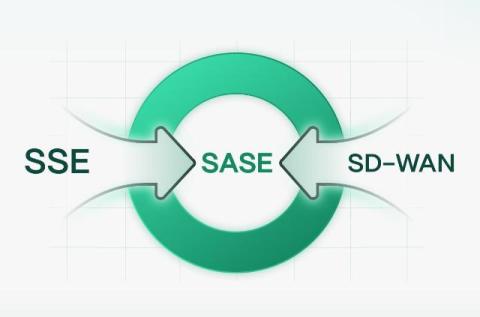
GigaOm’s latest analysis highlights a clear shift in the market. As they note, “The standalone Secure Service Edge (SSE) market has largely disappeared, with leading vendors now offering complete SASE solutions that converge software-defined wide-area network (SD-WAN) and SSE into single-vendor platforms. Organizations increasingly favor this consolidated approach to reduce operational complexity and improve visibility.”

Remote Access That Works Behind NAT, CGNAT, and Uncontrolled Firewalls

A device in your fleet encounters an issue. You try to SSH in only to discover that the IP changed overnight, the customer's firewall blocks inbound connections, and the VPN they set up six months ago stopped working when the device switched from Wi-Fi to cellular. The next several hours disappear into a Slack thread with the customer's IT team trying to get a port opened. Every engineer who has shipped hardware into a customer's environment has a version of this story.