Security | Threat Detection | Cyberattacks | DevSecOps | Compliance

ITSP: Corelight launches Agentic AI that makes SOC triage 10x faster

Modern SOCs face a difficult reality: attackers are moving faster while analysts are being asked to investigate more alerts than ever. Learn how agentic triage helps security teams move from alert overload to evidence-backed investigations. Rather than relying on opaque AI outputs, the approach uses expert-written playbooks and exposes the underlying queries and evidence so analysts can verify conclusions against raw network data.

Persona is one of the first verification vendors to accept California's mobile driver's license

During identity verification, organizations typically have to decide between increasing security controls and improving user conversion. Tighter checks mean more abandonment, and smoother flows mean more risk. Most verification flow design is an exercise in finding the right tradeoff. Mobile driver's licenses (mDLs) are different. Because an mDL is cryptographically signed by the issuing DMV and presented directly from a user's device, it's both faster to verify and harder to fake.

How Persona supports age verification and privacy online

Addressing these potentially competing priorities is difficult with today’s technology, and it's an active area of work for government agencies and private organizations alike. But we think there’s a potential path forward if regulations and organizations limit what you have to share, who you have to share data with, and how your data can be used.

The Trust Layer Autonomous Networking Was Missing Is Here

It has been a week since we announced Forward Predict at our Innovation Day broadcast, and I'm still taking it in. Since the inception of networking, the industry has been working without a safety net, making changes in the production network without knowing their impact beforehand. The result has been outages and security breaches. This wasn’t a lack of diligence, it was because there was no way to know, with certainty, what a change would do to the production network before it was pushed.

The Collapse of Symmetry: Why Periodic Pentesting is Strategic Suicide Against Algorithmic Warfare

The cybersecurity industry is sleepwalking. We are still captivated by the romanticized image of the hacker: a human in a hoodie manually typing code to breach a network. Wake up to the reality of 2026. The modern adversary is no longer human. It is algorithmic.

A2A vs MCP: Which Is More Secure?

Two protocols are shaping the AI revolution: A2A for agent-to-agent delegation, and MCP for agent access to tools and external systems. A2A expands who can participate in a workflow by enabling agent-to-agent delegation. MCP expands what agents can reach by connecting them to data and systems. By the end of 2026, task-specific AI agents are expected to appear in 40% of enterprise applications, up from less than 5% in 2025. That shift changes where security has to live.

Why Businesses Outsource Cybersecurity to MSSPs

Cybersecurity has moved from isolated tools to continuous operations. Most environments already generate alerts and logs across systems, yet attacks still progress undetected. The problem is not visibility but the speed at which teams can detect, understand, and respond to threats. The gap is not caused by a lack of tools but by limited execution capacity. This is where managed security services providers (MSSPs) come in. Modern attacks increasingly rely on identity misuse and legitimate system tools.

OWASP Top 10 LLM Risks Explained

As large language models (LLMs) become more embedded in business operations, the risks and attack methods targeting them are evolving just as quickly. The 2025 edition of the OWASP Top 10 for LLM Applications reflects this rapid evolution, addressing the current threats facing generative AI systems in production environments. For organizations investing in LLMs, understanding the risks is crucial for deploying these systems securely.

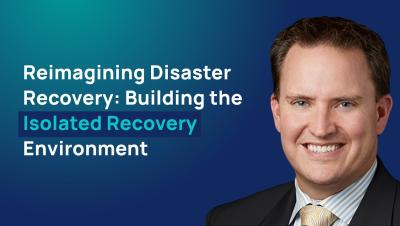
Reimagining Disaster Recovery: Building the Isolated Recovery Environment

Healthcare cyber resilience depends on ransomware recovery and patient care continuity. Christian Lindmark of Stanford Health Care joins Josh Howell to discuss an innovative approach to building an isolated recovery environment. Instead of requesting significant new capital from the board, Christian proposes a hybrid model that utilizes existing disaster recovery hardware for cyber response. They explore the shift from physical disaster planning to addressing the persistent reality of cyber attacks that compromise environment trust.