Security | Threat Detection | Cyberattacks | DevSecOps | Compliance

RAG vs Agentic AI: What's the Difference and Why Does It Matter for Security?

Security architects who understood the large language model (LLM) risk two years ago are now confronting a more complex problem. The enterprise AI stack has split into two distinct architectural patterns, retrieval-augmented generation (RAG) and agentic AI, and the security posture required for each is fundamentally different. Conflating them is how programs end up with coverage gaps.

Intelligent workflow automation: Where automation stops and intelligence starts

Automation works well until a step needs judgment, like an alert that needs context or an exception that doesn't match any rule. Those judgment steps are where the chain breaks, and where teams lose the capacity automation was supposed to give back. Intelligent workflow automation closes that gap. It orchestrates business processes across deterministic automation, AI for triage and decisions, and human-in-the-loop checkpoints in one workflow, so the ambiguous, judgment-driven steps don't break the chain.

Measuring AI-Enabled Success: 3 KPIs Leaders Should Track

AI represents a fundamental shift in how organizations work and innovate. It demands an equally fundamental shift in how technology leaders approach governance. Forward-looking leaders are moving beyond traditional gatekeeping by creating "paved roads": secure, pre-approved pathways that embed security controls, automated data protections, and real-time monitoring directly into AI workflows so teams can innovate rapidly within safe boundaries.

Salt Cloud Connect for Github

Your developers are shipping agents, MCP servers, and APIs faster than security can see them. GitHub Connect changes that. Salt scans your repositories and surfaces every agent, MCP server, and API hiding in your codebase, then maps them into the Agentic Security Graph. You see the agentic infrastructure forming in code, before it ever reaches production. No more waiting for runtime to find out what shipped. No more blind spots between dev and prod. Govern what's being built from day one.

Is anything about AI worth the hype?

Dr. Adeel Shaikh Muhammad argues that when it comes to AI in the SOC, alert prioritization, anomaly detection, and SOC efficiency are where the real value is. The rest is mostly noise. On The Cybersecurity Defenders Podcast, the cybersecurity strategist and three-time author draws a clear line between where AI delivers and where the industry has oversold it. Full autonomous SOCs, perfect attack prediction, and replacing human analysts all fall on the hype side. AI narrows focus and accelerates decisions, but the final call still belongs to humans.

Analyze SMS phishing with an AI agent in Tines

Automate SMS phishing triage with AI — employees upload a screenshot, and Tines handles the rest in under 5 minutes. When employees forward suspicious texts, security teams still have to manually review screenshots, extract indicators, and route cases. This Five Minute Flow shows how to automate the entire process using the Tines AI action with Claude Sonnet — from employee submission to SOC case creation, IOC enrichment, and escalation when multiple employees report the same threat.

Securing AI agents: Why guardrail placement is a key design decision

When teams start building AI agents, especially with managed systems like Amazon Bedrock, they often wonder whether simply enabling guardrails is enough to secure their agents. A framework like Amazon Bedrock Guardrails provides a solid foundation for content filtering and policy enforcement, but having guardrails in place is only part of the equation.

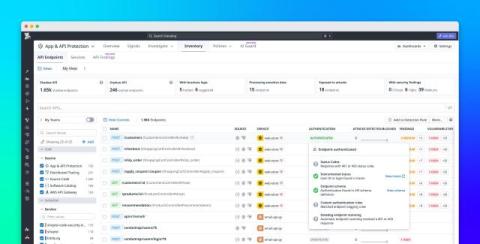
Improve API authentication detection with Datadog

Many organizations have hundreds or thousands of API endpoints across their services, each of which handles authentication differently. For example, one service might rely on standard headers like Authorization: Bearer, while another uses an API key, and a third uses a custom JSON Web Token header with mechanisms or naming conventions specific to the team that built it.