Security | Threat Detection | Cyberattacks | DevSecOps | Compliance

How Arctic Wolf Aurora Mobile Threat Defense Protects the Mobile Attack Surface

How Arctic Wolf Aurora Mobile Threat Defense secures the full mobile attack surface—devices, apps, networks, phishing, and privacy—in one unified platform. This demo highlights real‑time visibility, actionable insights, and automated response to reduce mobile risk.

5 Core Components of a Strong Software Supply Chain Security Framework

The rules of software security have changed. For years, the dominant threat narrative centered on stolen credentials and compromised accounts. Today, attackers have shifted strategies — and the data proves it. According to the 2026 Verizon Data Breach Investigations Report, exploitation of vulnerabilities now accounts for 31% of all initial access vectors, surpassing credential abuse, which has fallen to just 13%. Attackers aren’t just knocking on the front door anymore.

CVE-2026-44575: Middleware Authorization Bypass in Next.js App Router

A high-severity vulnerability in Next.js allows attackers to bypass middleware-based authorization controls in App Router applications through specially crafted.rsc and segment-prefetch requests. Tracked as CVE-2026-44575, the vulnerability can expose protected pages and sensitive application content without triggering the intended authentication or access control checks.

HIPAA vs. GDPR Compliance: What Is the Difference and Why Does It Matter?

For any business now, data privacy is no longer a legal issue. Companies today collect massive amounts of customer information through AI tools, healthcare apps, SaaS platforms, analytics systems, and cloud services. This has led organizations to take global privacy laws more seriously. This is even more important when it comes to the concept of GDPR vs HIPAA compliance requirements.

Acronis Cyber Protect Cloud adds support for Windows on ARM devices

Windows on ARM is becoming increasingly relevant for business endpoints. Newer ARM-based Windows laptops are built for mobility, long battery life, quiet operation and on-device AI workloads. Microsoft is also investing in the ARM application ecosystem for Copilot+ PCs, and Windows 11 on ARM can run x86 and x64 apps through emulation, with Prism improving compatibility and performance in Windows 11 24H2.

AI policy: a template for enterprise security teams

AI adoption inside security teams is now near-universal. Tines' Voice of Security 2026 report found that 99% of SOCs use AI in some capacity. What hasn't kept up is the policy that's supposed to govern it. ISACA's 2026 AI Pulse Poll found 56% of digital trust professionals don't know how quickly they could shut AI down after a security incident. The policy was supposed to handle this.

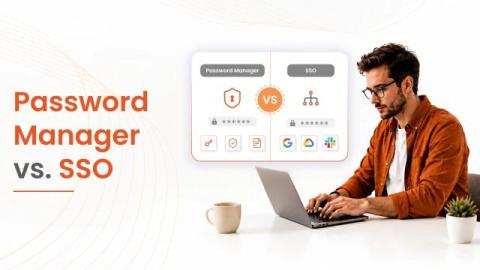
Password Manager vs. SSO: What Business Should Choose in 2026?

As businesses adopt more cloud applications, managing user access securely has become increasingly complex. Employees today use dozens of applications for communication, collaboration, development, HR, finance, and customer management. This creates a major challenge for IT teams: balancing security with a seamless user experience. To solve this problem, organizations typically evaluate two technologies: Single Sign-On (SSO) and password managers. In this guide, we’ll cover.

Guide to Just-in-Time (JIT) Provisioning

Imagine onboarding a new employee, contractor, or partner without creating accounts manually for every application. That’s exactly what Just-in-Time (JIT) provisioning enables. Instead of relying on slow, manual onboarding workflows, JIT provisioning automatically creates user accounts the moment users log in through SAML SSO. As organizations adopt more cloud applications and remote work models, automated user provisioning has become essential for scalable Identity and Access Management (IAM).

The EU Cyber Resilience Act: A Complete Compliance Guide for 2026 and Beyond

The Cyber Resilience Act (CRA) is an EU regulation that sets binding cybersecurity requirements for any "product with digital elements" placed on the European Union market. It is the first horizontal EU law that holds manufacturers accountable for the security of hardware and software throughout the entire product lifecycle—from design to end-of-support.

How analysts use cognitive reasoning in investigations with Chris Sanders

Join us for this week's Defender Fridays as Chris Sanders, Founder at Applied Network Defense and the Rural Technology Fund, breaks down how analysts actually think through investigations and what separates high performers from the rest. At Defender Fridays, we delve into the dynamic world of information security, exploring its defensive side with seasoned professionals from across the industry. Our aim is simple yet ambitious: to foster a collaborative space where ideas flow freely, experiences are shared, and knowledge expands.