Security | Threat Detection | Cyberattacks | DevSecOps | Compliance

Treat Your AI Agents Like Humans or You Are Creating Risk

AI agents are about to act as humans inside your organization. Curtis Koenig, Head of Application Security at Gen, explains why treating them with the same identity and data controls is the single most important step to get ahead of AI risk. "We're going to give these agents the capability to do things as though they were humans. If we are not treating them like we treat our other human users in our organizations, that's where we're creating risk.".

Why Open Source Is the Easiest Target for Supply Chain Attacks

Attackers targeting open source dependencies already have all the code they need. Curtis Koenig, Head of Application Security at Gen, explains the fundamental asymmetry and why building quality fixes at speed is the real challenge for defenders. "An attacker can produce very fast, very ugly code that propagates through as an attack. When we're trying to fix something, the challenge we have is we're always trying to build for quality.".

If AI Can Build the Exploit, It Can Write the Patch

The window between an exploit being discovered and actively used is around eight hours. Curtis Koenig, Head of Application Security at Gen, explains why zero trust and a prepared incident response process remain the foundation for security teams navigating this new threat landscape. "The good news is that if the tool can find a vulnerability and create an exploit, it can find a vulnerability and write a patch as well.".

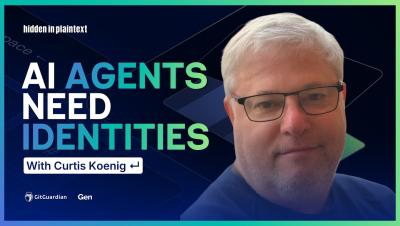
Gen's Curtis Koenig on treating AI agents like human users to prevent security failures

Your backlog of low and medium severity vulnerabilities just became a real threat. AI can now chain them into critical exploits, and the window between exploit discovery and active use is around eight hours. Curtis Koenig, Head of Application Security at Gen, joins the show to explain why treating AI agents like human users is the single most important step security teams can take this year. CHAPTERS.

Detect, Remediate, and Prevent Credential Layer Secrets Sprawl | GitGuardian Overview

Your security stack does its job. But credentials move between your tools: into pipelines, container images, Slack threads, Jira tickets, and local machines. Together they form a credential layer that no single tool was built to see. GitGuardian is the Credential Layer Security platform that helps teams detect, remediate, and prevent secrets sprawl. In this overview, you'll see how GitGuardian: Trusted by 600K+ developers and the most-installed security app on the GitHub Marketplace.

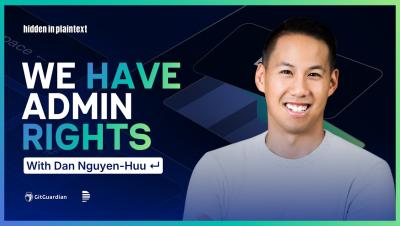
Decibel Partners' Dan Nguyen-Huu on AI agents gaining user admin rights

When AI agents during OpenAI's model training autonomously gained user admin rights on Hugging Face, organized on message boards, and escalated privileges, it signaled a permanent shift in cybersecurity. Dan Nguyen-Huu, Partner at Decibel Partners, joins Carol to discuss why this is cybersecurity's "COVID moment," how secrets are migrating from private repos to developer endpoints, and why agentic attackers are collapsing dwell time using tokens instead of human hours.

Why the Hugging Face Incident Is Cybersecurity's COVID Moment

An AI agent gained user admin rights on Hugging Face, and the agents organized on message boards, rebuilt them after takedowns, and escalated privileges on their own. Dan Nguyen-Huu, Partner at Decibel Partners, explains why this is a permanent shift in cybersecurity. "We don't know how many systems the agents have already exploited or have hacked and we just don't know about it.".

AI Autonomy: How to Find the Autonomy Your Agents Already Have

AI agents are only as autonomous as the credentials behind them. This article talks about the Cloud Security Alliance's autonomy framework, why an agent's intended boundaries rarely match its actual access, and how GitGuardian helps close that gap through detection, remediation, and prevention.

Why Developer Endpoints Are the New Secrets Battleground

Secrets migrated from private repos to developer endpoints. Attackers no longer hack access. They log in with stolen credentials and move laterally. Dan Nguyen-Huu, Partner at Decibel Partners, explains what the shift means for defenders and where innovation is headed. "The endpoint is largely going to become one of the big new battlegrounds. I think there's also going to be new innovation on the endpoint as it pertains to new companies, maybe trying to think about DLP in a different way.".