Security | Threat Detection | Cyberattacks | DevSecOps | Compliance

NIST AI Agent Authorization: Five Asks Mapped to Kubernetes

NIST has published no AI agent authorization standard, and nothing in its February 2026 draft gives an auditor a control to test. What the NCCoE did publish is more useful to a CISO with an audit on the calendar: five areas of interest that read like an assessor’s question list. Together they ask which agent acted, on whose behalf, under what authority, and with what record. A Kubernetes cluster has a primitive it can point to for each area.
What Does NIST IR 8587 Mean for API Security?

On September 15, 2026, NIST published Internal Report 8587, “Protecting Tokens and Assertions from Forgery, Theft, and Misuse.” It’s built to extend NIST Special Publication 800-53 Release 5.1.1, and on paper it reads like an SSO hardening document for government agencies and their cloud vendors.

Red Teaming Agentic AI: Why Testing the Model Is No Longer Enough

In January 2025, NIST's Center for AI Standards and Innovation published red team results that should have changed how enterprises test autonomous systems. Against an AI agent operating in simulated workspace, travel, Slack and banking environments, the strongest previously known hijacking attack succeeded 11% of the time. The strongest new attack developed by the red team succeeded 81% of the time. The model had not changed. The evaluation had.

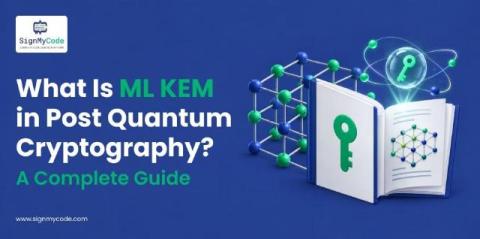
What Is ML-KEM? Guide to NIST's Post-Quantum Key Encapsulation Mechanism

Quantum computers are likely to render the current public-key cryptography used for protecting modern internet traffic, digital signatures, and encryption useless. In response, NIST has developed ML-KEM as the main post-quantum key encapsulation method. The guide below will introduce the concept of ML-KEM, how it functions, in which projects it is used, and how organisations can implement it.