Examining the Anti-Money Laundering (AML) Risks and Red Flags of Crypto Exchanges
Conversation with Claire Simm and James Brennan on AML compliance and regulations for cryptocurrency.


Have you been to the hospital lately? If so, you’ve probably been attached to at least one medical device with at least some sort of internet access. According to Cisco, the average hospital room has, on average, 15-20 connected devices, with an average of 6.2 cybersecurity vulnerabilities between them.
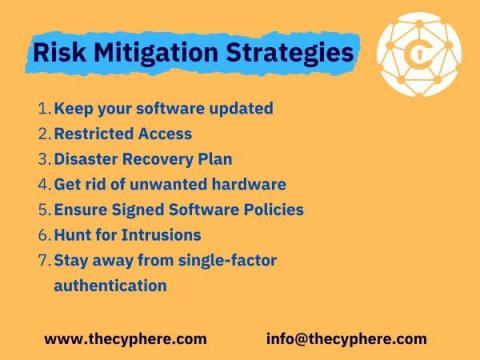
Risk management of code is an important and often overlooked development function that you need to pay attention to. You may think that this is not a developer’s problem, however developers should not write code that unduly adds to technical debt, hence the need to manage risk. The primary motivation for risk management is to prevent error or failure. Do not seek to eliminate failure, seek to minimise it, to manage the risk of failure.
Viruses are the hot topic of 2021. We’re not just talking about the COVID-19 virus. Computer viruses, identity theft, and threat actors are no longer just the subject of sci-fi films and crime shows, but a reality of running a business. More than ever, cybersecurity is top of mind for business leaders. Whether you are a Fortune-500 Company or just launching your first venture, no business is too big or too small to escape the realities of today’s cyber threats.
Cybersecurity is one of the essential tasks for any business. It’s not just a matter of protecting your company’s data and information from external threats, but also ensuring that it remains robust to internal ones. All three, i.e. people, processes and technology, are your greatest asset. If they are not embedded and managed throughout the organisation, you can expect that they will inadvertently put your sensitive data at risk.
In 1970, the world experienced its first “cyber attack” – What first started as a harmless joke, paved the way for a new wave of criminality - cybercrime. Since then, attacks have become more sophisticated with the use of malware, ransomware, and phishing attacks, among many others. In fact, according to Security Magazine, today’s hackers attack computers with Internet access every 39 seconds on average.
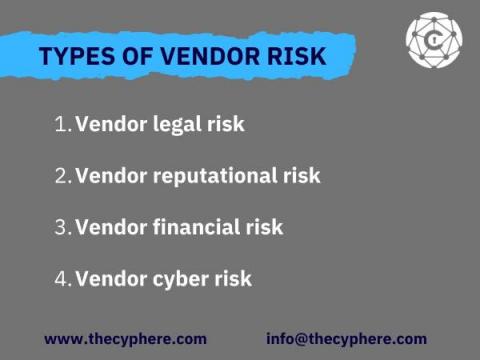
Vendor risk management (VRM) is the type of risk management practice assessing and mitigating business partners, third parties, or external vendors. This process is conducted before an entity enters into a business relationship and during the duration of the business contract with the vendor.
Vendor risk management (VRM) is rapidly emerging with ever-evolving cyber security strategies. As we hit the pandemic and try to manage critical operations in a remote work setup, each day, business entities challenge with the new security, privacy, and business continuity risks associated with their vendors.
Someone in your organization gets an email with an attached document. The sender seems legitimate, but when they click on the link, it’s not what it claims to be. Soon your organization’s data is encrypted and you receive a message: pay a ransom to the attackers if you want the decryption key. You’ve just been the victim of a ransomware attack. Ransomware has become a major attack vector in 2021.
As we’ve all learned, often the hard way, amazing tech has introduced not-so-amazing risks: viruses, hacks, and leaks, to name a few. A data breach or cyber attack can happen at any moment, to individuals or businesses of any size – and attackers do not discriminate.
I’ve been working at Tripwire for over two decades, and I’ve acquired a fair bit of swag over those years: branded jackets, hats, shoes, a watch, and of course a drawer full of t-shirts. One thing I never would have predicted owning was a Tripwire-branded face mask to protect me from a global pandemic. Over the past year, I’ve worn that face mask more than any of my other swag. Of course, none of my other swag protected me and others from a highly contagious, deadly virus.
Ransomware groups have generated so much damage that the United States Federal government has made it a top priority to thwart such efforts including, hosting a major international summit on the topic, setting up a ransomware task force and repeatedly urging organizations to improve their cyber resilience.
Today’s business landscape means having various business partners. From contractors to technology vendors, third parties are now part of everyone’s daily operations. However, with every new third-party you onboard, you also add a new risk. Supply chain attacks compromise your data, even if the third-party isn’t providing you a technology solution. To secure your data, you need to identify and classify high-risk third parties.
Organized cybercriminals are leaving traditional bank robbers in the dust. Nowadays, the banking sector’s most significant security concerns come in the form of online threats. Banks and other financial institutions process millions of transactions daily, with the majority of the transactions done via digital payment transfer platforms. For that reason, banks have become enticing targets for cybercriminals.
As organizations migrate to the cloud and adopt more “as-a-Service” technologies, identity and access have become the perimeter. Remote workforces mean that limiting access according to the principle of least privilege is a fundamental security control. As part of securing applications and networks, organizations need to focus on users with privileged access because they pose greater insider and credential theft risks.
Boards of Directors constantly need to be educated about and aware of their organizations’ cybersecurity posture. Regulations hold them responsible for decision-making and governance. Meanwhile, increased ransomware attacks pose a financial risk to their shareholders. To enhance the risk analysis, questions like these can provide visibility into the company’s strategy.
Threat intelligence feeds enable organizations to stay informed about indicators of compromise (IoCs) related to various threats that could adversely affect the network. These feeds also help to inform tools like SecurityScorecard’s Security Data by providing a source of information to collect, analyze and share with customers.
Rizal Commercial Banking Corporation (RCBC) begun as a small development bank in the Philippines and has grown to encompass a wide range of financial services and branches in the U.S., Europe, Australia and New Zealand. Like any financial institution, it must comply with a host of regulations and is a prime target for malicious actors.