Security | Threat Detection | Cyberattacks | DevSecOps | Compliance

Malvertising: The enemy of shoppers everywhere

You’ve seen suspicious ads. Some were obvious — ads that claim your browser is infected with malware and you need to click immediately to remedy the situation — but likely, some weren’t obvious at all. They just looked like regular ads, and might have appeared on a site you trust. You didn’t know it (and hopefully didn’t click) but some of the ads you see regularly are malvertising.

A Look Back at the Top Data Breaches of 2021

This past year was a banner year for cybercriminals. By the end of September, the Identity Theft Resource Center (ITCR) reported that the number of breaches that had taken place over the first three quarters of 2021 had exceeded the total number of breaches in 2020.

Third-Party Risk Management Framework: How to Select the Right One

Third-party technology providers can confer huge strategic advantages to a business. It allows each organization to focus on their highest value activities, but there’s a downside; new cyber security risks come with each partnership. Third-party risk is now an integral part of business ecosystems. A solid risk management framework is required to manage risk and keep you and your customers safe.

Netskope Advanced Analytics Simplify Risk Management Across Roles (Part 1)

Risk management doesn’t belong to one person or department at an organization. It’s a shared effort—partly because it touches on multiple roles at a company and partly because it is a massive and complex undertaking. Successful CISO’s use risk management visualization and reporting to provide a clear and easy way to understand the value of their security program.

SecurityScorecard CISO Mike Wilkes talks about 2022 Cybersecurity Predictions

There's never been a more important time to strengthen your cybersecurity posture. Hear what SecurityScorecard's Chief Information Security Officer, Mike Wilkes, has to say about 2022 Cybersecurity Predictions. He'll also share key ways you can improve your cyber posture going into the new year.

The Top 9 Cybersecurity Predictions for 2022

Cyberattacks are constantly evolving as criminals discover new ways to crack strong networks or automate attacks to target vulnerable systems. Nowadays, it seems as if cyberattacks are everywhere you look. In 2021, we faced many new attack vectors as the shift to remote work challenged traditional work operations, and we are likely to see those continue well into 2022.

SecurityScorecard Finds Log4j Active Exploitation from Nation State Actors

There's little question that you've already heard about the recently discovered security flaw related to Log4j, a widely used Java library for logging error messages in applications. The vulnerability enables a threat actor to remotely execute commands via remote code execution (RCE) on nearly any machine using Log4j. But it's also important to cut through all of the noise to truly understand the implications of the Log4j and what organizations can do to combat it.

'Tis the Season for Payment Fraud: 5 Top Holiday Shopping Risks

Holiday shopping is right around the corner, but unfortunately, Black Friday isn’t just an opportunity for shoppers and retailers — it’s also an opportunity for cybercriminals. While criminals have always been attracted by the money that changes hands on Black Friday, the last couple of years have been a magnet for cyber attacks. The pandemic means that more people than ever shopped online in 2020 — with shoppers spending $14.13 billion online last year on Black Friday.

7 Security Operations Center (SOC) Best Practices for Analysts

Security ratings are becoming a crucial component of every security operations center (SOC). Security analysts must learn how to read, analyze and report security ratings to the CISO effectively in order to help build an enterprise-wide culture of security. Here we outline how analysts can develop a successful security operations center that leverages ratings to evaluate and mitigate cyber risk.

Practice vs Maturity in CMMC 2.0 Framework

When CMMC was first introduced by the DoD, its purpose was to “normalize and standardized cybersecurity preparedness across the federal government’s Defense Industrial Base or DIB.” Essentially, they recognized a weakness in cybersecurity hygiene practices in their supply chain, and so CMMC became the standard the DIB would be “graded” by to ensure the protection of sensitive or Controlled Unclassified Information (CUI).

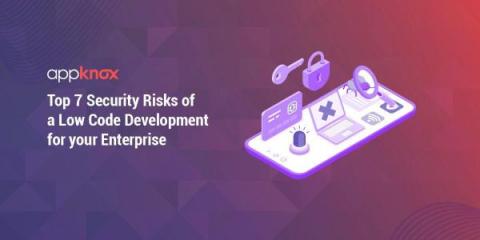
Top 7 Security Risks of a Low Code Development for your Enterprise

Who would hate the quick and easily applicable way to create application software? How is it even possible? Doesn't application development demand countless planning, design, testing, and most crucial thing, codes? Well, there was a time when it was required, but now, the low-code development approach helps enterprises build an app with little to no code. Sounds fantastic, right? The low-code development expedites business results and empowers them by speeding up the development of new applications.

6 Network Authentication Methods to Prevent a Data Breach

Cybercriminals are continuously finding new ways to steal sensitive information. Having robust network security measures in place is now more important than ever — and network authentication is part of the solution. There are various authentication technologies available that can add an extra layer of protection to prevent security lapses, and each one offers a unique solution. This post will highlight the most common methods for network authentication and answer the following questions.

Log4Shell Is the Most Dangerous Exploit Since Shellshock

Earlier today, a serious flaw was discovered in the widely used Java logging library Apache Log4j. The vulnerability, ‘Log4Shell,’ was first identified by users of a popular Minecraft forum and was apparently disclosed to the Apache Foundation by Alibaba Cloud security researchers on Nov. 24, 2021. The vulnerability has the potential to allow unauthenticated remote code execution (RCE) on nearly any machine using Log4j.

The Cybersecurity Playbook You Need to Run To Mitigate Risk During M&A

Mergers and acquisitions are high-risk endeavors, sometimes with billions of dollars and corporate reputations at stake. But one way to help lessen the danger is by conducting a thorough cybersecurity review during the due diligence process. The consulting and professional services team at Trustwave works closely with firms across the globe undertaking M&A deals of all sizes.

6 Common Hacking Techniques and How to Avoid Them

According to the recent Verizon Data Breach Investigations report, 45% of breaches featured hacking in 2020. With high-value information such as user credentials and credit card information being stored on personal devices and transmitted freely online, hacking techniques have evolved to become more sophisticated than ever before.

10 Ways to Reduce Cybersecurity Risk for Your Organization

‍Cybersecurity breaches have been on the rise, and it's expected that by 2023, they'll have grown to 15.4 million. While technological advancements have made it easy for organizations to upgrade their security measures, malicious hackers are now using sophisticated tools. This means that in addition to implementing strict cybersecurity policies, you also have to take proactive measures to reduce your cybersecurity risks.

Cybersecurity Risk Management // Live Panel with Built Technologies // UpGuard Summit December 2021

Join cybersecurity leaders from Built Technologies as they discuss the best practices in cybersecurity risk management. On the panel: CHAPTERS: UpGuard is a complete third-party risk and attack surface management platform, managing cyber risk across attack surfaces and third-party vendors by proactively identifying security exposures.