Security | Threat Detection | Cyberattacks | DevSecOps | Compliance

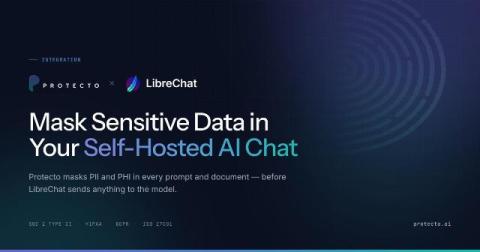
How Protecto's Privacy Gateway protects data inside LibreChat

Self-hosting LibreChat gives you control over your chat infrastructure and conversation storage. But when you connect a hosted model such as OpenAI or Gemini, the prompts and context you send can still expose sensitive data. Protecto Privacy Gateway for AI Chat sits in that gap, in the request path between your LibreChat instance and whichever model you’ve connected.

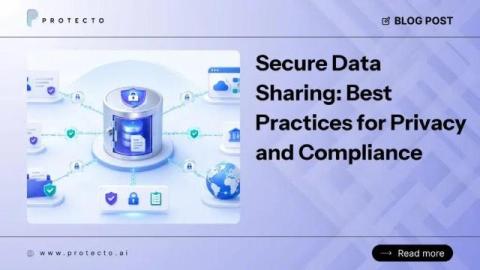
Secure Data Sharing: Best Practices for Privacy and Compliance

Data sharing creates business value only when organizations can control where data goes, who can use it, and what happens after it leaves its original system. That becomes harder as businesses exchange customer records, financial information, healthcare data, and AI-ready datasets across employees, vendors, applications, and regions. The answer is not simply sending files through an encrypted channel.

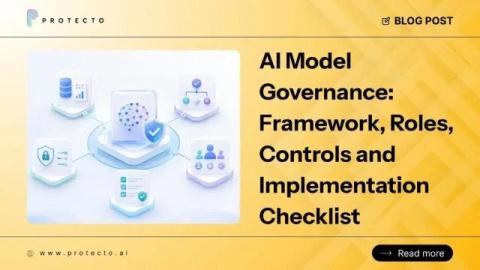
AI Model Governance: Framework, Roles, Controls and Implementation Checklist

AI models rarely become a governance problem because of the model alone. The real risk often emerges from what surrounds it: the data it receives, the decisions it influences, the systems it can access, and the people accountable for its outcomes. That makes AI model governance a lifecycle discipline, not simply a model approval process. Even NIST’s AI Risk Management Framework treats governance as a function that cuts across the entire AI lifecycle.

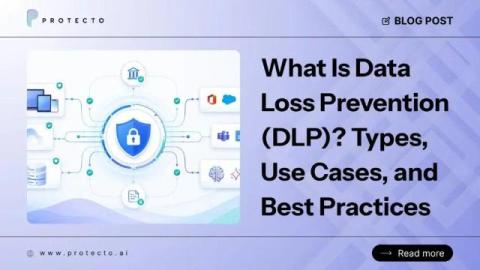
What Is Data Loss Prevention (DLP)? Types, Use Cases, and Best Practices

Protecting sensitive data is no longer just a compliance objective. It has become a prerequisite for adopting cloud services, enabling AI, and maintaining customer trust. Yet many organizations still struggle to balance innovation with effective data governance. A 2025 Forrester Total Economic Impact study commissioned by Microsoft found that organizations using mature data protection capabilities, including data loss prevention (DLP), achieved a 30% reduction in the likelihood of data breaches.

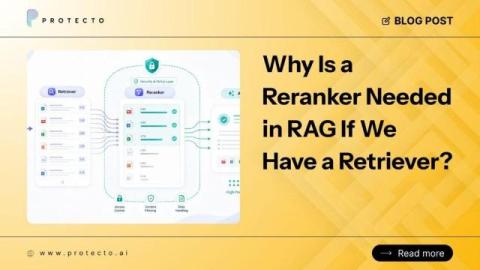
Why Is a Reranker Needed in RAG If We Have a Retriever?

Enterprise RAG pipelines have a recall stage and a precision stage. The retriever handles recall. The reranker handles precision. Skipping the reranker, or misplacing security controls around it, is where most accuracy and data exposure problems begin. The retriever’s job is to pull back every document that might be relevant. The reranker’s job is to find, from that candidate set, the documents that actually answer the question.

Attribute-Based Access Control: How ABAC Works, Examples and Use Cases

Access control has become significantly more complex as enterprises adopt cloud platforms, AI applications, and distributed workforces. A user’s identity alone is no longer enough to determine whether they should access sensitive data. Factors such as device posture, data sensitivity, location, and business context all influence the right decision. This shift is driving widespread adoption of attribute-based access control, a model that evaluates multiple attributes before granting access.