Security | Threat Detection | Cyberattacks | DevSecOps | Compliance

Why Java Is a Powerhouse for Web APIs: Benefits for Scalable, Secure, and Smart Backend Development?

Discover the top benefits of using Java for web APIs, including high performance, scalability, and robust security. Ideal for enterprise-level backend development and cloud deployments.

Optus Breach Lessons: Top 10 API Security Takeaways

In September 2022, Australia woke up to the largest data breach in its history. Optus, the country’s second-largest telecom disclosed that the personal information of nearly 10 million people had been exposed. To put that in perspective, that’s almost 40% of the entire population. Among the data spilled were 2.1 million government-issued IDs – passports, driver’s licenses, Medicare cards – the kind of information that isn’t just sensitive, but life-defining.

Bug Bounty Programs (2025) | Definition, Platforms & Costs

“Tech giants pay hackers millions to hack them – on purpose.” What once sounded like a risky experiment has now become standard practice in cybersecurity. Bug bounty programs have moved from the fringes into the mainstream because traditional defenses alone can’t keep up with today’s scale and sophistication of attacks.

Hackers Skipped the Payment Step: BLA 4 is Pure Logic Evasion #transitionvalidation #businesslogic

Missing Transition Validation (BLA 4) is a subtle but devastating threat. It exploits the sequence of steps in your application's workflow. The flaw? Your application fails to check that Step 2 (Payment) occurred before allowing access to Step 3 (Confirmation). The attacker simply draws a line straight to the goal! This attack is: Difficult to Detect: It uses valid requests in an invalid sequence. Tightly Coupled: It's unique to your application's specific logic. You need deep, sequence-aware runtime protection.

Find the Invisible: Salt MCP Finder Technology for Proactive MCP Discovery

The conversation about AI security has shifted. For the past year, the focus has been on the model itself: poisoning data, prompt injection, and protecting intellectual property. These are critical concerns, but they miss the bigger picture of how AI is actually being operationalized in the enterprise. We are entering the era of Agentic AI. AI is no longer just generating text; it is taking action. Autonomous agents read customer tickets, query databases, update financial records, and trigger workflows.

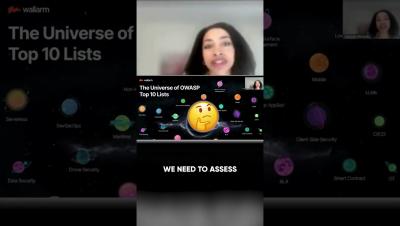
The Missing Link in OWASP is Found: Business Logic Abuse#owasp #owasptop10 #businesslogic

For years, security lists focused on technology (Cloud , Mobile , Serverless ). We desperately needed a list that focused on the core problem: flawed application logic, regardless of the stack. The OWASP Top 10 Business Logic Abuse (BLA) list fills that critical, architectural gap. Why? Because exploitation often happens between technologies, not within them. We must be able to categorize and talk about these intricate logic threats in a technology-agnostic way.

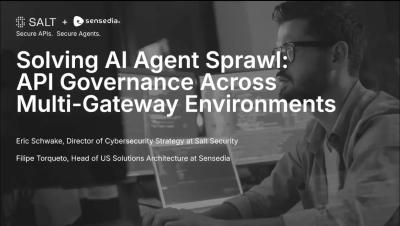
Solving Al Agent Sprawl: API Governance Across Multi Gateway Environments

As organizations accelerate adoption of AI agents, autonomous workflows powered by LLMs and MCP servers are rapidly proliferating across internal systems, partner networks, cloud environments, and API gateways. The result? A sprawling, often invisible attack surface: shadow APIs, duplicate endpoints, context drift, unmanaged agent access, inconsistent policies, and risk of data exposure or compliance failures.

Secure your APIs at the edge with Datadog App and API Protection

Modern applications are constantly exposed to various malicious activities, including credential stuffing, API abuse, and advanced injection attacks. Many of these threats can be stopped at the network edge, before they ever reach your application. That’s why Datadog App and API Protection offers real-time threat detection and blocking for popular edge proxies and load balancers, which include integrations for Envoy, Istio, NGINX, and Google Cloud Load Balancers (using Google Service Extensions).

Stateless vs. Stateful: The Difference in Cyber Attacks #StatefulAttack #businesslogic #apisecurity

The Hacker is Having a Conversation with Your API. There are two kinds of attacks you MUST understand: Stateless (Brute Force): One-and-done, instant gratification. Think SQL Injection. Stateful (Sophisticated): A persistent conversation over time. This is the signature of Business Logic Abuse. Why does this matter? Stateful attacks are executed by sophisticated threat actors who have done their due diligence on your architecture. You must evolve your defenses to monitor the entire session, not just single requests!

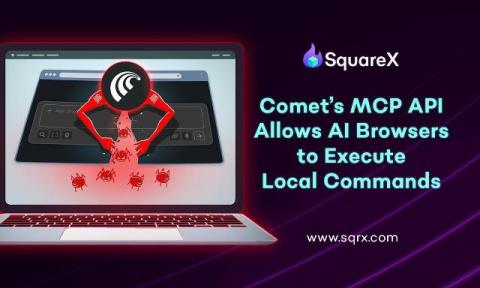
Obscure MCP API in Comet Browser Breaches User Trust, Enabling Full Device Control via AI Browsers

SquareX released critical research exposing a hidden API in Comet that allows extensions in the AI Browser to execute local commands and gain full control over users' devices. The research reveals that Comet has implemented a MCP API (chrome.perplexity.mcp.addStdioServer) that allows its embedded extensions to execute arbitrary local commands on users' devices, capabilities that traditional browsers explicitly prohibit. Concerningly, there is limited official documentation on the MCP API.

APIs Are the Retail Engine: How to Secure Them This Black Friday

Can you ever imagine the impact on your business if it went offline on Black Friday or Cyber Monday due to a cyberattack? Black Friday is the biggest day in the retail calendar. It’s also the riskiest. As you gear up for huge surges in online traffic, ask yourself: have you protected the APIs on which the business runs?

When your AI Assistant Becomes the Attacker's Command-and-Control

Earlier this month, Microsoft uncovered SesameOp, a new backdoor malware that abuses the OpenAI Assistants API as a covert command-and-control (C2) channel. The discovery has drawn significant attention within the cybersecurity community. Security teams can no longer focus solely on endpoint malware. Attackers are weaponizing public and legitimate AI assistant APIs and defenders must adjust.

From Cloud to Code: Salt Cloud Connect Now Scans GitHub

One of our most-loved features is Salt Cloud Connect. In a world of complex deployments, it’s a breath of fresh air: an agentless discovery model that delivers under 10-minute deployment and rapidly gathering API-specific info in cloud platforms. Customers plug it in, and in minutes, not weeks, they get a “traffic-free”, complete inventory of their APIs across AWS, Azure, GCP, Kong, and Mulesoft. This “ease of use” provides a “wow” moment of immediate visibility.

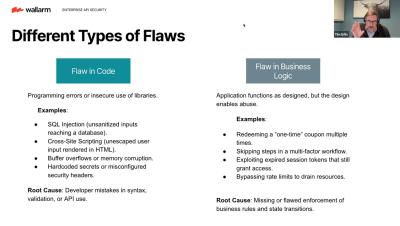
Hacked Architecture, Not Code: What is a Business Logic Attack? #businesslogic #cybersecurity

Why do hackers ignore your firewalls and clean code? Because they exploit your business logic and application architecture. A Business Logic Attack (BLA) is a sophisticated manipulation that uses your own system's design against you. Learn the key difference between code flaws and architectural exploits.

API Gateway vs. API Security #apisecurity #cybersecurity #architecture #devsecops

Your API Gateway Is Not an API Security Solution Confusing API management with API security is a costly and dangerous mistake. An API Gateway is a traffic controller, but it has critical blind spots: It authenticates users but doesn't analyze their behavior for malicious intent. It routes traffic but doesn't inspect payloads for complex attacks. It manages access but can't detect business logic abuse.

OWASP Top 10 Business Logic Abuse: What You Need to Know

Over the past few years, API security has gone from a relatively niche concern to a headline issue. A slew of high-profile breaches and compliance mandates like PCI DSS 4.0 have woken security teams up to the reality that APIs are the front door to their data, infrastructure, and revenue streams. OWASP recently published its first-ever Business Logic Abuse Top 10 List; a clear indication that the industry is taking API security and all its nuances seriously.

From Model Drift to API Exploitation: The Next Challenge in AI Security

From Model Drift to API Exploitation: The Next Challenge in AI Security In this clip from "Securing AI Part 4: The Rising Threat of Hidden Attacks in Multimodal AI," Diptanshu Purwar and Madhav Aggarwal summarize why external guardrails are the only sustainable defense against the new wave of AI exploitation. Jamison Utter then sets the stage for the next topic in the series: securing the fundamental protocols and APIs that AI agents rely on.

The Secret Backdoor in Your Firewall... How Attackers Get In WITHOUT Hacking!#cybersecurity#InfoSec

Your WAF is Providing a False Sense of Security Improper network configuration can completely nullify the effectiveness of your Web Application Firewall. If attackers can discover your origin server's direct IP address: They can bypass your expensive security controls entirely. Your "internal" services become externally exposed. You have a massive, unknown gap in your defenses. This animation is a clear example of why security doesn't end with buying a tool. Proper integration and a zero-trust mindset are non-negotiable.

The CISO's Checklist: How to Evaluate an API Security Platform

API Security Evaluation Checklist In the first half of 2025, APIs have emerged as the primary focus for attackers. Unlike traditional broad attacks on websites, threat actors are increasingly exploiting vulnerabilities and launching DDoS attacks on APIs, which are often harder to secure and manage at scale. Key insights from the State of Application Security Report H1 2025.

APIBased JIT Access vs Proxies: Streamlining Secure Cloud Permissions

Breaking down the trade-offs between API integration and proxy gateways for modern access management The way organizations manage access has fundamentally shifted. In the past, infrastructure was mostly static—centralized data centers, long-lived servers, and predictable traffic patterns. You could rely on VPNs, firewalls, and a fixed set of roles in your identity provider. Access paths were clear, and change was infrequent. But that’s no longer the case.

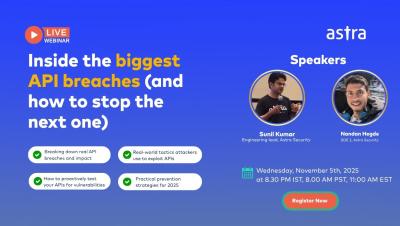
Inside the biggest API breaches (and how to stop the next one)

APIs power the modern digital world — but they’re also the fastest-growing attack surface. In this webinar, we break down the biggest API breaches, their root causes, and how they could have been prevented. What's covered: Featuring: Live insights and a product demo by the Astra Engineering Team.

The Business of API Security: Unpacking the Q3 API ThreatStats Report

Q3 provided us with another opportunity to dig into API vulnerabilities, exploits, and breaches. We'll dive into the details, picking out the trends that impact how you defend your APIs. This quarter's report includes a special focus on business logic abuse. Join the webinar to learn.