

|
By Niharika Mahesh
Change Healthcare took down a third of US claims processing. Ascension spent weeks on the papers. OCR settlements keep citing “risk analysis failure,” and HITRUST r2 assessors are asking harder questions about what actually got tested versus what got scanned. The math on pentesting shifted in the middle of all that. In 2024, 1 in 40 findings was Critical. In 2025, it’s 1 in 10.
|
By Keshav Malik
On September 1, 2026, OpenAI announced that its Astra model had reached the Critical tier for cyber capability under the company’s Preparedness Framework, a first for its systems. While working through an internal benchmark of 20 recently disclosed vulnerabilities in Google’s V8 engine, the model found two zero-days that no one had asked it to look for and used them in a working exploit chain. OpenAI is disclosing both flaws and restricting the capability to vetted testers.
|
By Sanskriti Jain
Security leaders at key financial institutions in Singapore now have a new line in their compliance calendars: AI-assisted red teaming, a requirement MAS introduced on 1 July 2026. What appears to be a scoping exercise actually asks a harder question, i. e., how does a bank differentiate between another convincing report and one that secures the institution?

|
By Keshav Malik
On September 1, OpenAI announced that its new model, GPT-6 Astra, had become the first to cross the “Critical” cybersecurity threshold in the company’s Preparedness Framework. Most coverage focused on the safety implications, and fairly so, but buried in the announcement sits a benchmark result that should change how every security leader reads their next vulnerability report.
|
By Keshav Malik
Buried in OpenAI’s evaluations of its GPT-6 Astra model sits a finding that mobile teams should sit with for a minute. The model reverse-engineered compiled software well enough to escape a browser sandbox and chain privilege-escalation flaws on a hardened operating system, according to the company’s published evaluations. Reading compiled binaries used to be specialist work priced in weeks, and now it’s something machines do quickly and well.
|
By Keshav Malik
Every security vendor’s homepage now says “AI-powered” somewhere above the fold, and most are describing the same scanners they sold in 2022 with a model bolted onto the reporting layer. Buyers have noticed, and the skepticism is earned. When everything claims to be intelligent, the label stops conveying information. A security lead evaluating tools is left with one question that matters: whether the tool can actually think through an attack the way a pentester does.
|
By Shikhil Sharma
The security industry killed CVE coverage as a credible metric, and it deserved to die. Vendors inflated the numbers for years in the name of depth, and nobody in the room had an incentive to ask whether they reflected real validated risk or just a longer signature list. So “CVE coverage is a vanity metric” became earned consensus. The question I keep coming back to is whether the autonomous pentesting era makes that consensus outdated.
|
By Ananda Krishna
I have watched the security industry run a very profitable game with abbreviations for the last decade. The simple way to do it is to invent a category, give it a cool catchy abbreviation, market it as the missing piece of the stack, and repeat. The greatest examples are CTEM, BAS, ASM, and EASM. Every one of them arrived promising to close the gap the last one left open, and every one of them ended up as a line item on a renewal spreadsheet that nobody at the buyer‘s side could confidently defend.
|
By Ananda Krishna
Large language models are now a core part of the software development lifecycle. The 2025 Stack Overflow Developer Survey found that 82% of developers used OpenAI’s GPT models in their work last year, and Google has reported that AI now writes over 25% of new code committed at the company. All of that rests on one assumption. The model understands what you asked, and its answer is accurate.

|
By Keshav Malik
Your vulnerability report is sorted by severity. The adversary looking at the same environment is sorted by path. That mismatch is the whole problem. Open any scanner output, and you get a tidy hierarchy: criticals at the top, then highs, then a long tail of mediums and lows that most teams will never touch. To the person who wrote the ticket, that tail is noise. To someone who thinks in chains, it’s a roadmap. A page of “lows” is not a page of things you can ignore.
|
By Astra Security
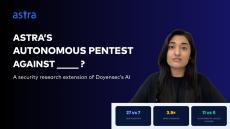
Astra vs. Other Tool: Who Finds More Real Vulnerabilities? How does Astra Autonomous Pentesting compare with the other tool when it comes to finding real-world vulnerabilities? In this independent benchmark, Astra was tested against the other tool to evaluate vulnerability coverage, depth, and true-positive findings. The results: 27 true-positive vulnerabilities identified 3.9× more vulnerability coverage 11 distinct vulnerability classes discovered Deep testing across business logic and application behaviour.
|
By Astra Security
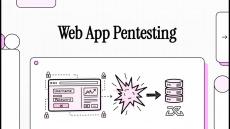
Web application penetration testing means simulating real-world attacks on your web application; probing everything from input fields, APIs and auth flows to server configs and business logic to find security flaws before attackers do. In this video, you’ll learn.



|
By Astra Security
Is Vibe Coding Actually Secure? We Tested 4 AI App Builders to Find Out Vibe coding promises no developers, no tech background, and no waiting weeks for a build, just describe your idea and watch an AI turn it into a working app. But how secure are the apps it builds? In this video, Viranchi (Product Marketer at Astra Security) breaks down what we found after testing apps built on popular AI app builders — Lovable, Replit, Base44, and Emergent. The results: 4 out of 4 apps tested had high or severe vulnerabilities.

|
By Astra Security
One team. One engagement. One PDF three weeks later. Already outdated. That was the old model. This video explains the new one. Autonomous pentesting runs continuously, finds attack chains, validates every finding, and delivers fixes to your developer's IDE the same day. No backlog. No waiting. No guessing. 60 seconds. Watch it.

|
By Astra Security
3 companies are using AI agents to run pentests continuously instead of waiting six weeks for a report. This video breaks down what Astra Security, XBOW, and NodeZero each actually do, and who they're built for. Timestamp: GO DEEPER TOOLS MENTIONED Only test systems you own or have explicit permission to test. AI doesn't change that rule. This is Astra's channel — XBOW and NodeZero are described from public documentation, no commercial relationship, not sponsored.
|
By Astra Security
AI Led Pentesting is redefining how organizations approach application security. As software development accelerates with AI-assisted coding, cloud-native applications, and rapidly evolving attack surfaces, traditional penetration testing is struggling to keep pace. In this detailed video, we explore why the future of security testing needs to be continuous, intelligent, and autonomous led by AI.

|
By Astra Security
Think this is just another product video? Think again. Join us for a live demo of Astra Autonomous Pentesting and see how modern security teams uncover and validate vulnerabilities in real time.

- October 2026 (5)
- September 2026 (15)
- August 2026 (8)
- July 2026 (12)
- June 2026 (22)
- May 2026 (10)
- April 2026 (9)
- March 2026 (5)
- February 2026 (14)
- January 2026 (35)
- December 2025 (20)
- November 2025 (15)
- October 2025 (16)
- September 2025 (14)
- August 2025 (19)
- July 2025 (12)
- June 2025 (8)
- May 2025 (12)
- April 2025 (19)
- March 2025 (15)
- February 2025 (6)
- January 2025 (3)
- December 2024 (7)
- November 2024 (4)
- October 2024 (1)
- September 2024 (3)
- August 2024 (4)
- July 2024 (7)
- June 2024 (3)
- May 2024 (2)
- April 2024 (1)
- March 2024 (3)
- January 2024 (4)
- December 2023 (3)
- November 2023 (2)
- October 2023 (6)
- September 2023 (13)
- August 2023 (7)
- July 2023 (1)
- June 2023 (2)
- May 2023 (10)
- April 2023 (8)
- March 2023 (7)
- February 2023 (8)
- January 2023 (9)
- February 2022 (2)
- January 2022 (1)
- November 2021 (1)
- May 2021 (1)
- January 2021 (1)
- December 2020 (4)
- October 2020 (2)
- September 2020 (2)
- August 2020 (2)
- July 2020 (1)
Astra Security Suite makes security simple and hassle-free for thousands of websites & businesses worldwide.
Find and fix every single security loophole with our hacker-style pentest:
- Test for 3000+ vulnerabilities: Including industry standard OWASP & SANS tests.
- Shift DevOps to DevSecOps: Integrate security into your CI/CD pipeline.
- Get ISO, SOC2, GDPR or HIPAA Compliant: Cover all the essential tests required for compliance.
- Scan your critical APIs: Protect your business critical APIs from vulnerabilities.
- Automated & manual pentest: We combine automated tools with manual, in-depth pentest to uncover all possible vulnerabilities.
Arm your website against every potential threat:
- Rock-solid firewall and malware scanner: Protect your website in real time and uncover any malicious code.
- Scan for vulnerabilities: Scan and protect your site from the most common vulnerabilities and malware.
- Seal up vulnerabilities automatically: Astra’s firewall automatically virtually patches known exploits which can be patched by firewalls principally.
- Perform daily malware scans: Get peace of mind and keep hackers at bay with Astra's daily malware scans.
- Build custom security rules. With Astra’s security boosters, build custom security rules for your website using our no code builder.
Protect your business from all threats, with Astra's hassle-free security.