Security | Threat Detection | Cyberattacks | DevSecOps | Compliance

Fast, Secure, Resilient: Modernizing Application Security at Scale

Software release cycles are now too fast for traditional security tools. Rapid iterations and reliance on open-source and cloud-native tech increase vulnerabilities, challenging AppSec teams to keep up. Attackers are taking advantage, targeting applications and exploiting misconfigurations, excessive permissions, and vulnerable plug-ins.

Measuring Agentic AI Posture: A New Metric for CISOs

In cybersecurity, we live by our metrics. We measure Mean Time to Respond (MTTR), Dwell Time, and Patch Cadence. These numbers indicate to the Board how quickly we respond when issues arise. But in the era of Agentic AI, reaction speed is no longer enough. When an AI Agent or an MCP server is compromised, data exfiltration happens in milliseconds rather than days. If you are waiting for an incident to measure your success, you have already lost.

Fast, Secure, Resilient: Modernizing Application Security at Scale

Software release cycles are now too fast for traditional security tools. Rapid iterations and reliance on open-source and cloud-native tech increase vulnerabilities, challenging AppSec teams to keep up. Attackers are taking advantage, targeting applications and exploiting misconfigurations, excessive permissions, and vulnerable plug-ins.

AI is Actively LEAKING Your Data (And You Don't Know It) #apisecurity #airisks #dataprotection #ai

AI agents don't think. They pattern-match. Critical to understand: Generative AI (ChatGPT, Claude, etc.) does NOT reason like humans. It: The API Security problem: When you give an AI agent access to an API, it will: AI agents can't reason. They recreate patterns based on weights. You need to be very careful: data in, data out. Practical example: text User: "Show me the account balance for user" AI agent → calls GET /api/account/123 API → returns { balance: 5000, name: "John", SSN: "123-45-6789" } AI agent → outputs EVERYTHING to user (including SSN!)

Why API Security Is No Longer an AppSec Problem - And What Security Leaders Must Do Instead

APIs are one of the most important technologies in digital business ecosystems. And yet, the responsibility for their security often falls to AppSec teams – and that’s a problem. This organizational mismatch creates systemic risk: business teams assume APIs are “secured,” while attackers exploit logic flaws, authorization gaps, and automated attacks in production. As Tim Erlin noted recently, “These are not exploits of a specific vulnerability, but abuse of an API.”

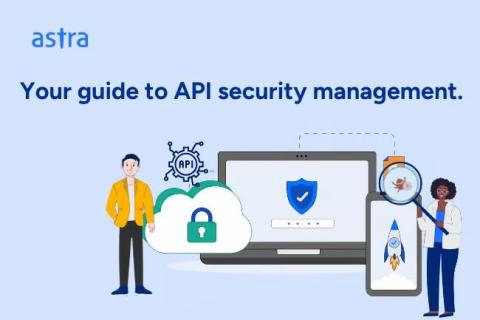
What is API Security Management? A Complete Guide

The fact that you’re here is proof enough that API is somewhere disturbing your or your security team’s sleep. Whether it is 99% of organizations reporting API security issues in recent surveys, or it’s a compliance/client mandate. We know you are (fear you soon will be) grappling with shadow APIs, misconfigured endpoints leaking sensitive data, BOLAs, unauthorized access, and more.

Stop Staring at JSON: How GenAI is Solving the API "Context Crisis"

There is a moment that happens in every SOC (Security Operations Center) every day. An alert fires. An analyst looks at a dashboard and sees a UR: POST /vs/payments/proc/77a. And then they stop. They stare. And they ask the question that kills productivity: "What does this thing actually do?" Is it a critical payment gateway? A test function? Does it handle credit card numbers or just transaction IDs?

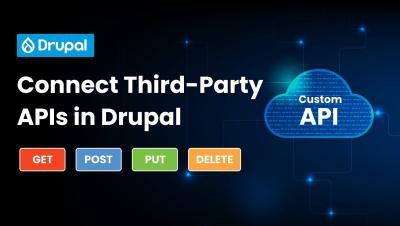
How to integrate third-party APIs in Drupal

Learn how to create and manage Custom REST API endpoints in Drupal using the Custom API module. This step-by-step tutorial shows how to build APIs without writing complex backend code, using Drupal’s core REST and routing system. Comprehensive Documentation: Don't forget to subscribe to our channel and click on the bell icon to get notifications about new uploads.

Business Logic Abuse: The Attack You Can't Patch #businesslogic #apisecurity #cybersecurity

The attack that no patch can fix Scenario:"Give me one million pizzas" API responds: "OK, one million pizzas at $0.01 each" Attacker: "Thanks!" What happened? API works exactly as designed Syntax is correct Protocol is followed WAF sees nothing wrong BUT the business logic intended: "Max 100 pizzas per order, at normal pricing".

From the Data Lake to the Edge: Why Universal Visibility is the Future of API Security

If you look at an enterprise architecture diagram from five years ago, it looks relatively tidy. You had a data center, maybe a cloud provider, and a few gateways. Today, that diagram looks like a constellation. Data is living in AI platforms like Databricks. Frontend applications are pushed to the edge on Netlify. Logic is scattered across microservices, serverless functions, and legacy IIS servers. For security teams, this fragmentation creates a massive headache: Blind Spots.

Your API Is the New Titanic (Iceberg Already Here) #apisecurity #cybersecurity #riskmanagement #api

The Titanic didn't hit the iceberg by accident. Organizations hit the API security iceberg for the same reason: they didn't see it coming. Your API iceberg consists of: Public APIs — for customers (SaaS, partners, third-parties) Private APIs — internal infrastructure (larger companies = larger insider threat surface) Partner APIs — for ecosystem integration AI APIs — the new frontier (and the most dangerous)

$170k Gone in One Day - API Paid Out Money Itself #apisecurity #cybersecurity #fraud #api #ai

This isn't a data leak. This is direct financial loss. The case: Flex Pay (payment processor in India) The vulnerability: An API flaw allowed unauthorized payouts The impact: $170,000 vanished in a single day Why this matters: Most CISOs focus on data breaches. But some APIs control MONEY. If that API is vulnerable, the attacker doesn't steal data—they drain your accounts. Attackers aren't always after data. Sometimes they're after money. And financial APIs are often the most neglected from a security perspective.

10 Best API Pentesting Tools in 2026 [Expert Opinion]

Security testing often becomes fragmented as systems scale and APIs multiply across platforms. Different teams use different tools, leading to inconsistent vulnerability identification and patching, which creates gaps in security and leaves organizations vulnerable to increasingly sophisticated API attacks.

How to Build an Enterprise API Security Strategy (Beyond Gateways and Checklists)

In the last few years, many of the largest data exposures haven’t come from broken pages or leaked databases. They’ve come from APIs. Public reports around large-scale scraping incidents at companies like Meta and LinkedIn showed how exposed APIs, not traditional web flaws, were used to pull massive volumes of user data at scale. This isn’t an edge case anymore. APIs now sit at the center of how enterprises move data between applications, partners, and customers.

Do We Have Full API Visibility Across Our Entire API Ecosystem?

Over 68% of companies have suffered API security breaches at a cost exceeding $1M. The question is not whether your APIs are vulnerable, but whether you can detect the threats in time. With API traffic comprising 71% of all web activity, the digital backbone of the modern enterprise is both our greatest strength and most exploited threat surface. Are we seeing every single API? These statistics reveal a concerning reality for most organizations.

Understanding the API Security Maturity Model

As per Traceable’s 2025 State of API Security report, only 21% of the >1500 respondents surveyed across the globe showed confidence in detecting attacks at the API layer. Furthermore, only 13% were capable of preventing >50% of API attacks. This is when the API sprawl is still burgeoning. The challenge, thus, is no longer volume but maturity.

Beyond Testing: API Security as the Foundational Intelligence for an 'industry leader'-Level Security Strategy

In today's security landscape, it's easy to get lost in a sea of acronyms. But one layer has become the undisputed foundation for modern application security: API security. Why? Because APIs are no longer just part of the application, they are the application. They are the connective tissue for microservices, third-party data, and the explosive new 'Agentic AI Action Layer' powered by protocols like MCP (Model Context Protocol). Securing the application is securing the APIs.

What We Got Right (and Wrong) about 2025

Watch now for a clear and candid look back at the predictions made for 2025 by Wallarm and by other voices across the industry. During the session, we revisit what people expected to happen in cybersecurity, API security, and the broader technology space, and compare those expectations with what actually unfolded throughout the year.

How Agentic AI Creates Shadow APIs: Security Risks Explained

How Agentic AI Creates Shadow APIs: Security Risks Explained As businesses move from static applications to Agentic AI, the security landscape is shifting beneath our feet. In this clip from the A10 Networks webinar, "APIs are the Language of AI: Protecting Them is Critical," experts Jamison Utter and Carlo Alpuerto discuss a new frontier in cybersecurity: AI that builds its own APIs.

57% of Companies ALREADY BREACHED Through APIs (Your Company Is Probably Next) #apisecurity #api

82% of companies are going API-First in 2025 But here's the troubling fact: 57% of them have ALREADY been breached through APIs. Why? Because they're going API-first without a solid API security strategy. It's like buying a sports car and forgetting the insurance. Organizations are racing toward digital transformation while threat actors simply walk through the open door. Threat actors love when you're API-first without a good security program. It makes their job easier.

7 Essential Best Practices to Strengthen Your API Security Posture

99% of organizations faced API security issues in the past 12 months. Yet only 10% have an API posture governance strategy in place to actually defend against them. What makes this worse is that 95% of API attacks now come from authenticated sources. Traditional defenses built around authentication are failing. Shadow APIs and zombie APIs operate undetected while businesses manage an average of 660 endpoints with little visibility.

The MCP Security Blueprint: What a Hardened MCP Server Looks Like

Over the last year, Model Context Protocol (MCP) servers have transitioned from "cool developer experiments" into critical production infrastructure. Developers love them because they allow AI agents to open tickets, query databases, and update records with almost zero integration backlog. But there is a fundamental truth we must acknowledge before moving forward: The AI revolution is actually an API revolution.

7 Reasons to Get Certified in API Security

API security is becoming more important by the day and skilled practitioners are in high demand. Now’s the time to level up your API security skillset. Wallarm University, our free training course, provides security analysts, engineers, and practitioners with hands-on skills you can’t get from documentation, videos, or traditional courses. Run real attacks, investigate real signals, and learn exactly how to defend API environments when it counts. Here are the 7 reasons you should register.

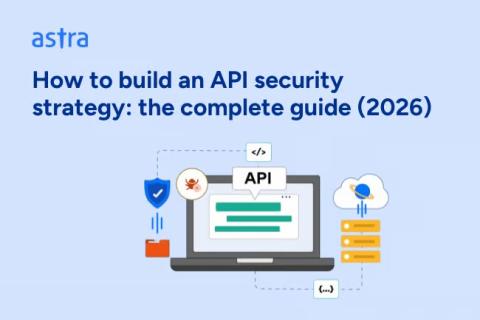
How to Build an API Security Strategy: The Complete Guide (2026)

Today, APIs power everything from mobile apps to cloud platforms, quietly moving data behind the scenes. That invisibility makes them prime targets. Over 84% of organizations experienced API security incidents last year, with breaches exposing ten times more data than in traditional attacks. Attackers now deploy AI-powered tools that map endpoints in minutes and exploit business logic flaws your defenses can’t see.

6 Best Runtime API Security Tools for Kubernetes & Cloud-Native Environments in 2026

Why isn’t your API gateway enough? Gateways control access; WAFs block known signatures. Neither sees what happens at the application layer—where SQL injection executes, where SSRF reaches your metadata service, where lateral movement begins. Runtime security monitors live behavior, not just perimeter traffic. What’s the real problem with API security tools? Most see only one layer. API security sees traffic patterns. Container security sees process execution.

The Silent Threat to the Agentic Enterprise: Why BOLA is the #1 Risk for AI Agents

In the race to deploy autonomous AI agents, organizations are inadvertently building on a foundation of shifting sand. While security teams have spent the last year focused on "Prompt Injection" and "Model Poisoning," a much older, more dangerous adversary has quietly become the primary attack vector for the agentic era: Broken Object Level Authorization (BOLA).