In today’s world, the importance of incorporating web application security best practices cannot be overstated. Recent studies show that web applications are the top attack vector in nearly 80% of incidents. The good news is DevOps processes lend themselves to integrated security practices. Here are the top six best practices for seamlessly weaving web application security into DevOps.
We’re delighted to announce that Mend.io has launched a new integration with Secure Code Warrior®, a platform that provides secure coding training and tools that help shift developer focus from vulnerability reaction to prevention.
In a rapidly evolving digital landscape, our reliance on mobile applications has increased dramatically. Yet, this rapid growth has also led to correspondingly soaring risks in security.
New research from TechTarget’s Enterprise Strategy Group (ESG) has identified that organizations’ application security programs struggle to keep up with the pace of software development, and it reveals best practices to secure modern software applications.
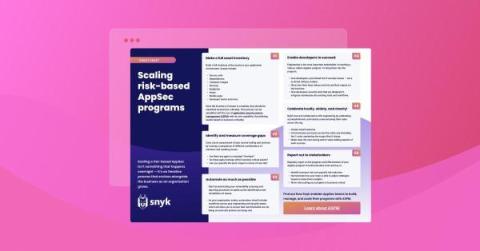
Scaling a risk-based AppSec program involves adapting your security practices to accommodate the growth and evolving needs of your business, while effectively managing and mitigating security risks.
As a software engineer in a cloud-native world, you’re the first line of defense in web application security. Armed with a few best practices that have a huge impact, securing both the code you create and the code you compile can be simple. Here are five tips that make your role easier in protecting data with secure development.
The use of artificial intelligence in every area of life — from writing papers to maintaining critical infrastructure to manufacturing goods — is a controversial topic. Some are excited about the possibilities that come with AI/ML tech, while others are fearful and reticent. These differing opinions raise a fundamental question: will AI turn our modern-day society into a utopia or a dystopia?