Security | Threat Detection | Cyberattacks | DevSecOps | Compliance

What is Cybersecurity Compliance? List of Compliance Regulations by Industry

Cybersecurity compliance refers to the practice of adhering to laws, standards, and regulatory requirements established by governments and industry authorities. These compliance regulations are designed to protect a business’ digital information and information systems from cyber threats, including unauthorized access, use, disclosure, disruption, modification, or destruction.


Cyber Security Monitoring: 5 Key Components

Cyber security monitoring is the practice of continuously observing IT systems to detect cyber threats, data breaches, and other security issues. By helping to identify threats early, monitoring solutions can help to mitigate attacks faster and limit the damage they can do. Monitoring solutions may track activity on networks as well as endpoints like individual laptops, mobile phones, desktop computers, and IoT devices.

A 2025 Guide to SOX Compliance

The Sarbanes-Oxley Act (SOX), enacted in 2002, is a U.S. federal law established to enhance corporate governance and strengthen the accuracy and reliability of financial reporting for publicly traded companies. SOX aims to protect investors and the public by enforcing stringent reforms to improve financial disclosures and prevent corporate fraud.

What is a Third-Party Data Breach? 7 Recent Examples

A third-party data breach is a security incident where an organization's sensitive data is compromised or stolen due to a vulnerability or cyber attack on one of its third party vendors. This type of breach happens outside the primary organization's own IT infrastructure but still impacts them, as the third-party vendor, contractor, or service provider has access to their data.

What is Cybersecurity Risk and How Can You Manage It?

Cyber risk is the potentially negative impact to an organization when information systems fail or are damaged, disrupted or destroyed by unauthorized use or by cyberattack. In the world of risk management, risk is commonly defined as threat times vulnerability times consequence. The objective of risk management is to mitigate vulnerabilities to threats and the potential consequences, thereby reducing risk to an acceptable level.

The Future of Cyber Security Lies in Behavioural Analytics

Behavioural analytics in cyber security has emerged as a powerful tool for identifying and mitigating human risks. By focusing on how humans interact with systems, user behavioural analytics offer a proactive approach to threat detection, ensuring a more secure digital environment for businesses.

Disparate Data to Unified Risk Insights: The Role of Asset Correlation in Vulnerability Management

In this webinar, Adam Dudley and Aaron Attarzadeh from Nucleus discuss the critical role asset correlation plays in vulnerability management. They dive into how organizations can unify disparate asset data to gain clearer, more actionable risk insights. They explore the challenges of managing vulnerabilities in today's complex environments, with a focus on metadata integration, asset correlation, and how to manage data from multiple scanners and sources.

Unmasking Shadow AI: What Is it and How Can You Manage it?

Since the launch of ChatGPT in late 2022, gen AI (generative artificial intelligence) has transformed nearly every facet of our lives, including our professions and workplace environments. Adoption has been driven by employees looking for faster, better ways to perform. For example, applications like ChatGPT, DALL-E, and Jasper are helping employees across industries boost productivity, overcome roadblocks, and brainstorm creative solutions.

Operation Phantom Circuit: North Korea's Global Data Exfiltration Campaign

In December 2024, a routine software update concealed a global threat. Attackers from the Lazarus Group, based in North Korea, infiltrated trusted development tools, compromising hundreds of victims worldwide. This sophisticated campaign, code-named “Phantom Circuit,” targeted cryptocurrency and technology developers, employing advanced obfuscation techniques through proxy servers in Hasan, Russia.

The Life of Pi - Privacy Leaders and Their Everyday

In today’s data-driven economy, enterprises are under increasing pressure to manage privacy risks effectively. The responsibility of identifying and mitigating these risks often falls on lawyers and Chief Data Privacy Officers (CDPOs), who must navigate complex regulatory landscapes, safeguard sensitive data, and ensure their organizations maintain customer trust.

Stating the Obvious: Vulns On the Rise in 2025

Happy New Year! As we usher in a year with some pleasant mathematical properties, I wanted to take a brief look back at one of the stories that was most interesting to me as a security data nerd from last year: our dependency on the National Institute of Standards and Technologies’s (NIST) National Vulnerability Database(NVD), and what the degradation in service has meant to the flow of information about new CVEs. TL:DR.

5 Cybersecurity Trends for 2025: Preparing for a Year of Elevated Risk and Accountability

As security and risk leaders look to the year ahead, they face a rapidly evolving and dynamic set of challenges. The implementation of more stringent cybersecurity standards—such as the U.S. Security and Exchange Commission’s (SEC) rules and the EU’s Network and Information Security Directive 2 (NIS2)—has placed boardroom scrutiny at an unprecedented level.

Digital Fingerprinting in Cybersecurity: An Advanced Guide

Digital fingerprinting refers to the process of identifying and profiling a device, system, or user based on a collection of unique characteristics and behaviors emitted during their interaction with a network or digital environment. These identifiers—often passive byproducts of normal operations—can include configuration settings, protocol behaviors, device metadata, and software versions.

Implementing Non-Repudiation in Your Security Strategy: Best Practices and Techniques

In the realm of cybersecurity, ensuring the authenticity and integrity of transactions or communications is paramount. Non-repudiation, a principle that prevents individuals or entities from denying their actions, is a cornerstone of this assurance. This blog post delves into the best practices and techniques for integrating non-repudiation into your security strategy, safeguarding your digital interactions against disputes and fraud.

Harnessing Cyber Risk Modeling to Navigate Modern Business Threats

‍Embracing cyber risk management during a time in which the average cost of a data breach nearly surpasses $5 million is not merely a strategic option; it’s an absolute imperative. ‍ This calculated move, however, is not as straightforward as deploying an end-point detection solution, for example, or conducting monthly cybersecurity awareness sessions.

Salt Typhoon, The Shadow in the Digital Storm

Salt Typhoon is suspected to be an Advanced Persistent Threat (APT) group. Their origins are linked to state-sponsored entities in Asia, leveraging their technical expertise to breach some of the world’s most critical telecom infrastructure. Unlike ransomware groups that aim for monetary gain, Salt Typhoon’s primary objective is espionage, focusing on data theft and surveillance.

Why CASB Solutions Are Unsuitable for Detecting AI Usage in Organizations

Cloud Access Security Brokers (CASBs) are essential tools for many enterprises, acting as intermediaries between users and cloud services to provide visibility, enforce security policies, and ensure compliance. While CASBs excel at managing traditional SaaS (Software-as-a-Service) applications, they fall short when it comes to detecting and managing the use of AI tools within an organization.
Stop Demonizing CVSS: Fix the Real Problem

If you read the newest risk-based vulnerability management literature, it appears we have a new favorite punching bag: the Common Vulnerability Scoring System (CVSS). You seemingly can’t throw a rock into the “vuln-o-sphere” without hitting someone dunking on CVSS or the National Vulnerability Database (NVD). The argument goes something like this: “Exploitation rates are up, ransomware is surging, and vulnerabilities are multiplying like rabbits.

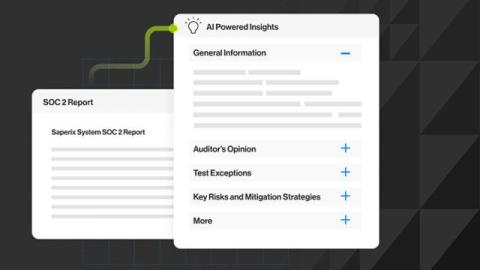
Instant Insights for SOC 2 Reporting: Using AI to Streamline Vendor Assessments

With technology supply chain risks at an all-time high, many governance, risk, and compliance (GRC) teams conduct formal risk assessments as part of their new vendor selection and onboarding processes. Audit-based reporting frameworks like SOC 2 are invaluable to these efforts, as they provide a consistent way to benchmark prospective vendors’ customer data management practices.

Shaping our 2025 Data Engine Priorities: Industry Evolution and Customer Feedback

The effectiveness of external attack surface management (EASM) and third-party risk management (TPRM) capabilities hinges on the depth, breadth, and timeliness of the underlying data they are based on. For this reason, Bitsight makes a significant ongoing investment in: The introduction of Bitsight’s next-generation data engine enabled many improvements to our capabilities across all of these areas throughout 2024.

Ahead of the curve: Proactively managing third-party risks

According to a Gartner report, 60% of organizations will rely on third-party vendors for more than half of their critical business operations by 2025. However, Gartner also warns that third-party risk events – such as data breaches or compliance violations – will increase by 30% in the same timeframe. As a technology leader, these figures resonate deeply with the challenges I see organizations facing daily.

What is the Threat Landscape?

The threat landscape refers to the evolving environment of cyber threats, attack methods, and attack vectors targeting organizations, governments, and individuals. Shaped by threat actors like hackers, nation-states, and criminal groups, it has grown increasingly complex with the rise of cloud computing, IoT devices, and interconnected supply chains. These changes have expanded attack surfaces, offering adversaries more opportunities to exploit vulnerabilities.

The Growing Risk of Insider Threats in Cyber Security

Cyber security threats are increasingly complex, and while external attacks like phishing and malware often take centre stage, insider threats are emerging as a significant concern. Insider threats are risks originating from within an organisation, which pose unique challenges. They exploit an insider’s knowledge of systems, processes, and vulnerabilities, making detection and prevention particularly challenging.

How to Identify, Prevent, and Respond to MFA Phishing Threats

In an era where password breaches have become all too common, Multi-Factor Authentication (MFA) has emerged as a critical layer of security. MFA provides an authentication method that requires users to present multiple forms of identification before gaining access to systems, which is considered a more robust defence against cyber attacks. However, as cyber criminals evolve tactics, MFA is no longer impervious to threats, particularly phishing attacks that exploit vulnerabilities.

New cybersecurity threat-focused reports from ENISA

The latest ENISA reports help inform about threat response and a more effective, risk-based approach to cybersecurity In December 2024, the European Union Agency for Cybersecurity (ENISA) released its first-ever report on the state of cybersecurity in the Union. The report, which was prepared in accordance with Article 18 of the NIS2 Directive, is a comprehensive, evidence-based overview of the cybersecurity ecosystem across EU Member States.
Operation 99: North Korea's Cyber Assault on Software Developers

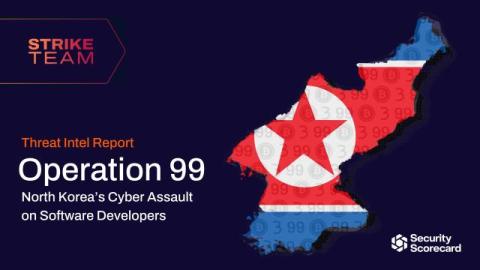
On January 9, the SecurityScorecard STRIKE team uncovered Operation 99, a cyberattack by the Lazarus Group, North Korea’s state-sponsored hacking unit. This campaign targets software developers looking for freelance Web3 and cryptocurrency work. If you thought fake job offers from the group’s Operation Dream Job campaign were bad, this latest move is a masterclass in deception, sophistication, and malicious intent. Here’s why Operation 99 demands your attention.
Mitel MiCollab Vulnerabilities: CVE-2024-35286 and CVE-2024-41713

Mitel’s MiCollab Unified Communications solutions are widely used by businesses to streamline communications. However, two critical vulnerabilities, CVE-2024-35286 and CVE-2024-41713, have been identified across several versions of Mitel MiCollab. CVE-2024-35286 has been identified in versions 9.8.0.33 and earlier and CVE-2024-41713 has been identified in versions 9.8 SP1 FP2 (9.8.1.201) and earlier.

Assembling the Dream Team: Building a High-Performing Supply Chain Incident Response Team

Organizations are increasingly reliant on third-party vendors. While this enables agility and innovation, it also introduces significant security risks. Cyberattacks originating from the supply chain are on the rise, underscoring the critical need for robust security measures. This article explores the key elements of building a high-performing supply chain incident response team to effectively mitigate and respond to these threats.

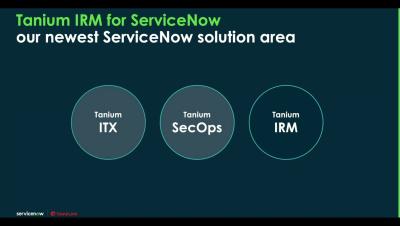
Is Your Organization Prepared for Tomorrow's Risks? Announcing Tanium Integrated Risk Management for ServiceNow

As IT infrastructures grow more complex and cyber threats escalate, CIOs are searching for a powerful new solution for risk and compliance. Tanium Integrated Risk Management (IRM) for ServiceNow addresses these challenges with an integrated platform that transforms visibility, control, and remediation with real-time, unified data for IT, security, and risk teams.

Understanding ROPA: Who, What, Why?

ROPA is primarily utilized by organizations subject to data protection regulations. While it is a legal requirement for businesses of all sizes handling personal data, it is especially critical for large enterprises that process substantial volumes of data or sensitive information. Compliance officers, data protection officers (DPOs), legal teams, and IT departments often rely on ROPA to demonstrate compliance to regulators during audits or investigations.

Securing Your Financial Ecosystem: A Guide to Managed Services for Supply Chain Detection and Response

A single breach can have devastating consequences in the highly regulated financial services industry. From reputational damage and customer loss to severe financial penalties, safeguarding your entire ecosystem is paramount. This blog explores the critical role of Managed Services for Supply Chain Detection and Response (SCDR) in securing your financial services organization.

General Data Protection Regulation (GDPR) Compliance: An Advanced Guide

The General Data Protection Regulation (GDPR) is a pivotal framework that governs data protection and privacy for individuals within the European Union (EU). Its implications are far-reaching, affecting organizations worldwide that handle EU citizens' data. Understanding and achieving GDPR compliance is essential to avoid substantial penalties and to maintain trust with customers.

Opportunities & Risks for Digital-first Leaders in Business-led IT

In the digital era, the ability to adopt and integrate technology quickly has become a key driver of business success. Technology decisions are increasingly being made outside IT organizations as cloud-based tools, SaaS platforms, and low-code/no-code solutions become more accessible. Known as business-led IT, this trend democratizes technology, empowering business leaders to innovate independently.

The HIPAA to HISAA transformation

The healthcare industry stands at the cusp of a major transformation with the introduction of the Healthcare Information Security Accountability Act (HISAA), a progressive regulatory framework set to replace the decades-old Health Insurance Portability and Accountability Act (HIPAA). HISAA is designed to address the evolving complexities of healthcare data management, emphasizing real-time data governance, proactive monitoring, and stricter controls over third-party data exchanges.

The Future of Cybersecurity: Insights and Predictions for 2025

2024 marked a transformative shift in cybersecurity with AI and data driven cyber security leading the change. As the threat landscape evolves, the stage is set for further advancements in continuous risk management, threat monitoring, resilience, and governance in 2025, shaping a more secure and dynamic digital landscape where cybersecurity is becoming a catalyst for business success and compliance.

How to build a cyber risk program that will lock hackers out

Rob Kraczek, One Identity Global Strategist, explores how organizations can avoid becoming part of the 90% of organizations that are victims of cyberattacks by developing a cyber risk program. Most hackers look for the easiest and most effective way to hack your environment. In this video, Kraczek shares why every organization needs robust identity governance and administration (IGA), the core component of a cyber risk program, to prevent cyberattacks. Learn more about Risk in the World of Identity Governance.

Web Application Security for DevOps: Cross-Origin Resource Sharing (CORS) and Subresource Integrity (SRI)

With all of that background from parts 1, 2, and 3 of this series out of the way, let's turn to some practical considerations for real-world web applications. The inherent security restrictions for resources, including cookies and JavaScript, assume that each website contains all of its functionality in one neat, isolated package. But websites often contain content and functionality from multiple websites that trust each other.

Kovrr's Top 9 Cyber Loss Scenarios: A Year In Review

‍ ‍While each organization faces its own unique set of cyber risks that must be carefully assessed and managed in order to reach a state of resilience, certain events are nearly inevitable in today's threat environment, having the potential to create damaging ripple effects across the global market. Early in 2024, Kovrr's cyber risk quantification models identified these potential cyber incidents and loss scenarios most likely to impact organizations worldwide in the upcoming year.

5 ways a Human Risk Management Platform could support SaaS Security Posture Management

Software as a Service (SaaS) applications have become indispensable for organisations in today's digital landscape. From collaboration tools enabling better communication, to SaaS applications that streamline operations, enhance productivity, and support remote work. However, their convenience comes with significant security challenges—many of which stem from human errors, insider threats, and inadequate configuration practices.

Looking Back: What We Learned in 2024

Looking back on 2024 to start the new year, we had the great opportunity to host and be part of several conversations and demonstrations that we hope were valuable learning opportunities for everyone who joined us. Let’s take a moment to review some of the highlights from those 2024 events before we leap into 2025.