Security | Threat Detection | Cyberattacks | DevSecOps | Compliance

Why strategic CISOs need proactive risk reduction, not reactive GRC reporting

Security and GRC teams have no shortage of risk mitigation activities. They are carrying more work than ever, yet many still lack confidence in the data and recommendations produced by all that manual effort. They are also operating in a risk environment that changes faster than their current operating model was designed to support. Unfortunately, the existence of risk activity does not mean actual risk has been reduced.

Empower your team with this comprehensive employee handbook template

Empowering your team starts long before a project kickoff or a performance review. It starts with clarity. A comprehensive employee handbook is one of the simplest ways to give people that clarity, and this template makes it much easier to do well. Companies typically give the handbook to new hires during onboarding so they understand their role, rights, and responsibilities from day one.

Board committee charters: Your governance playbook decoded

A board committee charter is more than governance paperwork; it’s the rulebook that keeps the board’s engine humming when pressure rises and complexity grows. At its best, a charter makes responsibilities visible, removes guesswork, and creates a predictable rhythm for oversight so directors and management spend less time arguing about who should do what and more time solving the right problems.

Zero trust is not a product: The architecture mistake most security teams make

Zero trust is not something you buy off a shelf. It is an architectural and cultural shift in how your organization thinks about access, risk, and trust across every layer of your environment. Most zero trust approaches are anchored on three core principles: verify explicitly, use least privilege access, and assume a breach. Verifying explicitly means using strong, context-aware authentication (like MFA, device posture checks, and risk signals) for every connection.

Agentic AI in security operations: Friend, risk, or both

Agentic AI is forcing a hard question on every security leader: when your SOC is full of autonomous “doers” instead of just dashboards and scripts, is that your new best friend or a brand‑new risk surface you barely understand? The honest answer is both, and the way you design, govern, and deploy these systems will decide which side wins.

Empowering data classification policy template guide

A data classification policy template gives you a repeatable way to define how your organization labels and protects data, so teams always know what’s sensitive, what’s not, and how to handle each type. Using a guided template (plus this article) removes the guesswork and lets you create a usable, audit‑ready policy much faster, similar to how your risk register guide simplifies risk management.

The $700 million question: How cyber risk became a market cap problem

Cyber risk used to be the kind of problem you could delegate. Something for the CISO, the IT team, and maybe an external auditor to worry about once a year. That comfort zone is gone. In the last decade, a new reality has set in: a single cyber incident can erase hundreds of millions of dollars in market value in a matter of days, derail strategic plans, and permanently rewrite how investors see a company.

Data privacy in 2026: What to expect

When exploring the regulatory environment, data privacy continues to be a critical area of focus for organizations worldwide. With rapid advancements in artificial intelligence, the proliferation of connected devices, and the increasing sophistication of cyber threats, safeguarding personal information has never been more critical. Governments worldwide are responding with stringent regulations, while consumers are becoming more discerning about how their data is collected and used.

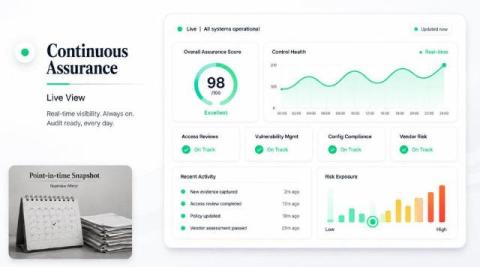
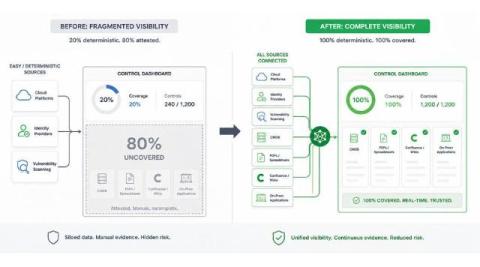
Point-in-time GRC is obsolete. What's replacing it? It isn't AI alone

The last generation of Governance, Risk and Compliance (GRC) software built a multi-billion dollar ecosystem by becoming systems of record for risk. ServiceNow became the system of IT workflows. Archer for audits. Diligent for policy management. Own the control framework, own the workflow, own the audit trail. It worked: for a world where risk moved slowly enough to be captured annually. That world is gone. Point in time attestations are obsolete. The Apple Watch didn’t replace the annual checkup.

Access control policy template that unlocks effortless compliance and security

Access control often feels like the invisible shield keeping your company’s data safe until it’s not there, and suddenly you’re scrambling over a breach or an audit surprise. I’ve seen teams waste hours untangling who had access to what, especially when growing fast or juggling contractors.