Security | Threat Detection | Cyberattacks | DevSecOps | Compliance

Top 5 SaaS misconfigurations to avoid and why

Cloud storage services and SaaS apps like Google Drive and Microsoft OneDrive provide convenient, scalable solutions for managing documents, photos, and more—making them indispensable for modern work and personal life. However, misconfigured settings and permissions can lead to serious security breaches, noncompliance, and even the loss of customer trust. Let’s explore the 5 most common misconfiguration issues with real-world examples.
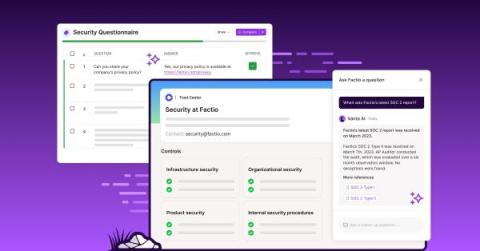
Vanta Trust Center, now enhanced with Questionnaire Automation and Vanta AI

As the number and severity of third-party breaches continues to rise, companies are scrutinizing more closely not just how they handle data, but how their vendors do as well. For security leaders, this means more security reviews are coming across their desk everyday. ‍ Limited resources and legacy processes make it hard for security teams to keep up with the pace of business.

17 Ways To Prevent Insider Threats: Steps, Tips & Tools

When you think of cybersecurity, your mind likely goes to external threat actors — malware, ransomware, spearphishing attacks, and other malicious activity. However, it’s crucial to note that 60% of data breaches are caused by insider threats, and a staggering 74% of organizations are at least moderately vulnerable to them. It’s not everybody else your organization needs to worry about; it’s your own people.

3 observability best practices for improved security in cloud-native applications

Observability, especially in the context of cloud-native applications, is important for several reasons. First and foremost is security. By design, cloud-native applications rely on multiple, dynamic, distributed, and highly ephemeral components or microservices, with each microservice operating and scaling independently to deliver the application functionality.

The Evolving Landscape of LLM Security Threats: Staying Ahead of the Curve

The rapid advancements in large language models (LLMs) have revolutionized how we interact with technology, powering various applications for different use cases. As the adoption of LLM-powered solutions continues to grow, so does the emergence of new and evolving security threats that aim to exploit these robust AI systems.

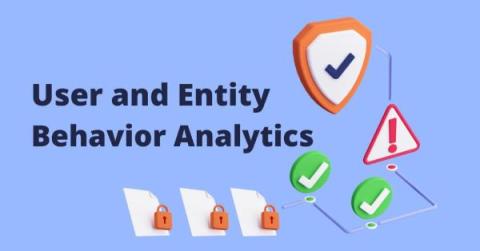
The 2024 Guide to User & Entity Behavior Analytics (UEBA)

User and Entity Behavior Analytics (UEBA) is a long-term that essentially refers to a security process that utilizes analytics to identify abnormal network behavior. UEBA takes a proactive approach by scanning the actions of users and entities within a network. It doesn’t just react to threats but also establishes a baseline from which it learns to be more precise and timely, empowering you to stay ahead of potential security breaches!

Security Best Practices in the Web Development Life Cycle

From the backend developer's perspective, we have learned that addressing security at every phase of the web development life cycle can significantly mitigate risks and protect both data and infrastructure. Here follows a detailed walkthrough of security best practices across the stages of web development, from planning to deployment and maintenance. It is important to work with cybersecurity-minded web developers who take security seriously throughout the web development life cycle.