Security | Threat Detection | Cyberattacks | DevSecOps | Compliance

Securing private applications with CrowdStrike Zero Trust Assessment and AWS Verified Access

AWS Verified Access (AVA), a feature of Amazon Virtual Private Cloud (VPC) networking, delivers secure, zero-trust access to private applications without a VPN by continuously evaluating each request in real time based on contextual security signals like identity, device security status and location. The service grants access based on the security policy configured for each application and then connects the users, thereby improving the security posture of the organization.
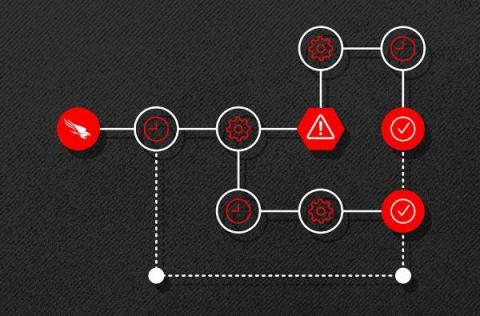

New CrowdStrike Falcon Fusion Features Refine Workflow Automation for CrowdStrike Customers

CrowdStrike Falcon® Fusion is a cloud-scale, extensible security orchestration, automation and response (SOAR) framework that’s natively integrated with the CrowdStrike Falcon® platform and available to CrowdStrike customers at no added cost.

How to Improve Your SOC's Cyber Vulnerability Awareness

The cybersecurity threat landscape is rapidly evolving as cloud computing, the Internet of Things (IoT), mobile devices, and remote work become more widely adopted. As a result, Security Operations Center (SOC) teams are increasingly overwhelmed. In addition to responding to cyber threats, teams must continuously identify emerging vulnerabilities and move quickly to apply and test patches and updates. A failure to do so significantly increases cyber risk. Consider the statistics.

Top Ten Tips to Lower Your Cyber Insurance Costs

As cyber-attacks become more sophisticated and frequent, businesses are turning to cyber insurance policies as a means of protection. Increasingly, CISO’s and Board of Directors are eager to take advantage of “risk transference” as part of a holistic cyber risk management strategy. However, the cost of such policies can often be a significant concern for organizations.

BitSight & RSA 2023: How Security Leaders Are Preparing for the "New Era" of Cybersecurity Disclosure

In response to the growing number of cyber incidents, policymakers and regulators around the world are creating new cybersecurity requirements for companies to comply with, including mandates to disclose cyber risks and incidents. For example, new cyber risk disclosure requirements from the U.S. Securities and Exchange Commission (SEC) are anticipated to be adopted in 2023 and would have a major impact on corporate cybersecurity initiatives.

Preventing insecure deserialization in Node.js

Serialization is the process of converting a JavaScript object into a stream of sequential bytes to send over a network or save to a database. Serialization changes the original data format while preserving its state and properties, so we can recreate it as needed. With serialization, we can write complex data to files, databases, and inter-process memory — and send that complex data between components and over networks.

The Benefits of Customized Regtech Solutions for SIs and their Clients

As a service provider for obligated organizations, it is essential to understand the factors driving the need for collaboration with regtech providers. It’s not just about adopting new technology; the real potential lies in effectively addressing anti-money laundering (AML) threats and streamlining regulatory compliance. Regulators consider regtech to be critical to modernizing the financial sector and ensuring clarity in supervisory expectations.

Top Identity Verification challenges faced by regulated industries and How to overcome them

Identity verification has become an essential aspect of various industries in today’s world. With the advent of technology and the growth of the digital economy, it has become increasingly important for businesses to verify the identities of their customers, clients, and partners. However, regulated industries such as finance, healthcare, and gambling face unique identity verification challenges due to the sensitive nature of their services and the regulatory requirements they must comply with.

Cybersecurity in the Energy Sector: Risks and Mitigation Strategies

The demand for cybersecurity in the energy sector is often understated. There is a misconception that very little IT is involved, and much of it does not impact operations. But 97% of surveyed ICS security professionals in the energy, oil, and gas sector believe cybersecurity is a growing concern. No industry has been untouched by digital transformation.