As the season shifts, we at CloudCasa are excited to share a fresh batch of updates with you. This autumn, we’re rolling out new features designed to bring more power and flexibility to your data protection strategy. From the convenience of our new Self-Hosted option to the seamless integration with Velero, our latest offerings are tailored to support enterprises in strengthening their data resilience.
As autumn leaves start to fall, bringing a crispness to the air, it’s time for another exciting update from CloudCasa. We’re thrilled to unveil a range of features that are sure to enhance your CloudCasa experience!
In the realm of government institutions in Brazil, regional electoral courts hold a pivotal role in ensuring the integrity of the electoral process. These institutions are mandated to safeguard their essential electoral data through off-site backup solutions. While Kubernetes’ efficiency and flexibility hold great promise for modernizing operations, government data protection challenges have deterred many regional electoral courts from embracing this technology.
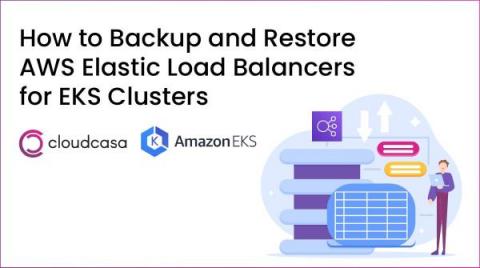
Load balancers are an integral component of any production environment. They allow the distribution of traffic across multiple available backend servers so that no single server becomes overwhelmed due to traffic. A load balancer can be configured for workloads running on AWS through the Elastic Load Balancer (ELB) service. At a high level, an ELB consists of 3 main components: AWS offers 3 different types of Elastic Load Balancers.
Velero is the most popular tool for backing up and restoring Kubernetes cluster resources and persistent volumes. However, there may be situations where you need to restore Velero backup data without using Velero itself. For example, if Velero is not installed and configured correctly, or if more fine-grained restore control is required. In this post, we will explore how to do this when either Restic or Kopia was used by Velero to store the persistent volume (PV) data.
It’s been about three months since the last CloudCasa feature release in April, and we are now approaching the Dog Days of summer. These, as you may know, are named for the heliacal rising of Sirius, the Dog Star, in this sultry season, though the term more often conjures images of dogs lazing in the hot summer sun. We have been doing no summer lazing here at CloudCasa, though! Since our April release, we have focused much of our development effort on performance and reliability improvements.
Velero is an open-source backup and recovery tool designed specifically for Kubernetes clusters. It provides a straightforward way to protect your Kubernetes resources, including persistent volumes, namespaces, and custom resources, by taking backups and restoring them in case of data loss or disaster recovery scenarios. In this blog you will learn the different use cases for Velero and the two ways to install Velero, using the Velero CLI and using a Helm chart.
Open source Velero is a popular choice amongst Kubernetes community for backup of their application. Along with scheduling regular backups for your Kubernetes clusters, monitoring Velero and getting automated alerts for failed Velero backups is also important. When your most important backup fails, you want to know about it immediately and make sure your application notifies you.
In the cloud native world, open source solutions are popular and widely used. Velero, an open source software, is quickly becoming a standard for Kubernetes backup and has been pulled over 100M times from Docker Hub! It is the most popular choice amongst Kubernetes community for backup and recovery. In a recent episode of TFiR, Swapnil Bhartiya sits down with Sathya Sankaran, Chief Operating Officer at CloudCasa by Catalogic, to talk about the power and potential of open source ecosystem.