Security | Threat Detection | Cyberattacks | DevSecOps | Compliance

CIS Hardening and Configuration Security Guide

The Center for Internet Security (CIS) published an updated version for the CIS Controls- CIS Controls v8. The CIS Controls are a set of gold standard guidelines for organizations facing data security issues. These controls were developed to simplify and help IT ops and security teams to remain focused on the essentials. The CIS updates its recommendation according to changes and new discoveries in the Information Security field. The 8th version of the CIS Controls was published in May 2021.

Open Source CyberSecurity Tools for Hardening

Open-source cybersecurity tools offer a prime solution for independent security experts, emerging businesses, and even medium to large enterprises aiming to tailor their security framework. These tools serve as a foundational platform for fostering security advancements, integrating proprietary software code and security automation scripts.

RCE vulnerability CVE-2023-36884

A phishing campaign carried out by the threat actor known as Storm-0978 has been detected by Microsoft. The campaign specifically targeted defense and government entities in Europe and North America. It exploited the CVE-2023-36884 vulnerability through Word documents, enabling a remote code execution vulnerability. Notably, the attackers used lures associated with the Ukrainian World Congress before the vulnerability was disclosed to Microsoft.

WormGPT: Cybercriminals' Latest AI Tool

The rapid and widespread adoption of artificial intelligence (AI) has ushered in a new era of technological advancement, revolutionizing various industries and becoming immensely popular worldwide. AI-driven applications and solutions have streamlined processes, improved efficiency, and enhanced the overall user experience. However, this surge in AI’s popularity also comes with a dark side.

IIS 10 CIS Benchmark Audit Procedure using PowerShell

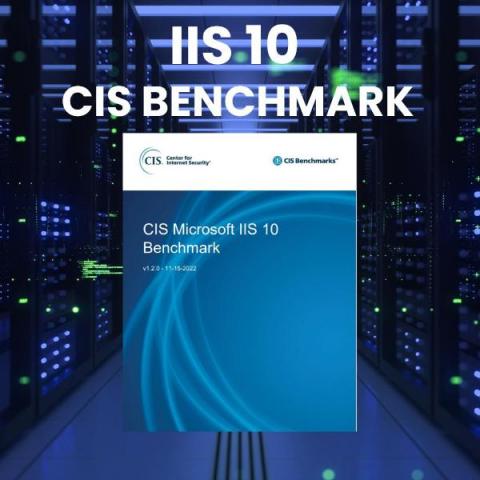
CIS IIS 10 Benchmark provides prescriptive guidance for establishing a secure configuration posture for Microsoft Internet Information Services (IIS) version 10. The benchmark provides guidance for establishing a secure configuration posture for IIS version 10. The benchmark is divided into two levels of security controls: Level 1 and Level 2. Level 1 provides a set of fundamental security measures that can be implemented with little or no impact on service availability.

IIS hardening: 6 configurations changes to harden IIS 10 web server

IIS server, Microsoft’s Windows web server is one of the most used web server platforms on the internet. IIS 10 hardening according to the IIS CIS benchmarks is essential for preventing cyber-attacks and achieving CIS compliance. Common breaches happen by using IIS unsecured server protocols and configurations, such as SMB and TLS/SSL. The IIS default configurations is not recommended to use and should be changed to meet the IIS CIS benchmarks requirements.

NIST Compliance for Enhanced Security

In today’s ever-evolving digital landscape, organizations operating in regulated industries face the challenge of meeting stringent regulatory requirements to ensure the security and privacy of their systems and data. NIST compliance, guided by key NIST publications, plays a vital role in helping organizations navigate these complex regulatory landscapes effectively.

NTLM v1 and v2 vs Kerberos

NTLM V1 and V2, and Kerberos are three authentication protocols. These protocols aim to enhance security, especially in the Active Directory environment. Authentication protocols are popular attack vectors. They can help attackers gain access and elevate privileges. It is important to choose the relevant and most secured protocol for your environments and configure it properly. The most veteran protocol among the three is NTLMv1.

RDP: Do Not Allow COM Port Redirection- The Policy Expert

Do not allow COM port redirection in RDP is the name of a security setting stated in Windows servers CIS benchmarks/STIGs. A COM port is an I/O interface that enables the connection of a serial device to a computer. In some cases COM ports are called “serial ports”. Most computers are not equipped with COM ports anymore but there are many serial port devices still used in computer networks.

NIST Cybersecurity Framework 2.0 (NIST CSF 2.0)

In 2014 and with extensive community involvement NIST Cybersecurity Framework was created for private sector organizations in the United States. It is also aligned with other NIST standards and guidelines, such as NIST 800-53 and FedRAMP. NIST Cybersecurity Framework (CSF or Framework) is intended to be a living document that is refined and improved over time and was updated in 2018 and called CSF 1.1. We will be discussing NIST CSF 2.0.