According to the Gallup State of the Global Workplace: 2023 Report, worker stress is at an all-time high. While other issues related to the pandemic have subsided, stress is causing trouble for organizations, especially those with remote workers, where it is harder to spot issues. Where there is stress, there is risk. Employees make more mistakes and are more likely to intentionally create other problems for employers.
March 2023 marks approximately three years since the world shut down at the beginning of the Covid-19 pandemic. Since then, organizations have seen their workforce change considerably. What was originally a short term plan to work from home has become ingrained in our new work culture. According to a recent LinkedIn poll, at-home work is ticking back up. Only 50% of workers are in the office full-time, the rest work from home full-time or have a hybrid schedule.
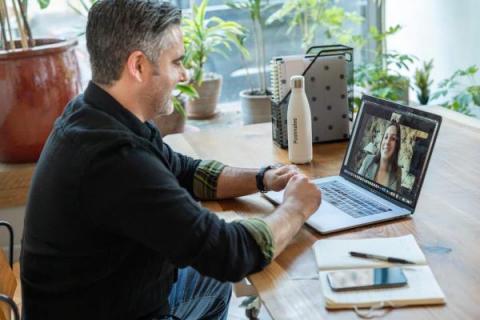
Many companies are concerned by the uptick in insider risk that’s come with the work-from-home boom. By one estimate, 58% of office workers work from home at least one day a week. This trend creates blind spots for companies. Managers see their employees less often, people work off network and on personal devices, and they keep schedules that don’t adhere to the previous more predictable hours.
Elizabeth Harz, CEO of Veriato, gave an interview to ISMG at this year’s RSA Conference in San Francisco. In it, Elizabeth covers the challenges of maintaining data security in the remote or hybrid workforce environment and the rising cost of data breaches. She also discusses some of the tools and solutions and can help businesses better manage their cybersecurity challenges.
Also known as “bossware” and even “employee surveillance”, employee monitoring has been placed in the bucket of technologies that companies force on their employees. Whatever you call it, its use is on the rise and it looks like it’s here to stay. As of 2022, 60% of companies use some kind of software to monitor employees. General productivity isn’t the only justification for implementing employee monitoring.
Recently, there has been considerable coverage of “bossware” and a focus on draconian types of “surveillance” some companies are using to stay on top of remote and flexible workforces. Articles claim companies are accessing the camera on laptops and tracking every movement so that employees can’t even go to the bathroom. In 1992, the New York Times ran a long article about Caller ID and how the new technology was an invasion of privacy.
Early in the pandemic, searches related to “how to monitor employees working from home” increased by 1,705%. Without the oversight of managers in an office setting, many companies are concerned that their employees are less productive, and that there is an increase risk to the company. This is a major reason why the use of employee monitoring technology has soared in the past year.
Perhaps someone doesn’t answer a Slack message as quickly as they should, or they have long hours blocked on their calendar. Maybe someone doesn’t seem motivated during team meetings or they are slow to complete work. While research has shown that overall, productivity has actually increased as a result of the work-from-home movement, managers know all too well what it’s like to be suspicious that someone is taking advantage of their new work arrangement.
In September 2021, 45% of full-time employees were still working remotely, and the trend is hard to reverse. People like the freedom of working from home. Without a commute, they save time. Without a boss looming in the background, they can multi-task at home. And, without an office full of colleagues, they don’t have to worry about dressing up or having water cooler chit-chat. While employees see these changes as positives, businesses see remote workers as a bit of a risk.