Security | Threat Detection | Cyberattacks | DevSecOps | Compliance

The Case of False Positives and Negatives in AI Privacy Tools [How to Reduce IT]

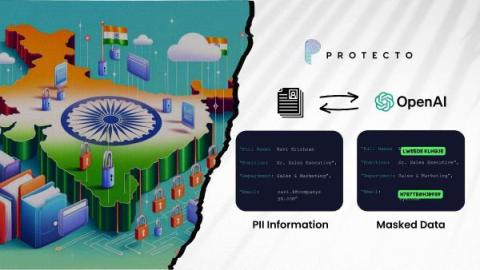
GenAI has revolutionized the way businesses interact with data. Thanks to easy accessibility and automation capabilities, it is increasingly becoming a part of more business workflows. If something sounds too good to be true, there’s usually a catch. GenAI works by continuously processing and improving on the data fed into it – often sensitive data, making privacy a tradeoff. Tools like Gemini, Claude, and ChatGPT are becoming the most common shadow IT tools.

Enterprises Are Hesitant to Share Data with LLMs. Here's Why.

Large language models like OpenAI’s GPT, Anthropic’s Claude, and Google’s Gemini have changed the way businesses process and transmit sensitive data. LLMs boosted productivity and enhanced customer experience like never before, triggering unprecedented adoption across enterprises. Amidst all the rush and excitement, the negative impacts were overlooked and swept under the carpet – till it became a privacy and compliance issue.

Securing AI Data with Protecto Privacy Vault

AI applications are becoming a primary target for cyber threats due to their reliance on vast amounts of sensitive data. Traditional security measures often fall short in protecting AI-driven environments. A privacy vault is essential for securing AI data, ensuring that sensitive information is protected while enabling innovation. AI models depend on vast datasets for training and operation, but this dependency introduces critical security risks.

Best Practices for Managing Patient Data Privacy and Security

Patient data privacy is of utmost importance in today’s healthcare environment. Security is equally critical, forming the foundation of trust between patients and providers. Healthcare organizations handle incredibly sensitive information, including medical histories, diagnoses, and treatment plans. Mishandling this data carries significant risks far beyond just financial implications. These threats come in the form of significant monetary fines under some regulations.

Should You Trust LLMs with Sensitive Data? Exploring the security risks of GenAI

As more businesses integrate AI into their workflows, it opens the door to unprecedented security and privacy risks. Amidst LLM’s immense power and unmatched capabilities, concerns around security and privacy often take a backseat. While some businesses deliberately ignore privacy concerns, the most common cause of this lack of concern is a gap in understanding the nature of the risks.

How Protecto's Privacy-First Approach Revolutionizes the Modern AI Data Stack

In an era where artificial intelligence (AI) is redefining industries, data privacy remains a critical challenge for enterprises. With organizations handling vast amounts of sensitive information, ensuring privacy and compliance while maintaining AI accuracy is paramount. Protecto is a new standard for securing modern AI data stack, enabling enterprises to leverage AI without compromising on data security, regulatory compliance, or operational performance.

Data Privacy in Healthcare: An Introduction to Protecting Patient Data

Healthcare organizations routinely handle large amounts of sensitive data, making data privacy in healthcare a top priority. Protecting patient data is not just about compliance—it’s crucial for maintaining patient confidentiality and safety. Unauthorized access can be severely detrimental, leading to breaches that compromise medical records and erode trust. Over the years, the digital revolution in healthcare has greatly elevated patient care standards.

The 2025 Playbook for Securing Sensitive Data in LLM Applications

Organizations worldwide are racing to deploy large language models for competitive advantage. Yet most executives remain unaware of the hidden security risks lurking within their AI systems. A single misconfigured LLM can expose customer data, violate regulations, and destroy years of trust-building efforts. Securing sensitive data in LLM applications requires more than traditional cybersecurity approaches. These AI systems present unique vulnerabilities that demand specialized protection strategies.