

|
By Daniele Polencic
Kubernetes audit logs may show multiple engineers as one user and do not capture what is typed after a kubectl exec session starts. Assign each engineer a unique identity, make sure it stays consistent through proxies and cloud IAM, and use a session recorder if you need to review terminal activity.
|
By Justin O'Leary
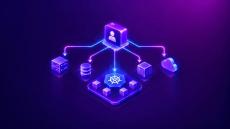
Overprivileged Kubernetes ServiceAccounts persist when broad RBAC, cloud IAM permissions, and long-lived credentials outlive their intended use. Reduce overprivileged access with least privileged RBAC, scoped cloud permissions, and short-lived certificates that eliminate static credentials. I spent two days last quarter tracking down why a developer could delete production secrets. The RBAC looked fine. The ClusterRoleBinding said edit, not cluster-admin.

|
By Daniele Polencic
TL;DR: If your development, staging, and production API servers all trust the same OIDC issuer and audience, Kubernetes will accept the same cached kubectl token across all of them. You should use separate audiences in your API.

|
By Daniele Polencic
TL;DR: A production kubeconfig that contains a certificate or token is a production credential, and every copy then accesses the cluster with the same identity. You should use individual single sign-on (SSO) logins and short-lived credentials for your clusters.
|
By Eric Dixon
Most conversations about PCI DSS 4.0 start with the requirements, but I’d rather start with a habit. As a GRC & Cybersecurity Consultant advising organizations preparing for PCI DSS 4.0 assessments, I’ve developed a habit of observing how findings move from identification to ownership, remediation, and documented closure. That’s often where accountability gaps and unresolved findings surface first.
|
By Mayur Pipaliya
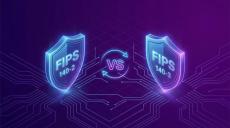
FIPS 140-3 is the current standard for validating cryptographic modules, which are the specific hardware or software components that implement encryption and manage keys inside a defined boundary. FIPS 140-3 was approved on March 22, 2019, became effective on September 22, 2019, and supersedes FIPS 140-2, which dates back to 2001. Most FIPS 140-3 security requirements come from ISO/IEC 19790:2012, with test requirements drawn from ISO/IEC 24759:2025.

|
By Preet Dhatt
ISO 42001 is the management system standard for artificial intelligence. It sits on the backbone of ISO 27001 but with a different focus: do you have a system for governing AI, and can you prove that system runs, with evidence? Core to the standard is an Artificial Intelligence Management System (AIMS), a structured set of policies, processes, and controls an organization uses to govern AI.

Featured Post
Every era of computing eventually exposes the assumptions that made the last era work. For decades, networking succeeded because it was mostly identity agnostic. Packets moved because they had addresses. Routers and switches forwarded traffic because the network knew where something was going, not necessarily who or what was behind it. That model helped build the internet and modern enterprises. But it is not enough for the era we are entering now.
Cisco and Teleport are announcing a strategic partnership centered on deep technology integration, licensing, and investment. As the largest strategic investor, Cisco is reinforcing its commitment to accelerating the next phase of Teleport's evolution.

|
By Rob Picard
Blame for all flaws belongs to the flawed human author. Historically, the bottleneck for finding security bugs in software was human bandwidth. As pointed out in this great post by Tom Ptacek, it appears that large language models are exceptionally good at finding them with simple prompting. This adds substantial bandwidth to the effort of finding bugs.

|
By Teleport
Teams of three to four, detective aliases, a magician, and a flag hidden on a Manhattan billboard. This is our second Identity Security Game Day, a tabletop CTF where Teleport engineers and customers team up to simulate the incidents that don’t happen often, but matter when they do. Game days put customers and Teleporters at the same table. You find out how people actually deploy Teleport versus how you expected, spot better ways of doing things together, and build the personal connections remote work rarely gives you.

|
By Teleport
Who has the edge in AI security when attackers and defenders have the same models? In this red team vs. blue team panel, Teleport's Ben Arent (Director of Product) talks with Rob (Director of Security, Teleport) and Marcus (founder, maker of Nemesis) about how AI is reshaping infrastructure security: frontier models like Mythos, the Hugging Face incident, prompt injection and the "lethal trifecta," alert fatigue in the SOC, and Teleport's "Pressure Washing" project, where 13 engineers spent a quarter hunting vulnerabilities with LLMs and found more high-severity bugs than in 2024 and 2025 combined.
|
By Teleport
Watch five AI agents tackle a CTF and start coordinating with one another. Learn how to detect risky agent behavior using @goteleport graphs, risk scoring, and custom classifiers. Ben Arent explores lessons from the Hugging Face incident, then demonstrates how agent identity, scoped access, and activity monitoring help secure AI agents running against infrastructure.

|
By Teleport
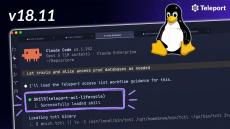
70% of organizations give AI more access than a human in the same role would get. Not surprising when it is common for a team to click “always” when an agent asks to be allowed once or always allowed. That means the agent holds that access in perpetuity and turns into agent over-provisioning. Makes you wonder: Does an agent have more access to your organization's stack than it should and more access than the people who deploy them?

|
By Teleport
We asked eight security and product leaders who's accountable when an agent ships to production and breaks something. Nobody said the model. Harish Gaggar named the reason. An agent runs on permissions someone approved and configuration someone set. Ron Reiter drew the line in the same place, accountability sits with whoever decided what the agent could actually do. As agents act across more systems, the accountability trail gets harder to follow. Most teams cannot determine which human granted an agent access.

|
By Teleport
What part of your profession do you hope AI takes over? What should it never touch? Security practitioners and technology leaders landed in the same place: hand off the tedious work, and keep human judgment on anything that affects blast radius. That's the skills reckoning. As AI absorbs the repetitive work, the expertise that decides what an agent is allowed to reach becomes more valuable.

|
By Teleport
The next big breach won't be a hacker. It'll be an over-permissioned agent. Someone approved an agent action at some point, for a reason that made sense at the time. But access persisted long after a task was performed. Stale permissions without human intervention could turn into exposure. Listen to perspectives from people who see this problem from different roles.

|
By Teleport
This started as an employee contest at our all-hands and turned into one of the best things we've ever made. Meet the Teleportopia house band and yes, you might recognize some likenesses to real Teleporters. Don't make AI a silo. Give it an identity.
|
By Teleport
Pi is a minimal coding agent that lets you choose the features Claude Code and Codex bake in for you. Nothing is forced, nothing is hidden, and you decide what your harness does. However, Pi runs with no safety rails by design, so the environment has to be the boundary. In this video, we'll take a look at Pi, what it is, its features, how to get your own customized setup running, and why it works so well with isolated agentic environments like Beams.

|
By Teleport
While SSH has always been a popular attack vector, the increased adoption of elastic, cloud infrastructure and dynamic, micro-service architecture using containerized application services (aka, "cloud-native" applications), has resulted in the additional complexity of having application services that can migrate across dynamic server infrastructure. This makes managing access to applications and their infrastructure through SSH more complicated and more prone to security threats.
|
By Teleport
With their rapidly changing architecture and API-driven automation, cloud platforms come with unique security challenges and opportunities. This hands-on book guides you through security best practices for multivendor cloud environments, whether your company plans to move legacy on-premises projects to the cloud or build a new infrastructure from the ground up.
|
By Teleport
In this paper, we will provide a brief description of what SSM Session Manager is and how it compares to Gravitational's Teleport privileged access management solution. We'll compare the significant design and feature differences and the operational overhead of the solutions. Because Session Manager is limited to AWS, we'll limit the scope of the discussion to that cloud provider. Finally, we have provided a feature matrix of the two solutions.
|
By Teleport
The goal of the paper is to identify key challenges and the most promising opportunities for small to medium sized server hosting providers in an era of rapid commoditization driven by AWS.
|
By Teleport
HIPAA, the Health Insurance Portability and Accountability Act, sets the standard for protecting sensitive patient data. Any company that deals with protected health information (PHI) must ensure that all the required physical, network, and process security measures are in place and followed.
- October 2026 (5)
- September 2026 (9)
- August 2026 (10)
- July 2026 (13)
- June 2026 (8)
- May 2026 (11)
- April 2026 (15)
- March 2026 (20)
- February 2026 (7)
- January 2026 (7)
- December 2025 (4)
- November 2025 (4)
- October 2025 (10)
- September 2025 (8)
- August 2025 (5)
- July 2025 (10)
- June 2025 (6)
- May 2025 (5)
- April 2025 (7)
- March 2025 (10)
- February 2025 (9)
- January 2025 (8)
- December 2024 (16)
- November 2024 (6)
- October 2024 (7)
- September 2024 (4)
- August 2024 (1)
- July 2024 (5)
- June 2024 (5)
- May 2024 (2)
- April 2024 (2)
- March 2024 (2)
- February 2024 (13)
- January 2024 (1)
- December 2023 (4)
- November 2023 (2)
- October 2023 (1)
- September 2023 (5)
- August 2023 (10)
- July 2023 (3)
- June 2023 (7)
- May 2023 (10)
- April 2023 (3)
- March 2023 (12)
- February 2023 (5)
- January 2023 (2)
- December 2022 (3)
- November 2022 (9)
- October 2022 (6)
- September 2022 (9)
- August 2022 (7)
- July 2022 (16)
- June 2022 (11)
- May 2022 (26)
- April 2022 (24)
- March 2022 (12)
- February 2022 (15)
- January 2022 (21)
- December 2021 (19)
- November 2021 (9)
- October 2021 (12)
- September 2021 (12)
- August 2021 (18)
- July 2021 (6)
- June 2021 (10)
- May 2021 (14)
- April 2021 (11)
- March 2021 (12)
- February 2021 (7)
- January 2021 (7)
- December 2020 (5)
- November 2020 (7)
- October 2020 (4)
- September 2020 (8)
- August 2020 (8)
- July 2020 (9)
- June 2020 (3)
- May 2020 (5)
- April 2020 (6)
- March 2020 (6)
- February 2020 (5)
- January 2020 (4)
- November 2019 (2)
- October 2019 (3)
- September 2019 (4)
- August 2019 (3)
- July 2019 (1)
- June 2019 (1)
- March 2019 (2)
- September 2018 (1)
- July 2018 (2)
Security and Compliance for Cloud Applications and Infrastructure. Cloud-native application delivery with robust Day-2 operations across many clouds, in restricted, regulated and remote environments.
Get compliance and security best practices out-of-the-box and make it easy for engineers to access SSH and Kubernetes environments across many clouds, data centers and edge devices. Deploy and Run Kubernetes applications on your customers' clouds, on the edge, and even in air-gapped server rooms, without overloading your DevOps teams.
Our products are open-source and based on open standards:
- Teleport: Access Kubernetes and Linux infrastructure across clouds, datacenters and IoT devices while enforcing industry best-practices for security and compliance.
- Gravity: Deploy and run cloud-native applications in hundreds of locations where security and compliance matter, on your customers' clouds or on the edge.
- Teleconsole: Teleconsole is a free service to share your terminal session with people you trust. Your friends can join via a command line via SSH or via their browser over HTTPS. Use this to ask for help or to connect to your own devices sitting behind NAT.
Grow your business across many production environments without having to worry about the vendor lock-in.