


|
By cesmng
A SOC can have broad telemetry, a modern SIEM, and a queue that still feels impossible to control. Analysts move between identity, endpoint, cloud, and network dashboards while low-confidence alerts accumulate. The problem usually isn't a lack of data. It's the missing operational layer that turns scattered events into decisions, investigations, and repeatable response. Security event management provides that layer.

|
By cesmng
Periodic vulnerability scans are no longer a reliable security program for hybrid environments. NIST's guidance treats scanning as a recurring, risk-based control that should account for changing vulnerabilities, historical results, authenticated coverage, and correlations between findings over time (NIST vulnerability-scanning guidance). Industry practice is moving in the same direction.

|
By cesmng
A mid-sized SOC can have endpoint telemetry in one platform, cloud logs in another, vulnerability findings in a third, and identity alerts somewhere else entirely. Analysts switch consoles, normalize the same event repeatedly, and still miss the incident that required context from several systems. The problem usually isn't a lack of detection technology. It's the absence of a shared data model, disciplined correlation, and evidence that security and compliance teams can use together.

|
By cesmng
83% of organizations reported moderate or major delays from manual compliance work in 2026, while 53% said one full-time employee's worth of effort is spent on evidence collection, according to the 2026 State of Continuous Compliance Monitoring report. Those figures describe the operational problem more accurately than another promise of an audit-ready dashboard.

|
By cesmng
Enterprises missed 60% of incidents because their existing tools produced no high-confidence alerts, according to Kaspersky's 2025 compromise-assessment findings. An indicator of compromise is useful, but static matching alone won't reliably reveal an attacker who has learned how to blend into normal activity.

|
By cesmng
A SOC analyst starts a shift with a queue full of alerts. The first few investigations reveal repeated authentication failures from the same service account, blocked network scans from a known internal scanner, and endpoint events that three different sensors reported separately. Somewhere in that queue may be a real compromise, but the analyst has to work through the noise before finding it.

|
By cesmng
The most popular advice about living off the land attacks is also the least useful when it stands alone: hunt for suspicious PowerShell, block LOLBins, and alert whenever a signed Microsoft binary behaves unexpectedly. Those controls have value, but they don't solve the operational problem. PowerShell, WMI, certutil.exe, and bitsadmin.exe are legitimate administrative utilities, and attackers abuse them precisely because security teams can't remove them without disrupting normal work.

|
By cesmng
A critical alert enters the SOC queue during the overnight shift. By morning, the dashboard shows an acceptable headline MTTR because the incident was closed quickly after an analyst finally picked it up. The timeline tells a different story: the alert sat unassigned for nine hours because severity routing sent it to the wrong queue. The team optimized the visible number while leaving the dangerous delay untouched.

|
By cesmng
A security operations center is a centralized function that continuously monitors, detects, investigates, and responds to cyber threats across an organization's environment. The global SOC market was valued at USD 42.85 billion in 2024 in one estimate and is projected to reach USD 91.88 billion by 2034, while another estimate places it at USD 52.3 billion in 2025 with a projection of USD 130.2 billion by 2034 (market estimate).

|
By cesmng
SIEM is a platform that centralizes logs from across an environment, normalizes them, and correlates them in real time to surface threats and satisfy compliance audits. Gartner's 2024 reprint records SIEM market growth from $5.03 billion in 2022 to $5.7 billion in 2023, a 13% annual growth rate (Gartner's SIEM definition). You're likely dealing with the problem SIEM was built to solve.

|
By UTMStack
In this video, I walk you through the essentials of UTMStack compliance automation, specifically focusing on CMMC compliance. I explain how to navigate the compliance menu and ensure the correct framework is selected. I also highlight the automatic evaluation of controls and the options available for exporting reports. Please make sure to review the controls and provide any necessary evidence if the system indicates non-compliance.

|
By UTMStack
In this video, I walk you through the process of managing false positives in the UTMSatck platform. We often encounter numerous false positives when starting with a new SIEM, which can lead to confusion and unnecessary alerts. I demonstrate how to tag these false positives effectively and filter them out to streamline our alert system. Please make sure to implement the tagging rules I discussed to help reduce noise in your SOC team's workflow.

|
By UTMStack
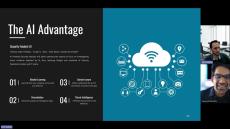
In this video, I walk you through the process of creating custom dashboards and visualizations in UTMStack SIEM. I demonstrate how to build various types of visualizations, such as pie charts and bar charts, to effectively display alert data. I also highlight the importance of adding filters for better data management and how to set up auto-refresh for real-time monitoring. Please make sure to follow along and try creating your own dashboards as we go through the steps together!
|
By UTMStack
Keeping IT Services profitable can be challenging, equipment and software costs increase, margins suffer and customers cancel. The solution resides in the economy of horizontal scale. Imagine what could happen if your existing customers contracted two times more services from your business, would that help? Sell them something every business needs: cybersecurity, launch your own Security Operations Center, and close new profitable deals. Why UTMStack and not something else? The answer is simple: UTMStack is free and Open source and very intuitive, so you can hit the ground up and running in no time.


|
By UTMStack
Overview of UTMStack Free SIEM features and approach the threat detection and response through ML-powered real-time AI detection.

|
By UTMStack
Advanced persistent threats (APTs) and targeted attacks are a growing concern for organizations of all sizes. These types of cyber attacks are characterized by their high level of sophistication and the ability to evade traditional security measures. In order to defend against APTs, organizations need to adopt a multi-layered approach that includes implementing security information and event management (SIEM) systems.
|
By UTMStack
Facts about the dark web and the threat that small businesses face. Learn how Dark web monitoring can protect your business.
- August 2026 (28)
- July 2026 (19)
- June 2026 (26)
- April 2025 (3)
- October 2024 (1)
- November 2023 (1)
- October 2023 (7)
- July 2023 (1)
- June 2023 (3)
- May 2023 (3)
- January 2023 (4)
- June 2022 (1)
- May 2022 (1)
- April 2022 (3)
- March 2022 (3)
- February 2022 (1)
- January 2022 (5)
- July 2021 (1)
- August 2020 (1)
- May 2020 (1)
A Next-Generation SIEM and Compliance Platform that delivers all essential cybersecurity services while being simple and Cost-Effective.
Stack Modules:
- Log Management (SIEM): Security information and event management. Collect, store and correlate log data, and use in compliance reports.
- Vulnerability Management: Active and passive vulnerability scanners for early detection, with of the box reports for compliance audits.
- Access Rights Auditor: Track and manage accounts access and permission changes. Get alerted when suspicious activity happens.
- Incident Response: Remotely manage your environment and respond to attacks right from your dashboard.
- HIPS and NIPS: Host based and Network based Intrusion Detection Systems with prevention capabilities.
- Dark Web Monitoring: We keep searching the Dark Web for compromised users or PII data from your organization.
- Endpoint Protection: Protect endpoints and servers with Advanced Threat Protection.
- Compliance: GPDR, GLBA, HIPAA, SOC and ISO compliance reports and dashboards.
- Endpoint Protection: Keep track of changes and access to classified information.
The Unified Threat Management platform for all cybersecurity needs.