Security | Threat Detection | Cyberattacks | DevSecOps | Compliance

PCI DSS For Small Business

In an era where digital transactions reign supreme, ensuring the security of payment card data is paramount for businesses. This is where the Payment Card Industry Data Security Standard (PCI DSS) comes into play, serving as a crucial framework for safeguarding sensitive information and protecting both businesses and consumers from the ever-present threat of cybercrime. While it is generally associated with large businesses, it is equally important for smaller ones as well.

Preparing for PCI SSF Assessments and Audits Tips and Strategies

Welcome to our latest webinar recording on “Preparing for PCI SSF Assessments and Audits Tips and Strategies”, presented by VISTA InfoSec. This webinar provides an in-depth understanding of the Payment Card Industry Software Security Framework(PCI SSF) assessment and how to conduct audits and address the unique security challenges associated with software development and maintenance in the payment card industry.

PCI DSS Compliance For Banks

In today’s digital era, financial transactions are carried out using cards daily. It is of utmost importance for banks to ensure the safety and security of the cardholders’ data. The Payment Card Industry Data Security Standard (PCI DSS) compliance 4.0 offers essential guidelines and a framework to safeguard cardholders’ data and mitigate any potential data breaches that may occur in banks.

The Impact of PCI DSS 4.0 on Organizational Penetration Testing Strategies

PCI DSS version 4.0 recently took effect on March 31, 2024, and includes no less than 63 new requirements. This is the first update of the information security standard designed to defend against payment and credit card fraud since the release of PCI DSS v3.2 eight years ago.

Credit Card vs Debit Card: Which Is Safer?

Identity theft and card fraud are the main concerns associated with using debit and credit cards. Like any financial instrument, credit and debit cards are susceptible to certain security threats that can compromise cardholders' information and lead to credit card fraud or debit card fraud. Common examples of such financial security threats include card theft, phishing, skimming, malware, card cloning, vishing, weak passwords/PINs, and social engineering.

Deep dive on PCI DSS 4.0 API Security Requirements

The Payment Card Industry Data Security Council created PCI DSS as the global standard for protecting payment data. The PCI DSS is the compliance stick to which entities that transmit, store, handle, or accept credit card data of any size must adhere. Recently, PCI DSS came up with version 4.0. In this blog, we delve deeper into the new version and explain why securing APIs is critical for PCI DSS compliance and how organizations can do so.

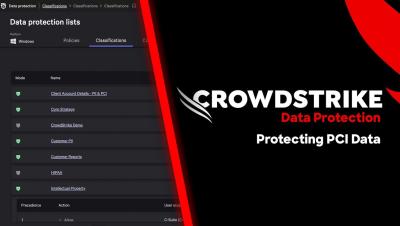
Falcon Data Protection PCI Egress Prevention: Demo Drill Down

Malicious and accidental leakage of sensitive PCI data will result in compliance violations and regulatory fines for organizations. CrowdStrike Falcon® Data Protection, part of the powerful CrowdStrike Falcon® platform, takes a modern approach in stopping unauthorized PCI egresses in real-time. In this demo, see how easy it is to define data classifications and frictionless precedence-based rules that suit your business requirements to effectively stop PCI data loss.

PCI DSS Requirement 12 - Changes from v3.2.1 to v4.0 Explained

Welcome to our latest blog post where we delve into the intricacies of the Payment Card Industry Data Security Standard (PCI DSS) Requirement 12. This requirement, which focuses on maintaining an Information Security Policy, is a cornerstone of the PCI DSS framework. It outlines the need for comprehensive policies and programs that govern and provide direction for the protection of an entity’s information assets.

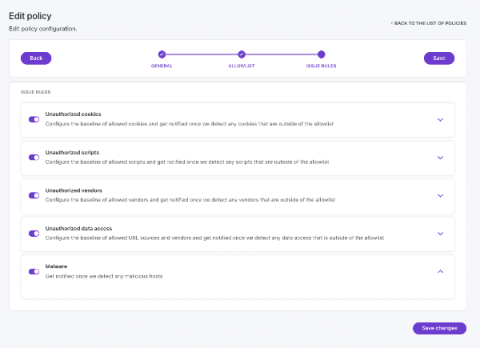
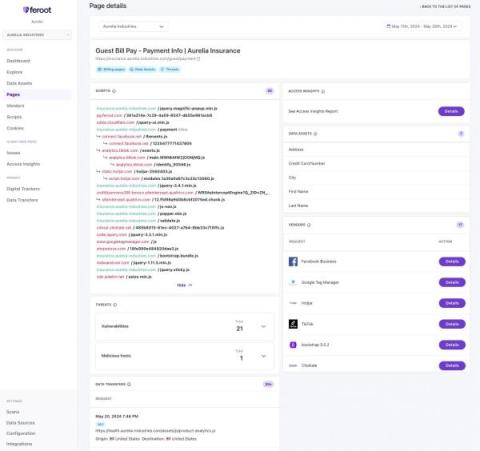
Ensuring PCI DSS 4.0 Compliance with Feroot: A Deep Dive into Requirement 6.4.3

The Payment Card Industry Data Security Standard (PCI DSS) 4.0, issued a comprehensive set of requirements, to safeguard online payment systems against breaches and theft of cardholder data. Requirement 6.4.3 is one of the critical components for businesses that take online payment and focuses on the management and integrity of scripts on webpages that take payment card (i.e.m credit card) payments.

PCI DSS Requirement 11 - Changes from v3.2.1 to v4.0 Explained

In the ever-evolving landscape of cybersecurity, staying updated with the latest standards and protocols is crucial. One such standard that has undergone significant changes is the Payment Card Industry Data Security Standard (PCI DSS) Requirement 11. This requirement, focused on the regular testing of security systems and networks, has seen notable updates in its transition from version 3.2.1 to version 4.0.