
How to Build a More Flexible and Connected AV Setup
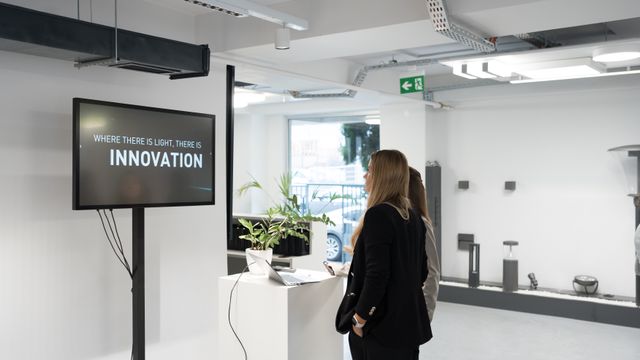
A boardroom gets used for a client demo on Monday, a town hall on Wednesday, and a hybrid interview on Friday. It was built for one of those. It's now handling all three, badly.
That mismatch is what flexible AV design fixes. Not by cramming in more gear, but by rethinking how the room, the network, and the equipment connect to each other in the first place.
Why Fixed AV Setups Are Falling Behind
Most AV systems installed a decade ago assumed one room, one purpose. A conference room stayed a conference room. A lobby display stayed a lobby display.
That assumption doesn't hold anymore. Hybrid work turned single-purpose rooms into multi-purpose ones overnight. A space now needs to handle video calls, in-person presentations, training sessions, and the occasional all-hands, sometimes in the same afternoon.
Fixed installs can't keep up. Hardwired controllers, single-vendor ecosystems, and rooms wired for one specific layout become expensive to change the moment the use case shifts. Flexibility isn't a nice-to-have anymore. It's what determines whether a system still works in two years or gets ripped out.
Start With How the Space Actually Gets Used
Before choosing a single piece of equipment, map out how the room actually functions day to day. Not how it was designed to function. How people actually use it.
Ask a few direct questions:
- How many people use the space on a typical day, and on a busy one?
- Does it need to support video calls, in-person meetings, or both at once?
- Will the layout change (movable furniture, partition walls, different seating configurations)?
- Is this one room, or part of a system that needs to scale across a whole building?
Skip this step and you'll end up designing for the room you imagine instead of the one you have. That's how organizations end up with expensive AV that gets used at 20% of its capability.
Build on Modular, Not Monolithic, Equipment
Traditional AV setups often lock you into one vendor's ecosystem: one brand of display, one proprietary controller, one closed system that only talks to itself. It works fine, until you need to add a room, swap a display, or integrate a new platform, and discover none of it plays well with anything else.
Modular equipment solves this. Displays, mounts, audio components, and control systems that follow open standards can be swapped, added, or reconfigured without tearing out the whole system. A modular approach costs slightly more to plan upfront. It costs far less to maintain and expand over time.
The practical test: if one component fails or gets discontinued, can it be replaced without redesigning the whole room? If the answer is no, the system isn't flexible. It's just complicated.
Why AV-over-IP Is the Backbone of Flexibility
Traditional AV runs on dedicated cabling: one cable per signal, running directly between a specific source and a specific display. It works, but it doesn't scale. Adding a screen means running new cable. Moving a display means rerunning it again.
AV-over-IP changes the model. Instead of dedicated point-to-point cables, audio and video signals travel over the same network infrastructure already running through the building. Any source can reach any display, anywhere on the network, without new cabling for every connection. Adding a screen becomes a configuration change, not a construction project.
This is also where the hardware conversation is shifting. Rather than dedicated, expensive AV-over-IP encoders and decoders for every endpoint, businesses are turning to Android-based AV over IP setups like MAWi Spacewall, which use standard Android devices as network-connected display endpoints. It's a cheaper, more flexible way to run video walls and digital signage across multiple screens or locations, managed from a single browser-based console instead of a rack of proprietary controllers.
Design the Network Like It's Core Infrastructure
Once AV runs over IP, the network stops being someone else's problem. It becomes the AV system.
That means bandwidth planning matters. Video and audio traffic needs dedicated capacity, not leftover bandwidth after everything else on the network gets served. Segmenting AV traffic onto its own VLAN keeps it from competing with regular office traffic and keeps it more secure.
Power matters too. PoE (Power over Ethernet) lets displays and endpoints run off the same cable carrying their signal, cutting down on separate power runs and simplifying installation.
None of this works if AV and IT plan separately. The teams that get flexible AV right treat it as one project with two areas of expertise, not two projects that happen to share a room.
Plan for the Room You'll Have in Two Years, Not Today
The mistake most organizations make is designing for current needs exactly, with no margin. Then a team grows, a layout changes, or a new use case shows up, and the system that was "perfect" a year ago needs a rebuild.
Scalable design leaves room to grow: network capacity beyond what's currently used, mounting systems that accommodate different display sizes, and a control system that can add endpoints without a full reconfiguration. It costs a bit more upfront. It's far cheaper than rebuilding.
Where Professional Integration Still Matters
Modular, IP-based, and flexible doesn't mean DIY. Network configuration, signal routing, and system testing are where flexible AV setups succeed or quietly fail.
A professional integrator brings a few things a self-installed system usually misses: proper testing under real load (not just a quick check), staff training so the system actually gets used correctly, and ongoing support when something needs adjusting six months in. Flexibility built into the hardware only pays off if the system behind it is configured and maintained well.
FAQ
What is AV-over-IP and how is it different from traditional AV?
Traditional AV connects each source to each display with dedicated cabling. AV-over-IP sends audio and video signals over standard network infrastructure instead, so any source can reach any display without running new cable for every connection.
Is a flexible AV setup more expensive upfront?
Usually a bit, yes. Modular equipment and proper network planning cost more than a fixed, single-purpose install. The difference shows up later: adding, moving, or upgrading components costs far less than rebuilding a rigid system from scratch.
Can existing AV equipment be integrated into a flexible, IP-based system?
Often, yes. Many existing displays and audio components can connect through AV-over-IP encoders or decoders rather than being replaced outright. A professional assessment will show what can stay and what needs upgrading.
How long does it take to plan and install a flexible AV setup?
It depends on scope. A single room can take a few weeks from needs assessment to final testing. A multi-room or building-wide system takes longer, mainly because of network planning and coordination between AV and IT teams.