
Securing the Digital Thread in Motor Manufacturing Without Slowing Production
Image Source: depositphotos.com
Modern factories depend on digital instructions long before a machine begins cutting metal. Engineers exchange CAD files, production teams load programs into equipment, quality departments record measurements, and suppliers receive updated drawings. This connected workflow improves coordination, but it also creates new paths through which an error or security incident can disrupt production.
Precision electric motor manufacturing illustrates the challenge. Tooling data, material specifications and machine settings may be commercially sensitive, while an interrupted production line can delay an entire assembly programme. Protecting those assets requires more than securing the office network.
Identify the information that actually matters
An effective security programme begins by mapping the manufacturing workflow. Which systems store approved drawings? Who can change a CNC or stamping program? Where are inspection results kept? Which external partners can access them?
Consider a process such as bonded motor lamination stacks. The approved stack specification, bonding requirements and process instructions must remain consistent across engineering, production and inspection. An unauthorised change could create quality problems even without a dramatic machine outage.
Classifying data by its operational importance helps teams protect the right assets. A publicly available product description is different from a controlled drawing, customer-owned tool design or production recipe.
An asset inventory should distinguish the systems that create information from those that merely display it. The workstation used to release a tool drawing, for example, has a different risk profile from a read-only production monitor. Teams can map the consequences of lost availability, lost confidentiality and lost integrity for each asset. In many precision operations, a silent change to an approved programme may be as disruptive as a visible outage because the defect can travel into assembled products before anyone notices it.
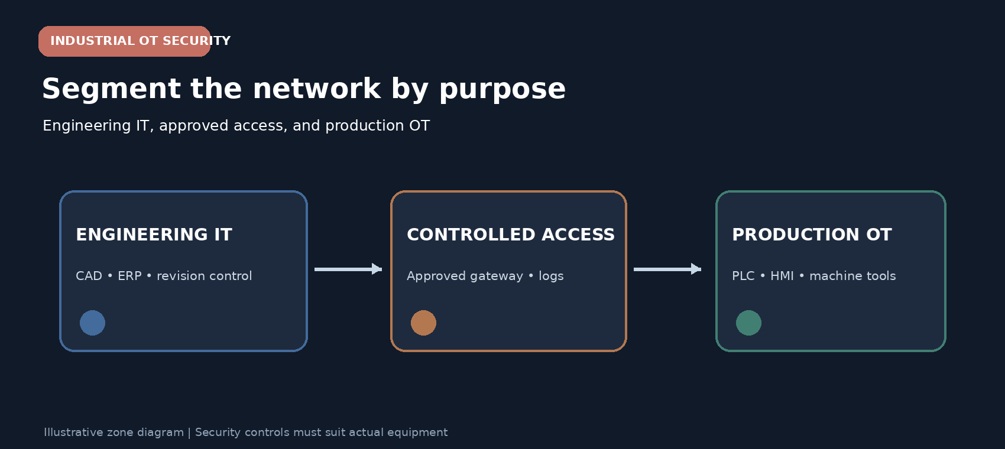
Figure 1. Separate engineering IT from production OT.
Separate production equipment from routine office traffic
Operational technology, or OT, often includes equipment with long service lives and limited tolerance for unplanned software changes. Connecting these systems directly to ordinary office networks can increase exposure to threats that were never considered when the machines were installed.
Network segmentation can reduce the number of paths between business systems and production equipment. Access to machine controllers should be limited to approved users and required services. Where practical, data can be transferred through controlled gateways rather than unrestricted shared folders.
Segmentation is not a substitute for asset inventory. Teams first need to know which controllers, engineering workstations and support laptops are actually connected.
Before introducing network changes, engineering and maintenance staff should document which connections are genuinely required for production, vendor support and data collection. Legacy controllers may depend on specialised software or communication methods, so security controls need to be tested against operational constraints. Where a machine cannot support modern protections directly, compensating measures such as restricted network paths, controlled workstations and monitored access can reduce exposure without assuming that every device can be patched like an office laptop. Changes should be scheduled and validated rather than improvised during a shift.
Control supplier and maintenance access
Manufacturing is collaborative. Equipment vendors may need to diagnose faults remotely, while outside engineers may review process files. Permanent, broadly privileged accounts make that collaboration harder to govern.
A more defensible model grants access for a defined purpose and period, requires strong authentication where supported, and records significant changes. External access should be disabled when it is no longer needed. Sensitive customer drawings should not be copied into personal messaging accounts simply because that is convenient.
These controls are particularly relevant during motor lamination prototyping, when designs change frequently and multiple parties may exchange files before a stable production specification exists.
Supplier agreements can define who approves remote sessions, what information may be transferred and how access is revoked after the task is complete. A maintenance visit should leave a short record of the equipment touched, the changes made and the configuration verified afterward. This is useful for troubleshooting as well as security. If a machine begins producing out-of-tolerance parts following service, the team has a starting point for investigating whether a parameter, fixture or programme changed.
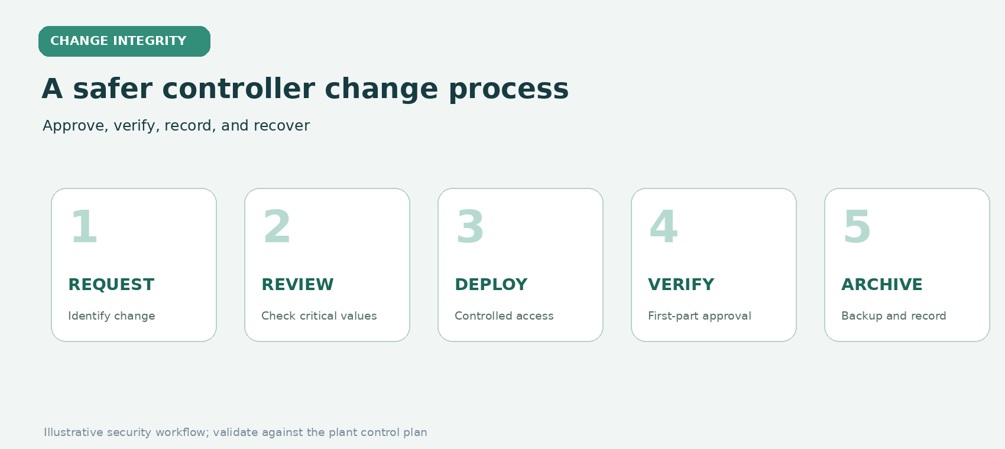
Figure 2. Controlled change management for production systems.
Protect the integrity of engineering revisions
Cybersecurity and quality assurance overlap at revision control. If a production team cannot establish which drawing is approved, it may manufacture obsolete parts without any attacker being involved. A malicious alteration would exploit the same weakness.
Engineering files should have named owners, controlled release status and an auditable change history. Machine programs should be checked against the authorised version before important production runs, particularly after maintenance or a tooling update.
For critical settings, independent verification by production and quality staff can add protection against both accidental and intentional changes.
For especially sensitive operations, release procedures can require a second person to verify critical values before a programme is put into production. This is not about slowing every routine change; it is about identifying the changes with the greatest potential impact. A revised slot dimension, adhesive cure setting or inspection limit may justify additional review, while an administrative description may not. Clear thresholds help quality and security teams focus their attention where an error would be most costly.
Plan for recovery, not only prevention
No manufacturing network is immune to equipment failure, human error or cyber incidents. Recovery plans should identify which systems are essential for safe operation and how their configurations can be restored.
Backups need to cover more than office documents. Depending on the equipment, they may include controller configurations, machine programs, approved process recipes and inspection data. Restoring a file is useful only if the team can verify that it is the correct, safe version.
An incident response plan should also define who has authority to stop production, isolate equipment, notify customers and approve restart. These decisions are difficult to improvise during a live disruption.
Recovery exercises should include a realistic question: can the factory restore the approved machine configuration and prove that the first parts made afterward meet requirements? A successful IT restore does not by itself establish product conformity. Restart procedures may therefore need engineering approval, sample inspection and documented release of the line. Running a limited tabletop exercise with production, quality, IT and management can expose missing responsibilities before an incident forces the organisation to discover them under pressure.
Security that respects the factory floor
The strongest OT security measures are designed around actual production constraints. They minimise unnecessary access, protect engineering integrity and support reliable recovery without demanding risky, unplanned changes to machines.
For motor manufacturers and other precision suppliers, the objective is straightforward: the digital information that defines a part should be as dependable as the equipment that makes it.