Security | Threat Detection | Cyberattacks | DevSecOps | Compliance

The Minimum Viable Hospital: Protecting Patient Care When Everything Is Offline

In this episode of Building Cyber Resilience: A Healthcare Leader’s Guide, host Josh Howell sits down with Dr. Sam Bhatia, Medical Director for Innovation in Microsoft’s Health & Life Sciences division. With a career that spans clinical practice, pathology-focused informatics, and global technology leadership, Dr. Bhatia brings a rare dual perspective on how hospitals can protect patient care when core systems fail. He breaks down how to define the Minimum Viable Hospital, why clinicians must shape recovery priorities, and how hybrid downtime models powered by AI can help health systems navigate the next decade of cyber disruptions.
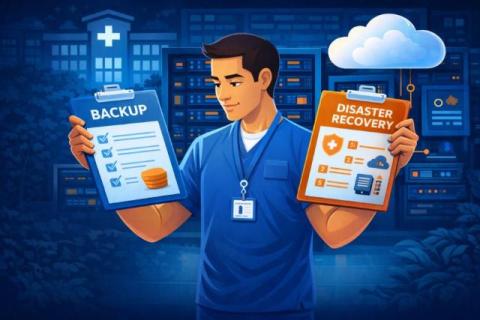
Backup vs Disaster Recovery for Medical Practices: What's the Difference?

Many medical practice administrators believe their organization is protected because “we have backups.” When asked about disaster recovery, they point to the same backup system. This confusion between backup and disaster recovery creates significant risk, because backup alone cannot restore operations quickly enough when systems fail. The distinction matters because patient care depends on system availability.

Healthcare Ransomware Recovery: A HIPAA-Compliant Response Framework

Healthcare remains the most targeted sector for ransomware attacks, with 238 ransomware incidents reported to the FBI in 2024 alone. The Change Healthcare attack demonstrated the cascading impact a single breach can have across the entire healthcare ecosystem, affecting payment processing for providers nationwide and ultimately compromising data on an estimated 190 million individuals.

HIPAA Incident Response Plan for Website PHI Leaks

Traditional HIPAA response plans were built for the incidents everyone can picture, like a compromised server, ransomware in the network, or unauthorized access to a clinical database. But website PHI leaks are different altogether. Often, there’s no attacker and no break-in. The leak comes from authorized tracking pixels or third-party analytics scripts simply collecting and sending data as designed, but on pages where it should never touch patient information in the first place.

HIPAA Breach Notification Rule: Meeting the 60-Day Timeline for Website PHI Exposure

Earlier, the anatomy of a HIPAA breach felt tangible. The threat landscape was shaped by risks you could point to, such as physical theft, phishing, or simple human error. Now, some of the biggest risks live in your website and run quietly in the background. Third-party scripts, tracking pixels, and analytics tags can collect or transmit PHI to external parties while looking like routine marketing infrastructure.

HIPAA Compliance for Pharmaceutical Websites, Portals, and Mobile Apps

If you operate pharmaceutical websites, portals, adherence tools, or patient support platforms, client-side execution is part of your compliance surface. Analytics, pixels, chat interfaces, and third-party libraries stop being neutral once they run alongside condition-specific content, authenticated access, or patient-initiated actions. At that point, they participate in disclosure. OCR’s clarification on tracking technologies did not create new obligations.

How to Build HIPAA-Compliant Infrastructure on AWS

Many healthcare organizations want to move workloads to AWS but stall because they’re uncertain how to maintain HIPAA compliance in the cloud. The good news: AWS provides the tools and certifications needed for HIPAA-eligible services. The challenge is implementing them correctly. AWS has been HIPAA-eligible since 2013 and currently offers over 150 services that can be used in HIPAA-compliant architectures. But eligibility doesn’t equal compliance.

Top 5 Mistakes New Devs Make in Healthcare App Builds and How to Avoid Them

"How to develop a healthcare app" sounds like a normal software question until you actually try it. Once you step into healthcare app development, you realize you're not just shipping features. You're building something that sits alongside doctors, nurses, and patients in real healthcare settings. If it breaks, it can delay treatment. If it leaks data, it can ruin trust and trigger legal problems. A glitch here hurts more than someone missing a DM in a chat app. That's why healthcare software in 2026 requires a mindset closer to clinical engineering than regular SaaS development.

HIPAA Disaster Recovery Requirements: What Healthcare Organizations Really Need

What are HIPAA disaster recovery requirements? Healthcare data breaches exposed over 276 million patient records in 2024, representing more than 80% of the US population according to the HHS Office for Civil Rights. For healthcare organizations, the question is no longer whether a disruption will occur, but when. The HIPAA Security Rule addresses this reality directly through its contingency planning requirements, yet many organizations still operate with significant compliance gaps.