Security | Threat Detection | Cyberattacks | DevSecOps | Compliance

The Future of Developer Upskilling Is Human-Led, AI-Supported

In the last year, generative AI has dramatically accelerated how software is written. Developers can generate entire functions with a prompt, automate repetitive logic, and offload everything from boilerplate code to documentation. But with this newfound speed comes a deeper, more complex challenge: ensuring that what’s being created is secure, trustworthy, and production-ready.

AI Trust in Action: How Snyk Agent Redefines Secure Development

One word defines success or failure in the race to adopt AI in security workflows: trust. While the industry moves fast toward automation and autonomy, adoption often stalls when developers and the teams supporting them can’t trust what the AI delivers. It’s not enough for a tool to explain what it did. Developers want to know: Did it actually fix the problem? Will this change break something else? Can I rely on it again next time? Nowhere is that skepticism more justified than in security.

Can Google Jules Build a SECURE Note Taking App?

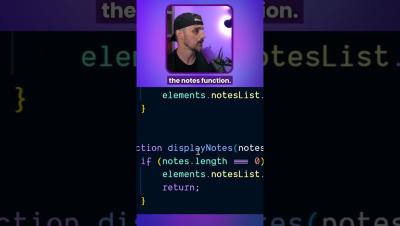
In this video, I test out Google Jules, Google’s brand new AI developer assistant, to see if it can build a secure note-taking app from scratch. With a focus on privacy, authentication, and data protection, I challenge Jules to create something functional and secure. This is part of an ongoing series where I test different AI models and tools to see how well they handle real-world development tasks. Check out our playlist where we're putting these various models to the test!

Welcome-to-The New Era of AI-Driven Development

Artificial intelligence is no longer a future consideration. It’s here — and it’s changing how software is built. Fast. Enterprise teams are moving beyond AI pilots and proof-of-concepts. They’re rolling out real-world, high-value use cases and doing it at scale. According to IDC forecasting, AI spend will more than double by 2028. At the center of that surge is AI-assisted software development.

AI Is Reshaping Software. Is Your Security Strategy Keeping Up?

Software development is undergoing its biggest shift since the rise of cloud and DevOps. The difference this time? The shift is being driven by artificial intelligence, and it’s moving fast. AI-powered coding tools have rapidly made their way into developer workflows. Agents and LLMs are helping teams move faster, automate more, and build in entirely new ways. But speed often comes with tradeoffs.

Welcome to Snyk Labs: Charting the Course for AI-Native Security

Software development is in the midst of a monumental shift, powered by the rapid advancements in Artificial Intelligence. AI isn't just changing how we build software; it's transforming the very nature of applications themselves. As AI-native applications become more prevalent, we're also seeing new, complex security threats emerge. Traditional security approaches aren’t designed for the dynamic and often unpredictable nature of Large Language Models (LLMs), agents, and other AI-driven systems.

Is Windsurf's SWE-1 Model a Game Changer? Let's See...

In this episode of my ongoing series testing AI coding tools, I put Windsurf’s latest model, SWE-1, to the test. The challenge? Build a secure note-taking app from scratch. I’m looking at everything from how it handles authentication and encryption to whether the code is clean, usable, and actually secure. If you're curious about how SWE-1 stacks up against other AI dev tools like GPT-4 or Claude, this video is for you.

Snyk Report shows 88% of CISOs are concerned with current state of U.S. cyber readiness

Having recently reached the 100 day mark of the new administration in the U.S., Snyk thought it important to check in with some of the nation’s CISOs to gauge how they were feeling about the cybersecurity posture of both the nation and their own organizations. In partnership with Researchscape, we surveyed a total of 101 U.S. based CISOs working in Information Security and/or Information Technology who responded to the online survey from April 7 - 21, 2025.