Security | Threat Detection | Cyberattacks | DevSecOps | Compliance

Unmatched Coverage for Cloud and Hybrid Workloads: Sysdig's Next Generation Instrumentation

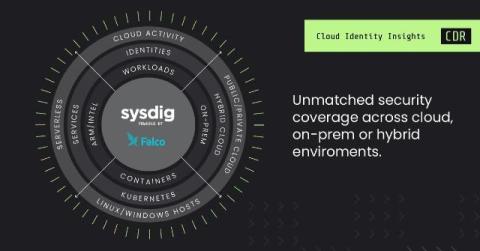
In today’s rapidly changing and evolving cloud-native environments, security and infrastructure teams face challenges ranging from managing complex deployments to ensuring capability across their entirety of their diverse infrastructure. EDR and XDR tools cannot provide comprehensive coverage of cloud workloads, making them fundamentally unsuited for cloud security.

Detect and respond to compromised identities in minutes with Sysdig

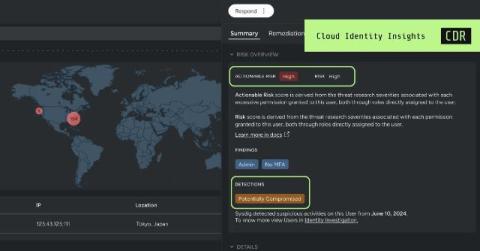
Sysdig continues to enhance our real-time cloud detection and response (CDR) capabilities with the introduction of Cloud Identity Insights, empowering customers to analyze identity attack patterns and get ahead of threat actors. In this post, we’ll explore how Sysdig uses Cloud Identity Insights to correlate suspicious events with potentially compromised user accounts.
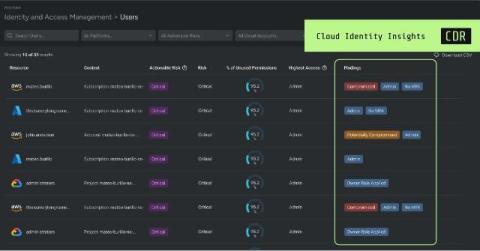
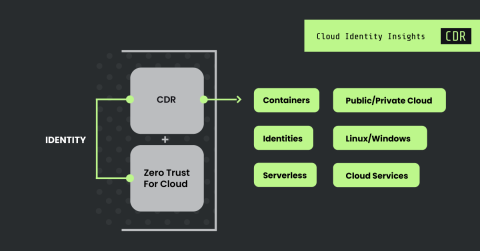
Introducing Cloud Identity Insights for Sysdig Secure

In recent years, almost every major cloud breach has been marked by overly permissive credentials, followed by lateral movement and privilege escalation. These vulnerabilities have allowed attackers to navigate through systems with ease, escalating their privileges to cause significant harm. It’s crucial for cloud threat responders to be aware of threats as they occur and to be able to contain these attacks swiftly and effectively.

Evolving cloud security: Why identity infused CDR is the key

Minimizing the time to detect, investigate and respond to threats is crucial in stopping cloud attacks. In fact, this might be the biggest understatement in cloud security today. Modern threat actors are escalating their tactics, making attacks faster, more aggressive, and increasingly difficult to stop. Cloud attacks occur at lightning speeds, leveraging automation to access sensitive data and resources before security teams can react.

Supercharge your investigation with Sysdig Sage for CDR

Artificial intelligence has taken over almost every aspect of our everyday lives. In cybersecurity, generative AI models with natural language processing are commonly being used to predict, detect, and respond to threats. But AI security assistants, although an upgrade from traditional machine learning, only provide very basic queries and summarization, which is insufficient to fully comprehend modern cloud attacks. As part of an ongoing effort to improve the cloud detection and response (CDR) experience,

Sysdig Sage: A groundbreaking AI security analyst

Generative AI (GenAI) is a top priority for organizations looking to increase productivity and solve business problems faster. In cloud security, AI chatbots to aid security practitioners are becoming more common, but to date, most of these solutions offer only basic queries and summarization. Diverse cloud environments and evolving threats require more from an AI security analyst.

Sysdig Sage for CDR: Accelerate analysis, investigation and response

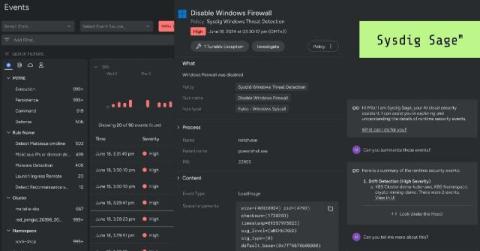
Last year, Sysdig outlined our vision for an AI-driven cloud security assistant. Today, we are excited to announce Sysdig Sage for cloud detection and response (CDR), our new release that embodies our vision. Built upon the core principles we introduced, Sysdig Sage offers actionable insights for cloud environments, with a focus on CDR.

Sysdig Sage for Cloud Detection and Response

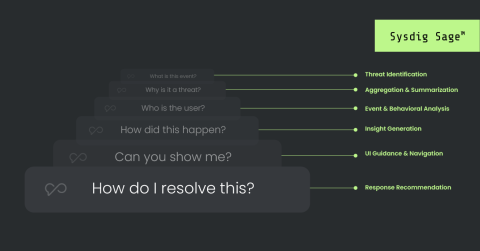
AI has supercharged cloud attacks - they are faster, more complex, and more sophisticated It's time for defenders to harness this powerful technology for good. Meet Sysdig Sage, the first AI cloud security analyst capable of multistep reasoning. Sysdig Sage goes beyond simple summarisation. It is context-aware. It is able to control the UI and move you across the platform. With Sysdig Sage on your side, investigating threats in real time is easier than ever.

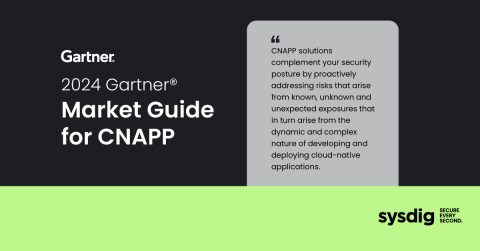
2024 Gartner CNAPP Market Guide: Runtime insights is a core pillar of cloud-native application protection platforms

As organizations continue to look for consolidated platforms to address their security needs, an important shift has happened. Customers have discovered that traditional tools focusing exclusively on static risks (such as misconfigurations, policy/control failures, and network exposure) are not enough to address today’s dynamic cloud threats.

Transforming enterprise data from leaky sieve to Fort Knox

Enterprises today face significant challenges in managing, governing, and securing corporate data. Data moves and is shared more ubiquitously than we likely recognize. Through the use of large language models (LLMs), shared with third-party vendors, or exposed on the dark web, there are blind spots that hinder the security and IT teams’ visibility into where data resides and how and by whom it’s accessed.