Security | Threat Detection | Cyberattacks | DevSecOps | Compliance

Detect runtime threats in Python Lambda functions with Datadog AAP

Python AWS Lambda functions are ephemeral and highly distributed, which creates security visibility gaps that traditional perimeter defenses and proxy-based controls struggle to fill. Techniques such as credential stuffing, SQL injection, and server-side request forgery (SSRF) can look like legitimate application traffic, making them difficult to identify without visibility inside the application itself.

Observability and Security for the AI Era

Datadog has always been driven by a broader vision of helping teams understand and operate complex systems. In this session, you’ll hear from Yanbing Li, Chief Product Officer, and Shri Subramanian, Group Product Manager, as they share the latest updates across the Datadog product suite and discuss how that vision continues to shape the platform’s evolution and support the next generation of AI-driven applications.

Introducing our open source AI-native SAST

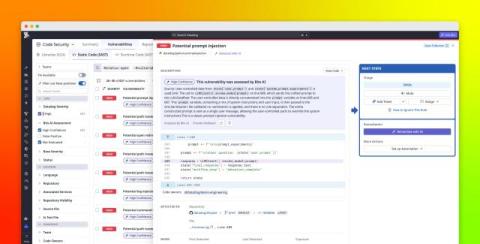
Static application security testing (SAST) tools help developers quickly catch potential vulnerabilities as they code. However, these tools rely on inflexible rules that often generate a high number of false positives, reducing trust in their accuracy and slowing adoption. To help developers access context-aware vulnerability detection, we’ve released an open source AI-native SAST solution. This tool scans code changes incrementally and surfaces security issues in real time.

CI/CD security: threat modeling using a MITRE-style threat matrix

Source code management (SCM) and CI/CD pipelines have become the industry standard for automating software delivery. But from the time a code change enters your SCM until it’s deployed, it’s susceptible to changes and reconfigurations that can go so far as to modify the pipeline itself. If you’re not proactively securing your CI/CD system, attackers can use it to grant themselves permissions, access secrets, and ship malicious code.

CI/CD security: How to secure your GitHub ecosystem

In Part 1 of this series, we discussed the CI/CD security boundary, mapped out potential attack vectors with a CI/CD threat matrix, and introduced a simple threat model focused on ideating detection workflows. In this post, we’ll apply these principles to a real-world source code management (SCM) tool example that every developer is familiar with: GitHub. In addition to threat modeling, we’ll also be taking a closer look at historical attacks on GitHub and GitHub Actions ecosystems.

Introducing the Datadog Code Security MCP

AI-assisted development helps teams write code faster, but that speed comes with added security risk. As agents generate more code, they can introduce vulnerabilities, insecure dependencies, or exposed secrets, often before a human reviewer ever sees the change. Security teams are left reviewing more code with the same resources, which makes it harder to catch issues early.

Observability and Security for the AI Era

Datadog has always been driven by a broader vision of helping teams understand and operate complex systems. In this session, you’ll hear from Yrieix Garnier, VP of Product, and Hugo Kaczmarek, Senior Director of Product, as they share the latest updates across the Datadog product suite and discuss how that vision continues to shape the platform’s evolution and support the next generation of AI-driven applications.

BewAIre: Detecting Malicious Pull Requests at Scale with LLMs

As AI coding assistants accelerate software development, the volume of pull requests at Datadog has grown to nearly 10,000 per week, increasing the risk that malicious changes slip through due to review fatigue. To address this, Datadog built BewAIre, an LLM-powered code review system designed to identify malicious source code changes introduced by threat actors. By reducing approval fatigue for developers while increasing friction for attackers, BewAIre guides human reviewers to the areas where judgment matters most, without slowing developer velocity.

What's new in Cloud SIEM: AI-powered investigations, enhanced threat intelligence, and scalable security operations

Security teams face a threat landscape shaped by AI-driven attacks and identity misuse. Adversaries increasingly rely on compromised identities to blend in as legitimate users, making attacks harder to detect and slower to contain. On average, organizations take 241 days to identify and contain a breach.1 While threats have evolved, legacy SIEMs have not kept pace.

How we centralize and remediate risks with Datadog Case Management

Proactively addressing risks in technical environments is a constant challenge. Many teams wait until it’s too late and key application functionality is disrupted or sensitive data is exposed. However, understanding risk severity in context can be difficult, especially in distributed systems where related issues and impacts may not be immediately obvious.