Security | Threat Detection | Cyberattacks | DevSecOps | Compliance

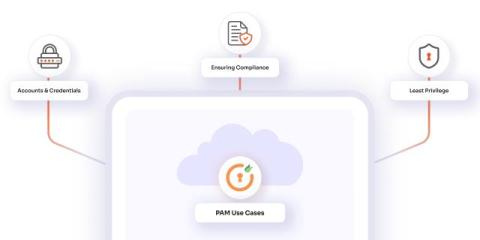
Top 12 Privileged Access Management (PAM) Use Cases in 2026

Privileged Access Management (PAM) is your organization's security control center for managing and monitoring high-level access to critical systems. Think of it as a sophisticated vault system that safeguards your most powerful administrative credentials while maintaining detailed audit trails of their usage. As we head into 2026, PAM has become crucial. Here's why: Cyberattacks are getting scarier and more complicated.

Google Gemini 3 Pro Builds an App with ONE PROMPT...

Google announced Gemini 3 Pro, which they tout as their most intelligent model yet that's best for complex tasks and bringing creative concepts to life. We're going to put this model to the test and see how good it is at fulfilling our prompt with a production ready app and the security of the code it produces.

Why Every CEO Needs a CISO or CIO on the Board and How to Get a Board Seat if You Are One

As boards face AI risk, digital transformation, and evolving regulation, technical expertise has become essential. But when it comes to board seats, CISOs or CTOs are often underrepresented. Speakers Dr. Aleksandr Yampolskiy, Co-Founder and CEO of SecurityScorecard | Beth Stewart, Founder and CEO of Trewstar Corporate Board Services SecurityScorecard monitors and scores over 12 million companies worldwide.

How to Recognize Holiday Phishing Scams | The Eighth Day of Scam-mas

On the 8th night of Scam-mas, Hannah Klein almost fell for a Hanukkah online scam. See how Avast Scam Guardian blocks phishing links and protects personal data. Stay safe from holiday online scams this season! SUBSCRIBE to our Avast channel for more tips, updates, and advice: YouTube.com/Avast CHAPTER TIMESTAMPS: FOLLOW US.

New AMOS Infection Vector Highlights Risks around AI Adoption

During a recent investigation into AMOS InfoStealer, Kroll Threat Intelligence Team has discovered a troubling new delivery vector that leverages the growing trust users place in AI tools. In this case, attackers leveraged ChatGPT as the source of guidance, tricking victims into initiating the infection, presenting it as a legitimate solution to a common technical problem. Victims were tricked into believing they were running a harmless command to fix a sound issue on their Mac device.

Evolving security at Datadog: How we designed roles to support a growing organization

Defining success looks different for security organizations than it does for product, infrastructure, and other engineering teams. The latter group can often point to tangible outcomes, such as newly shipped features or performance improvements. Security orgs succeed when risks are lowered and the company’s posture improves over time, which are results that aren’t as easy to recognize but still valuable.

Solving Human Risk: Build a Measurable, Security-First Culture

We've previously addressed the foundational problems of visibility and automated human risk management. However, the final, most enduring challenge remains: how do you address the human element that lies at the core of human cybersecurity risk? Now more than ever, users are prime targets for attackers, but the traditional playbook offers little more than check-the-box training (which is often easily forgotten).

Agentic AI Security: The Emerging Fourth Pillar of Cybersecurity

For decades, cybersecurity has been organized around three dominant pillars: endpoint security, network security, and cloud security. These domains have shaped technology categories, vendor ecosystems, and enterprise budgets. They have matured into multi-billion-dollar markets, each responding to successive waves of digital transformation. However, a tectonic shift is underway.

How to test incident response readiness through red team exercises

Incident response (IR) plans are a cornerstone of organisational resilience. Many businesses maintain policies, run tabletop exercises, and document procedures, but high-impact incidents still expose gaps in real-world response. Red team exercises provide a practical, objective-driven way to test incident response readiness.