Security | Threat Detection | Cyberattacks | DevSecOps | Compliance

CISO Risk Intel Brief: Material Exposures, Control Gaps, and Program Response

This executive intelligence briefing covers two distinct horizons: the past week (12–19 August 2026) and the past month (approximately 20 July–19 August 2026). It prioritizes AppSec, software supply chain, state-actor activity, cloud/IaC, identity, ransomware resilience, and regulatory developments with board-level implications. Analysis focuses on residual risk, control effectiveness, and business enablement rather than volume metrics alone.

Managing LLM Code Security at Scale with Hybrid SAST

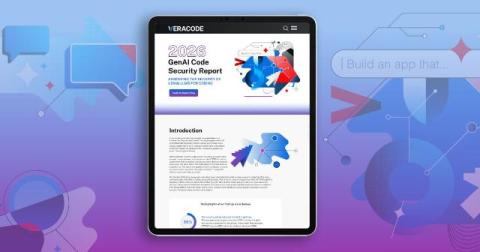
The amount of code being generated in the era of AI is staggering, and some non-trivial percentage of that code is insecure. According to the 2026 GenAI Code Security Report, roughly 44% of AI generated code test produced a known vulnerability. Organizations are more reliant than ever on cybersecurity programs that can scale at the velocity of AI while still managing risk with guardrails, governance, and compliance standards.

Who Authorized That Tool Call?

Veracode I have been going to Black Hat for more than 25 years, and I have spent many of those years on the Review Board. New technologies keep changing the shape of the systems we secure. The questions I find myself asking stay remarkably familiar. Where does untrusted data enter? What authority does a component have? Which boundary controls a sensitive operation? How do we know that control worked?

Meet Captain Veracode | Guardian of Secure Code

In the year 2079, vulnerabilities are endless and breaches are a daily reality. Jordan Kodak, a weary engineer, dreams of a world where developers can innovate without fear. She leaves Earth in search of Secura Prime—a legend of flawless code—and decades later receives a distress signal from a temporal anomaly. Meet Cipher, a sentinel from 2177, where secure coding finally took root. Armed with future knowledge, Jordan realizes the utopia she sought isn’t a place… it’s a practice.

Java Source Code Scanning that Works the Way You Do

Many tools fail to adapt to diverse developer use cases, leading to workflow interruptions in IDEs and CI pipelines. Managing dependencies for multi-module projects can be complex and time-consuming, often causing delays. And developers frequently work across varied environments – whether it’s IDEs, CI pipelines, or repositories, each with unique requirements. These challenges create friction and slow down the development process, making it harder to deliver secure applications on time.

CISO Risk Intel Brief: Application Risk Intelligence for Early August 2026

Senior security leadership continues to confront a dual acceleration: self-propagating software supply-chain worms that weaponize developer credentials at unprecedented velocity, and the persistent security debt introduced by AI-generated code. This briefing synthesizes material developments across the most recent seven days and the preceding thirty days, framed strictly around residual risk, control effectiveness, and business enablement.

CISO Executive Briefing: Application Risk Intelligence for July 2026

This briefing synthesizes verified threat activity, vulnerability disclosures, supply-chain incidents, and regulatory signals into a board-ready assessment of residual risk and control effectiveness for the period of 29 June to 28 July 2026. The analysis prioritizes AppSec, software supply chain, identity, cloud/IaC, API/web, ransomware resilience, and AI-related exposure.

2026 GenAI Code Security Report: AI Is Writing More of Your Code but Security Hasn't Caught Up

New GenAI code security research shows a stubborn truth: as AI is generating more of the code entering production, secure output is not improving at the same pace. The result is a GenAI code security challenge defined by scale, model choice, and the growing need for verification. AI coding has moved past experimentation. For many teams, it is now part of how software gets built every day. That’s the opportunity. It’s also the risk.

Compliance Stopped Being a Checkbox. Most Companies Haven't Caught Up.

For a long time, compliance meant paperwork. Fill out the right forms, pass the annual audit, file it away. Done. Now, your development pipeline is generating code at a pace no human team can review manually, your supply chain runs three layers deep into open-source packages and AI plugins you didn’t choose, and regulators are watching in real time. The old approach doesn’t just underperform; it creates a false sense of security.

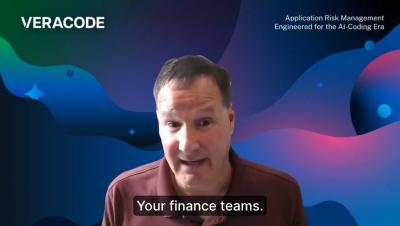
Everyone is a Developer Now - How Do We Put Guardrails in Place? | Veracode

With AI tools, **everyone** is becoming a developer. Marketing teams, finance teams, and business users are now building applications and generating code. So the big question is: In this clip, Tim Brown, CISO in Residence at Team8 and former CISO at Solarwinds, discusses the shift happening in organizations and why strong guardrails are more important than ever in the AI-coding era. Subscribe for more insights on Application Security, AI Coding, and DevSecOps.