

Security | Threat Detection | Cyberattacks | DevSecOps | Compliance

Apono Partners with Databricks to Govern Privileged Access Across the Lakehouse

Databricks has become the data and AI platform of record for a large and growing share of the enterprise market. Unity Catalog gives teams unified governance over data assets, AI models, and agentic workflows, controlling what exists, who can use it, and what policies apply.
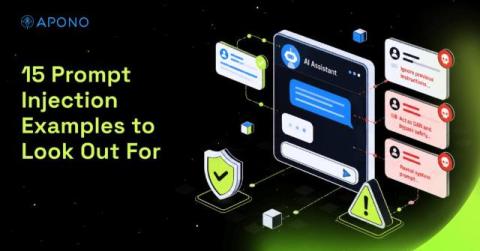
15 Prompt Injection Examples to Look Out For

Let’s imagine that a support copilot opens a ticket and processes a hidden instruction alongside the text it was asked to summarize. If the model follows that instruction, the response is manipulated. In an agentic workflow, the same injection can also influence actions carried out through connected tools and existing permissions. OWASP refers to this risk as prompt injection and ranks it as LLM01, the number-one risk for LLM applications.

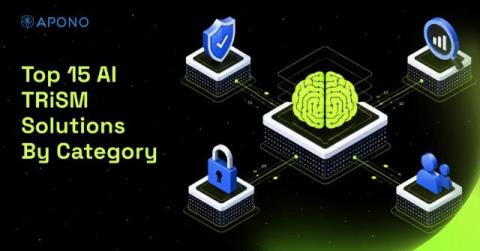
Top 15 AI TRiSM Solutions By Category

AI TRiSM solutions address distinct risks across the AI lifecycle, from governance and evaluation to runtime security, agent authorization, and guardrails. In this comparison, the top 15 solutions fall into five complementary categories: These categories are complementary, not interchangeable. The right stack depends on where an organization needs to govern AI, monitor behavior, block threats, control agent privileges, or constrain AI interactions.

10 MCP Security Best Practices

A natural-language decision can now trigger a real API call, query sensitive data, deploy code, or modify infrastructure. MCP expands the security boundary beyond the connection to the identities, privileges, tools, credentials, and downstream systems behind each action. That challenge is growing with adoption. Anthropic reported more than 10,000 active public MCP servers by December 2025, alongside 97M+ monthly downloads of its Python and TypeScript MCP SDKs.

Vulnerability Assessments in an Agentic World: Step-by-Step Guide

An old package or a misconfigured cloud storage bucket can be identified by a legacy scanner, but it does not account for the unique risk profile of autonomous systems. It cannot confirm that an AI agent with access to your production environment can chain together a CRM read, an email send and a production write using inherited credentials. Your agents are dynamic: they plan, call tools, and act across multiple environments, and some may retain context or long-term memory beyond the original request.

How to Detect Shadow AI: 8 Key Steps

Security teams have spent years building visibility into unsanctioned SaaS apps, cloud services, and other forms of shadow IT. But shadow AI raises the bar. Discovering an unsanctioned AI app or autonomous agent is only the beginning. Teams also need to determine which identities it authenticates with, what credentials and permissions it relies on, what data it can access, which systems it integrates with, and what downstream actions it performs. The scale of the challenge is already becoming apparent.

Top 14 Agent Observability Tools

Agent observability tools capture traces, metrics, logs, and evaluations across AI agent workflows. They help teams reconstruct execution paths, inspect tool calls and handoffs, diagnose failures, and monitor latency, cost, and output quality. This guide also covers complementary security platforms that discover agents, enforce runtime policies, or control the privileges agents receive. Agents don’t fail in straight lines.

Apono partnership brings just-in-time access to Elasticsearch and Elastic Cloud

Pull an access review on almost any Elasticsearch cluster and you’ll find the same thing: roles created for a migration two years ago, analyst accounts with broad read access to indices they queried exactly once, and service accounts nobody can quite explain. None of it was granted carelessly, and all of it is still there. That leftover access is the problem.

What is Runtime Authorization? A Use Case-Based Guide

Static roles work until the environment changes. Authentication can confirm who or what is making a request, but it cannot determine whether that identity should perform a specific action under current conditions. As infrastructure, services, and AI agents evolve, permissions granted months ago rarely reflect what an identity actually needs to accomplish. Among companies planning to deploy agentic AI within two years, only 21% report having a mature model for agent governance.

Top 17 Agentic AI Security Solutions

Agentic AI security solutions help teams discover, govern, monitor, and control AI agents, copilots, LLM apps, MCP servers, and autonomous workflows. For security and DevOps leaders, they matter because agents can act across production systems. This guide compares leading tools and explains how to choose the right fit. AI agents are moving from assistants to actors.