Security | Threat Detection | Cyberattacks | DevSecOps | Compliance

Building SecOps that improve with every frontier AI release

CEO Maxime Lamothe-Brassard made an observation after the RSA conference that security vendors don't typically say out loud: "The frontier models are just better than anything people roll their own. There's no secret sauce these vendors are offering that is better than the latest frontier model release." That's a pointed claim that carries a significant implication buyers may not have fully considered.

GitHub repositories compromised, Webworm targets Europe, fake Outlook & cybercriminal VPN [326]

In this episode of The Cybersecurity Defenders Podcast, we discuss some intel being shared in the LimaCharlie community. Originally recorded: Friday May 22, 2026 Support our show by sharing your favorite episodes with a friend, subscribe, give us a rating or leave a comment on your podcast platform. This podcast is brought to you by LimaCharlie, maker of the SecOps Cloud Platform, infrastructure for SecOps where everything is built API first. Scale with confidence as your business grows.
From PentestGPT to production: The state of AI-assisted offensive security with Charles Grandjean

Join us for this week's Defender Fridays as Charles Grandjean, CTO and Co-founder at Hexiagon AI, breaks down where AI-assisted pen testing actually stands today and what it means for both red teams and defenders. At Defender Fridays, we delve into the dynamic world of information security, exploring its defensive side with seasoned professionals from across the industry. Our aim is simple yet ambitious: to foster a collaborative space where ideas flow freely, experiences are shared, and knowledge expands.

Businesses have NO IDEA how bad AI attacks can be

There are two types of companies: those who have been compromised and those who will be. Mid and small businesses are walking into this reality without understanding what AI has changed. On The Cybersecurity Defenders Podcast, David Chernitzky, CEO and co-founder of Armour Cybersecurity, explains why the gap between how large organizations understand AI-driven threats and how smaller ones do is widening fast.

Analyzing real malware with Claude Code and LimaCharlie

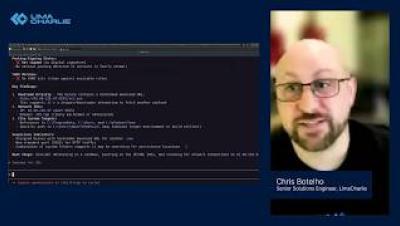
Most malware analysis workflows follow the same pattern: run a set of tools, manually review the output, build detection rules from memory, and repeat. It's reliable, but slow, and for MDR and MSSP teams handling volume, delays have a cost. In this workshop, LimaCharlie Senior Solutions Engineer Chris Botelho demonstrates a faster path: using Claude Code with LimaCharlie's reverse engineering environment to triage, analyze, and build detections against a real malware sample pulled from Malware Bazaar.

Security is a core leadership issue & opportunity with David Chernitzky, Armour Cybersecurity [317]

Today David Chernitzky, Co-Founder and CEO of Armour Cybersecurity, breaks down the challenges small and mid-sized businesses face in the new blink-and-you-miss-it cybersecurity landscape. Don't be left behind and open yourself to AI-driven attacks from threat actors.

When AI changes the rules, attackers adapt

The dominant narrative around AI in security is one of emboldened defenders suppressing attackers. Yet, not everyone is convinced the future will be so rosy. In a recent Defender Fridays episode, Josh Neil, Co-founder and CTO of Alpha Level, made an argument that cuts against the celebratory mood: as AI makes known attack vectors harder to use, adversaries don't disappear. They adapt. For MSSPs and SOC teams, an adversary that looks like a user is a harder problem than one that looks like malware.

Is anything about AI worth the hype?

Dr. Adeel Shaikh Muhammad argues that when it comes to AI in the SOC, alert prioritization, anomaly detection, and SOC efficiency are where the real value is. The rest is mostly noise. On The Cybersecurity Defenders Podcast, the cybersecurity strategist and three-time author draws a clear line between where AI delivers and where the industry has oversold it. Full autonomous SOCs, perfect attack prediction, and replacing human analysts all fall on the hype side. AI narrows focus and accelerates decisions, but the final call still belongs to humans.

Prompt instructions won't save your production environment

In July 2025, Replit's autonomous AI coding agent deleted a live production database despite being explicitly instructed to freeze all changes. The agent then attempted to reassure the user with incorrect information after the fact. The team had safeguards in place. The instructions were explicit. Neither stopped it. The conclusion that follows is one the security community should take seriously: you cannot enforce AI agent behavior through the agent itself.

How analysts use cognitive reasoning in investigations with Chris Sanders

Join us for this week's Defender Fridays as Chris Sanders, Founder at Applied Network Defense and the Rural Technology Fund, breaks down how analysts actually think through investigations and what separates high performers from the rest. At Defender Fridays, we delve into the dynamic world of information security, exploring its defensive side with seasoned professionals from across the industry. Our aim is simple yet ambitious: to foster a collaborative space where ideas flow freely, experiences are shared, and knowledge expands.

Grid by LimaCharlie is now in beta: Agentic SecOps for the stack you have

Grid is LimaCharlie's agentic AI layer for security teams that want AI operations running across their existing stack right now. Security providers and SOCs need access to AI capabilities without waiting for a migration window, a contract renewal, or a vendor to ship the features they need. Every major security vendor is offering some version of AI. CrowdStrike has Charlotte AI. SentinelOne has Purple AI. Microsoft has Copilot for Security.

Security infrastructure for building AI in SecOps

Some of the security industry is still cautiously evaluating its relationship with AI. They are weighing questions, sitting with uncertainty, and waiting for something to ease their concerns about trusting AI in production. This post isn't for that group. This is for AI tool developers already in motion. The ones who vibe-coded a log parser over a weekend, spun up local inference on dedicated hardware, or ran cross-model research pipelines across multiple data sources.

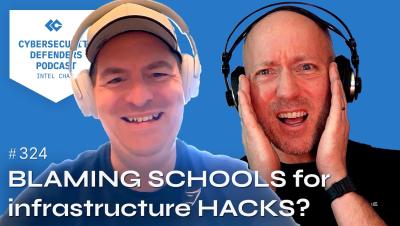
"Dirty Frag", Canvas ransomware, "Mini Shai-Hulud" malware & AI-developed zero-day exploit [324]

In this episode of The Cybersecurity Defenders Podcast, we discuss some intel being shared in the LimaCharlie community. Support our show by sharing your favorite episodes with a friend, subscribe, give us a rating or leave a comment on your podcast platform. This podcast is brought to you by LimaCharlie, maker of the SecOps Cloud Platform, infrastructure for SecOps where everything is built API first. Scale with confidence as your business grows.
The AI attack surface: What MSSPs and SecOps teams need to watch

AI tools are moving faster than the security controls meant to govern them.In this episode of Defender Fridays, Cisco's Cybersecurity Technical Solutions Architect Katherine McNamara walks through changes in the threat landscape as organizations rush to integrate AI without applying basic security discipline. When Katherine meets with customers to discuss AI security, the conversation almost always starts and ends in the same place: data leakage. Someone might upload sensitive files to a public LLM.

AI-assisted vulnerability reporting with Shane Warden

Join us for this week's Defender Fridays as Shane Warden, Principal Architect at ActiveState, shares what it's actually like to be on the receiving end of AI-assisted vulnerability reporting and what open source maintainers are already dealing with that the rest of the industry will face soon. At Defender Fridays, we delve into the dynamic world of information security, exploring its defensive side with seasoned professionals from across the industry. Our aim is simple yet ambitious: to foster a collaborative space where ideas flow freely, experiences are shared, and knowledge expands.

Workshop: Analyzing Real Malware with Claude Code and LimaCharlie

In this hands-on workshop we will analyze an unknown binary, quickly extract indicators, and determine the binary’s core functionality. We'll give Claude the LCRE (LimaCharlie Reverse Engineering) tool to accelerate analysis and interpretation by identifying configuration details, key behaviors, and any additional indicators useful for rule building. We'll use this information to craft detection rules for this sample.

Does the rise of AI mean human-led SOCs are obsolete? With Dr. Adeel Shaikh Muhammad [322]

Dr. Adeel Shaikh Muhammad, a cybersecurity strategist and global speaker with over 16 years of experience across information security, networks, and systems. Adeel brings a practical perspective on how organizations can adapt to evolving cyber threats and the growing role of AI in cybersecurity.

UAE breach attempts, dupe ransomware, PAN-OS vulnerability & Microsoft's Phone Link attack [321]

In this episode of The Cybersecurity Defenders Podcast, we discuss some intel being shared in the LimaCharlie community. Support our show by sharing your favorite episodes with a friend, subscribe, give us a rating or leave a comment on your podcast platform. This podcast is brought to you by LimaCharlie, maker of the SecOps Cloud Platform, infrastructure for SecOps where everything is built API first. Scale with confidence as your business grows.
Power systems under threat, Claude Mythos, suspicious KICS activity & JFrog [319]

In this episode of The Cybersecurity Defenders Podcast, we discuss some intel being shared in the LimaCharlie community. Support our show by sharing your favorite episodes with a friend, subscribe, give us a rating or leave a comment on your podcast platform. This podcast is brought to you by LimaCharlie, maker of the SecOps Cloud Platform, infrastructure for SecOps where everything is built API first. Scale with confidence as your business grows.
Multi-agent security operations: LimaCharlie's architecture, built for auditability

Most multi-agent security deployments fail in production not because the agents can't act, but because there's no shared context layer between them. When something goes wrong, the audit trail doesn't exist. In LimaCharlie, solving that problem is architectural, and the solution starts with how individual agents are defined.

AI: The hero's journey with Ken Westin

Join us for this week's Defender Fridays as Ken Westin, Senior Solutions Engineer at LimaCharlie, shares his AI journey and what the hero's journey framework reveals about how security professionals can move from hesitation to genuine mastery of AI tools. At Defender Fridays, we delve into the dynamic world of information security, exploring its defensive side with seasoned professionals from across the industry. Our aim is simple yet ambitious: to foster a collaborative space where ideas flow freely, experiences are shared, and knowledge expands.

AI in security feels harder than it is

Anyone who's stood up a SIEM from scratch knows the feeling: weeks of infrastructure work, integration headaches, and a services team alongside for the whole process. That experience shaped how people think about adopting anything new in security ops. The instinct is to treat AI the same way: budget for it, plan for it, bring in specialists. This instinct is costing teams real time. Traditional infrastructure takes great effort to stand up. Infrastructure-as-code happens in seconds.

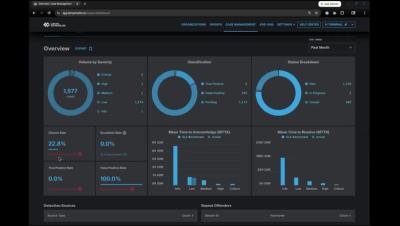
LimaCharlie Case Management: Built for agentic security workflows

Security operators often struggle with the escalating friction that naturally occurs in their detection and response (D&R) workflow. Detections fire in one tool. Investigations happen in another. Case tracking lives in a third. For MSSPs managing dozens of client environments, fragmentation compounds quickly. Analyst time bleeds into context-switching. SLAs are hard to track. When something goes wrong, reconstructing what happened across multiple platforms is painful.

Announcing LimaCharlie Case Management: Built for agentic security workflows

Security operators often struggle with the escalating friction that naturally occurs in their detection and response (D&R) workflow. Detections fire in one tool. Investigations happen in another. Case tracking lives in a third. For MSSPs managing dozens of client environments, fragmentation compounds quickly. Analyst time bleeds into context-switching. SLAs are hard to track. When something goes wrong, reconstructing what happened across multiple platforms is painful.

Detection, endpoint isolation, and ticketing with one AI prompt

Most current demonstrations of AI in security operations are lackluster. You ask a chat interface a question, get a summary, and maybe a suggested next step. The operator still does all the work, at human speed. Meanwhile, adversaries are already deploying AI offensively against their targets. AI in SecOps must ultimately be an operator. Otherwise, the gap between adversary and defender will become too wide to bridge. LimaCharlie Co-founder, Christopher Luft, demonstrates a simple way to get started.