

|
By LimaCharlie
Co-founder & CCO LimaCharlie Email Security is generally available today. It protects Microsoft 365 and Google Workspace mailboxes from inside the same tenant, permission model, and data lake as the rest of LimaCharlie. A phishing email and the endpoint activity it causes can now be detected, investigated, and remediated in one place.
Building a bot takes five minutes. What it stands on took eight years. Introducing LimaCharlie Bots.
|
By LimaCharlie
Co-founder and CCO We shipped bots in the LimaCharlie AI Terminal. You can create one in a few minutes: give it a role, pick a profile if you want one, and open a chat. I said this during our September Build Log demo and I'll repeat it here, because everything else in this post follows from it. The bot is the easy part.
|
By Chris Luft
Soteria started as a consulting and advisory firm focused on penetration testing and incident response. Co-founder and managing principal Paul Ihme describes the company's growth from there as organic, expanding into virtual CISO work, offensive security, managed detection and response, and Microsoft 365 security products.
|
By LimaCharlie
Co-founder and COO I have been using AI coding tools since the beginning. Back around 2022, I built a RAG system that would return links to relevant documentation when users made a search request. Initially, I wanted the AI to answer the user's question directly, but at the time it would hallucinate so much that I didn't trust the output enough to put it in front of users. Instead, I had the AI return static links to the relevant documentation.

|
By LimaCharlie
Co-founder and COO AI Sessions in the LimaCharlie web application now run on OpenAI, Google Gemini, and OpenRouter models in addition to Claude. Connect your own credentials, pick a provider per session profile, and the session behaves the same way regardless of which model is doing the work. Sessions run on Claude by default. Beyond that, you can connect any of the following with your own credentials.
|
By LimaCharlie
Senior Solutions Engineer In Part 1, we looked at how to use Claude to analyze an unknown binary given a basic Linux system. Analysis is only half of the job, though, and while we can reasonably assume that our rules will work, especially for high-fidelity indicators such as hashes and IPs, rules looking for behaviors get more challenging to build and validate.
|
By LimaCharlie
Co-founder and COO Over the past eight months, security teams at Databricks, Salesforce, WRITER, Box, and Coinbase have published detailed accounts of building their own agentic security operations. None of them coordinated, and all of them arrived at the same architecture. Part of what made the surge possible is tooling. Agentic coding tools like Claude Code turned practitioners with deep systems knowledge into builders, and security teams were among the first to act on it.
|
By LimaCharlie
Co-founder and COO When a cloud security tool finds an over-permissioned identity, the finding goes into a dashboard. When your EDR sees that same identity's credential used on an endpoint, that goes into a different system. Connecting the two is your job, and it usually costs you an export pipeline, a pile of webhooks, and a SOAR license. For service providers the problem compounds.
|
By LimaCharlie
Co-founder and COO LimaCharlie founder Maxime Lamothe-Brassard joined Alex Hurtado on the Detection Dispatch podcast to talk about the shift happening across the industry: security capabilities moving out from behind the UI. When every platform function is reachable through an API or CLI, both humans and AI agents can do the work without logging into a console. The episode covers what headless means in practice, how to govern agents in production, and where automation actually pays off.
|
By LimaCharlie
Co-founder and COO Two credible engineering organizations have now documented internal agentic triage builds. The results validate the architecture. The build details explain why service providers need a different way to get it.
|
By LimaCharlie
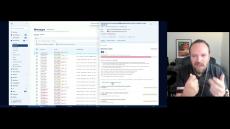
LimaCharlie CEO and founder Maxime Lamothe-Brassard gives the first public demo of LimaCharlie Email Security, which treats every message as an event in the same platform as your endpoint, cloud, and identity telemetry. Email Security connects to Microsoft 365 and Google Workspace through the provider API, with no MX record changes. Every verdict shows the signals and scoring behind it, every action is audited, and everything you see in the UI is available through the API, CLI, and MCP server so AI agents can work with it directly.
|
By LimaCharlie
Intel Chat with Matt Bromiley and Chris Luft. Stories covered: Chapters: The Cybersecurity Defenders Podcast — a podcast about cybersecurity and the people that keep the internet safe. New episodes drop weekly. Subscribe wherever you listen.

|
By LimaCharlie
Introducing LimaCharlie Email Security. It connects to Microsoft 365 or Google Workspace through the provider's API, with no MX change and nothing in the delivery path, and shows the signals behind its verdicts. This walkthrough follows one malicious email from its 94/100 verdict through how the score compounds, a benign contrast with its measured processing timeline, the evidence, link analysis, response at the provider, hunting across the organization, groups and campaigns, user reports, the rule that caught it, policy, and email as telemetry for detection and response rules.

|
By LimaCharlie
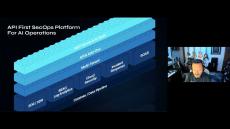
Today we're speaking with Geoffrey Mattson, CEO of SecureAuth, about identity and authority for AI agents: what changes when software stops being something a human uses and starts taking actions on its own.
|
By LimaCharlie
Every MSSP is under pressure to adopt AI, and most of the advice available is either vendor hype or generic guidance written for enterprise teams with one environment to manage. MSSPs face a harder problem: any AI they adopt has to work across dozens or hundreds of client stacks, respect tenant boundaries, and produce results an analyst can defend to a customer. In this session, Sr. Solutions Engineer Ken Westin lays out a practical roadmap for bringing AI into service provider security operations.

|
By LimaCharlie
Today we're speaking with Dr. Amarjot Singh, Founder & CEO of Skylark Labs, about physical AI — what changes when a model leaves the server and has to perceive, decide and act inside a machine that moves through the real world.
|
By LimaCharlie
Intel Chat with Matt Bromiley and Chris Luft. Stories covered: Chapters: The Cybersecurity Defenders Podcast — a podcast about cybersecurity and the people that keep the internet safe. New episodes drop weekly. Subscribe wherever you listen.

|
By LimaCharlie
Intel Chat with Matt Bromiley and Chris Luft. Stories covered: Chapters: The Cybersecurity Defenders Podcast — a podcast about cybersecurity and the people that keep the internet safe. New episodes drop weekly. Subscribe wherever you listen.

|
By LimaCharlie
Intel Chat with Matt Bromiley and Chris Luft. Stories covered: Chapters: The Cybersecurity Defenders Podcast — a podcast about cybersecurity and the people that keep the internet safe. New episodes drop weekly. Subscribe wherever you listen.

|
By LimaCharlie
By the end of this hands-on workshop, you will have deployed a working detection pipeline, ingested a cloud log source, and shipped a bespoke dashboard app, all using Claude Code integrated with Grid by LimaCharlie. Along the way, you will see how Grid compresses the traditional SIEM/EDR/SOAR stack into a single automated workspace. We go well beyond standard EDR and SIEM use cases. What to expect.
- October 2026 (6)
- September 2026 (8)
- August 2026 (6)
- July 2026 (21)
- June 2026 (13)
- May 2026 (25)
- April 2026 (32)
- March 2026 (18)
- February 2026 (32)
- January 2026 (15)
- December 2025 (13)
- November 2025 (13)
- October 2025 (15)
- September 2025 (17)
- August 2025 (20)
- July 2025 (11)
- June 2025 (11)
- May 2025 (17)
- April 2025 (14)
- March 2025 (18)
- February 2025 (15)
- January 2025 (14)
- December 2024 (8)
- November 2024 (11)
- October 2024 (8)
- September 2024 (14)
- August 2024 (9)
- July 2024 (9)
- June 2024 (11)
- May 2024 (11)
- April 2024 (12)
- March 2024 (9)
- February 2024 (14)
- January 2024 (3)
- November 2023 (3)
- October 2023 (4)
- September 2023 (2)
- August 2023 (6)
- July 2023 (4)
- June 2023 (2)
- May 2023 (5)
- April 2023 (9)
- March 2023 (7)
- February 2023 (7)
- January 2023 (7)
- December 2022 (6)
- November 2022 (6)
- October 2022 (9)
- September 2022 (6)
- August 2022 (6)
- July 2022 (4)
- June 2022 (6)
- May 2022 (4)
- April 2022 (3)
- March 2022 (6)
- February 2022 (3)
- January 2022 (3)
- December 2021 (5)
- November 2021 (6)
- October 2021 (3)
- September 2021 (4)
- August 2021 (9)
LimaCharlie gives security teams full control over how they manage their security infrastructure. Get full visibility into your coverage, build what you want, control your data, get the security capabilities you need, for however long you need them, and pay only for what you use.
LimaCharlie Sensors enable organizations to collect relevant security telemetry, logs and artifacts in real-time from any source and process that data at wire speed using a universal detection, response and automation engine. Use signature based detections, your favourite threat feed or subscribe to curated detection rules.
An engineering approach to cybersecurity:
- Endpoint detection & response: Respond to threats at wire speed and create powerful automations. Leverage solutions custom designed for your environment and control your security posture without having to rely on external vendors.
- Software-defined networking: Secure and monitor network access to your endpoints by providing advanced instrumented Zero Trust VPN access. LimaCharlie’s Secure Access Service Edge (SASE) makes secure remote networking easy and affordable.
- Windows Event Log monitoring: Gain the ability to capture and analyze Windows Event Logs (WEL) in real-time. Ingested WEL are indexed along common indicators of compromise and run through the Detection & Response engine.
- File & registry integrity monitoring: LimaCharlie's File & Registry Integrity Monitoring capability allows you to monitor specific file path patterns and registry patterns for changes.
- Monitoring cloud deployments: Secure your cloud using LimaCharlie’s advanced Sensor technology. Run in a VM, Docker, or as a privileged container in Kubernetes. Optimize your costs with fine-grained event collection control, autoscaling and automated sensor culling.
- YARA scanning at scale: Various YARA scanning methods are available. Run a scan on any given endpoint or continuously across the entire fleet in a way that does not impact performance. Pull YARA signatures from Github repositories and other sources, both private and public.
- Cutting edge detections: Leverage the work of best-in-class professionals with an unparalleled cost efficiency. Subscribe to threat feeds and curated detection rules. Easily write your own custom rules and apply them instantly to your entire fleet.
- Log and artifact monitoring: Ingest logs, or any file type, from any source and run them through the detection, automation and response engine. One year of full telemetry storage included - not just detections or select entries, but all endpoint, network, and external logs telemetry.
Detect and respond on everything.