Security | Threat Detection | Cyberattacks | DevSecOps | Compliance

Agent Tesla Doesn't Need Admin Rights to Steal Your Business

See how Cato helps stop an Agent Tesla-style malware credential theft attack before it becomes business impact. In this demo, a remote finance user opens what appears to be a routine invoice. Behind that simple action is a common attack path: malware designed to steal credentials, keystrokes, and sensitive business data.

Zero Trust for AI Agents Starts After Login

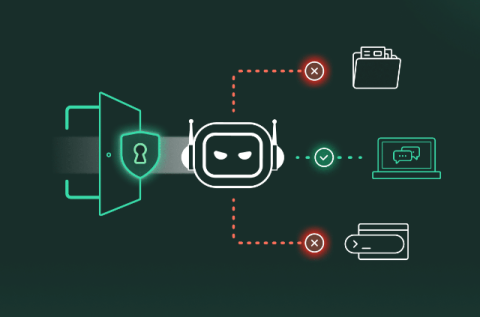
Zero Trust was built to fix an older assumption: if you were inside the network, you were trusted. Then, Cloud, SaaS and remote work broke that, so security moved toward identity, device checks, MFA, least privilege, and continuous verification. But now, with agents, the messy bit starts after access. The agent reads a prompt, pulls context, chooses a tool, calls an API, and may trigger a workflow. The login tells you the agent is “trusted”.

DuneSlide: Two Critical RCE vulnerabilities via Zero-Click Prompt Injection in Cursor IDE

Cato AI Labs has discovered two critical remote code execution (RCE) vulnerabilities in Cursor IDE, the popular development environment which, according to Cursor, is used by over half of the Fortune 500. Both RCE vulnerabilities, which we refer to as “DuneSlide,” achieved a 9.8 CVSS score, and involve breaking out of the IDE’s sandbox environment and were assigned CVE IDs CVE-2026-50548 and CVE-2026-50549.