Security | Threat Detection | Cyberattacks | DevSecOps | Compliance

Edge Security Is Not Enough: Why Agentic AI Moves the Risk Inside Your APIs

For the last twenty years, cybersecurity has been built around the edge: the belief that threats come from the outside, and that firewalls, WAFs, and API gateways can inspect and control what enters the environment. That model worked when applications were centralized, traffic was predictable, and most interactions followed a clear pattern: a user in a browser talking to an app inside a data center. Agentic AI breaks that model.
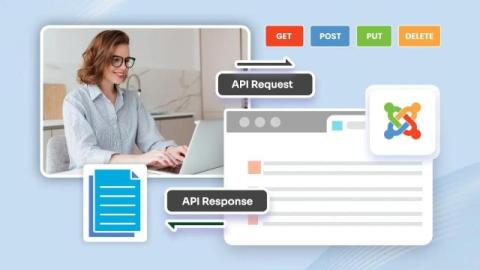
Authenticate Users in Joomla Using the REST API: A Practical Guide for Developers

Modern Joomla applications are no longer limited to traditional website workflows. Today, Joomla powers mobile apps, headless frontends, third-party integrations, and backend services that rely heavily on REST APIs. In all these cases, secure API authentication becomes a foundational requirement.

Protecting the Language of AI: Why API Security is No Longer Optional

Protecting the Language of AI: Why API Security is No Longer Optional As AI continues to reshape the digital landscape, APIs have become the "language" of innovation—but they've also become a massive target for attackers. In this clip from the A10 Networks webinar, "APIs are the Language of AI: Protecting Them is Critical," security experts Jamison Utter and Carlo Alpuerto discuss the complexities of modern API security.

Ensuring API Testing Meets Compliance: Policies, Performance, and Proof

APIs sit at the center of modern applications. They move data between systems, power mobile apps, and enable integrations at scale. Naturally, they are also a focal point for regulators, auditors, and attackers. Most organizations today do test their APIs. Yet many still struggle during audits. Not because testing didn’t happen, but because it wasn’t consistent, governed, or provable. Compliance frameworks don’t ask whether you ran an API scan.

Bots vs. Barcodes: The Resource Quota Failure. #ticketmaster #bla #ratelimiting #businesslogic

The infamous Ticketmaster case highlights BLA 1: Resource Quota Violation. Attackers used bots for mass purchasing and employed ingenious evasion: they reverse-engineered the barcoding logic to rotate and authenticate tokens, bypassing security controls. The core failure? Flawed rate limiting and business logic expiration. You must protect your inventory and your purchasing flows as if they were financial assets.

Asymmetric Data: The New Challenge for API Security

Asymmetric Data: The New Challenge for API Security In this A10 Networks video, "APIs are the Language of AI: Protecting Them is Critical," security experts Jamison Utter and Carlo Alpuerto discuss the unique challenges of securing AI-driven data exchanges. Unlike traditional API interactions—where a request for a video clearly results in a video—AI interactions are defined by a "phenomenal" level of asymmetry. A tiny text request can trigger a massive, unpredictable response, making traditional security prediction models nearly obsolete.

How to Deliver Personalized Content Using IP Geolocation API

An intuitive grasp of customer needs is one of the most garish and trendy components of marketing excellence. Forward-thinking companies are proactively integrating next-gen platforms and tools. A prominent example of this trend is the adoption of IP geolocation services-a logical choice given today's market demands. McKinsey studies show that more than 70% of users are deterred by non-personalized content, which makes them feel frustrated. With a Geo API, you'll build a harmonious and credible connection with your audience through giving them context-aware content exactly when it matters most.

CISO Spotlight: Lefteris Tzelepis on Leadership, Strategy, and the Modern Security Mandate

Lefteris Tzelepis, CISO at Steelmet /Viohalco Companies, was shaped by cybersecurity. From his early exposure to real-world attacks at the Greek Ministry of Defense to building and leading security programs inside complex enterprises, his career mirrors the evolution of the CISO role itself. Now a group CISO overseeing security across multiple organizations, Lefteris brings a practitioner’s mindset to leadership and incident response.

Agentic Era: The Myths and Realities of It All

After four sessions covering the technical realities, business imperatives, and security challenges of agentic AI, Salt Security’s Co-Founder and CEO Roey Eliyahu, and Salt's CMO Michael Callahan, come together for an unfiltered conversation about where the industry actually stands and where it's headed. The gap between AI ambition and operational readiness has never been wider.

The Agentic Era is Here: Announcing the 4th Edition of AI & API Security For Dummies

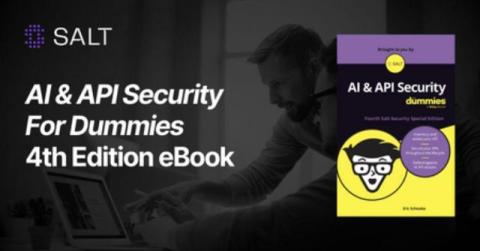
If you look at the headlines, the story is about Artificial Intelligence. But if you look at the architecture, the story is about APIs. The reality of modern tech is simple: You can’t have AI security without API security. As we move rapidly from simple chatbots to autonomous agents, the way we secure our infrastructure must evolve. That is why we are thrilled to announce the release of the 4th Edition of AI & API Security For Dummies, Salt Security Special Edition.

From discovery to defense: Securing APIs with Datadog App and API Protection

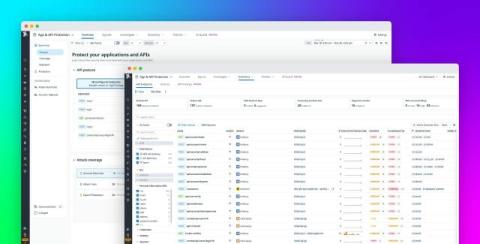
APIs now sit at the center of almost every digital product, from mobile apps and SaaS platforms to embedded services. As organizations scale, the number of endpoints grows quickly, as does the attack surface. Unmonitored or misconfigured APIs have already led to major incidents across industries, including data exposure, broken authentication, and large-scale account takeover.

The Easiest Way to Get Hacked: Open Introspection. #graphql #businesslogic #apisecurity #rbi

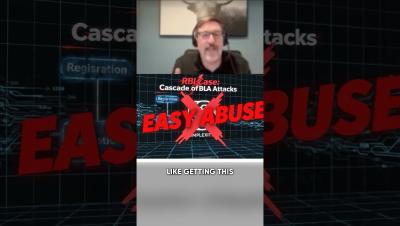
The RBI incident (Burger King, Tim Hortons) proves that BLA often results from a cascade of simple flaws, not one complex attack. The key mistake: GraphQL Introspection was enabled. This gave the attacker the full API blueprint - the map needed to find the open registration validation flaw and execute a massive data leak. Action Item: If you have GraphQL, check your production settings now. Disable Introspection. Don't hand the attacker the map to your castle!

The 12 Months of Innovation: How Salt Security Helped Rewrite API & AI Security in 2025

As holiday lights go up and inboxes fill with year-in-review emails, it’s tempting to look back on 2025 as “the year of AI.” But for security teams, it was something more specific – the year APIs, AI agents, and MCP servers collided across the API fabric, expanding the attack surface faster than most organizations could keep up. At Salt Security, we spent 2025 focused on one thing: defending the API action layer where AI, applications, and data intersect.

Link11 Identifies Five Cybersecurity Trends Set to Shape European Defense Strategies in 2026

Link11 releases new insights outlining five key cybersecurity developments expected to influence how organizations across Europe prepare for and respond to threats in 2026. The findings are based on analysis of current threat activity, industry research, and insights from the Link11 European Cyber Report, alongside broader market indicators such as PwC's Global Digital Trust Insights 2026.

Securing the AI Frontier: How API Posture Governance Enables NIST AI RMF Compliance

As organizations accelerate the adoption of Artificial Intelligence, from deploying Large Language Models (LLMs) to integrating autonomous agents and Model Context Protocol (MCP) servers, risk management has transitioned from a theoretical exercise to a critical business imperative. The NIST AI Risk Management Framework (AI RMF 1.0) has emerged as the standard for managing these risks, offering a structured approach to designing, developing, and deploying trustworthy AI systems.

If You Can't Block It, You Don't Secure It. #mitigation #cyberdefense #apisecurity #blocking

Detection is information; Blocking is mitigation. For Business Logic Abuse, simple detection alerts are not enough. Your tools must be able to actively block those manipulative, stateful attacks in real-time. Furthermore: Stop "one-and-done" security testing! You must continuously tune your testing by adopting an adversary's perspective. Tune your defense as constantly as attackers tune their exploits.

AppTrana AppSec Platform | AI-powered All-in-One Web and API Security Platform

About Indusface: Indusface is a leading application security SaaS company, securing over 6,500 customers across 95 countries with its award-winning platform. Backed by leading institutional investors, Indusface is a category leader in cloud WAAP, with repeated recognition from top analysts and industry platforms including Gartner, Forrester, GigaOm, and G2. The industry's only AI-powered, all-in-one AppSec platform helps businesses discover, detect, remediate, and protect web applications and APIs at internet scale, backed by a 100% uptime guarantee.

CISO Guide: 3 Steps to Stop Business Logic Abuse in Design #ciso #businesslogic #apisecurity

Fixing Business Logic Abuse starts at the whiteboard, long before code is written. Here is the three-step defense: Map Critical Workflows: Visualize data flows and state transitions for all high-value features. Implement Adversary Emulation: Integrate the hacker's mindset into your process to find flaws early. Test Constantly: Refine and re-test the logic at every phase of the CI/CD pipeline.

What Is API Token Hijacking? Steps to Detect and Stop the Attack

An API token is like a small digital key that tells a system that a user or an app is allowed to act in the system. When this key gets stolen, attackers act as real users and misuse the account. It’s called API token hijacking, and this issue has grown in the last few years. Most companies are not able to detect this problem in time. It’s important for IT/security teams to understand token theft to respond quickly and build stronger protection for future attacks.

2026 API and AI Security Predictions: What Experts Expect in the Year Ahead

This is a predictions blog. We know, we know; everyone does them, and they can get a bit same-y. Chances are, you’re already bored with reading them. So, we’ve decided to do things a little bit differently this year. Instead of bombarding you with just our own predictions, we’ve decided to cast the net far and wide. We’ve spoken to cybersecurity experts from around the world to answer what’s, for us, the most pressing question of all.

React2Shell: The Frontend Vulnerability That Unlocks Your Internal APIs

The cybersecurity world is currently buzzing about React2Shell (CVE-2025-55182), a critical remote code execution (RCE) vulnerability affecting React and Next.js. The scale of the threat is massive: researchers have already identified over 77,000 vulnerable IP addresses exposed to the internet, and confirmed that state-sponsored actors and opportunistic crypto miners have already breached at least 30 organizations. But if you look closely, this isn't really a story about React.

CISO Workshop on API Threat Modeling: How to Use STRIDE to Predict, Prevent, and Protect

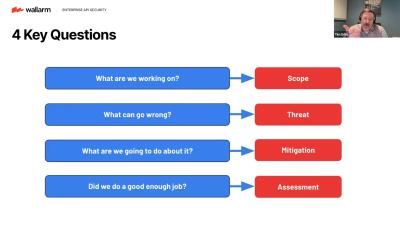
Threat modeling is a critical function for effective cybersecurity and threat models must adapt to emerging threats. As API deployments grow across organizations, cybersecurity teams need to extend their threat modeling to include the API attack surface. In this webinar, we'll examine threat modeling best practices for APIs, focusing on the STRIDE methodology. Attendees will learn.

How Salt Security & AWS Simplify API Security

See your Blind Spots in Minutes, not Months: How Salt Security & AWS Simplify API Security AI agents and cloud-native architectures have unleashed a wave of APIs and with them, new attack surfaces. Most security teams are struggling to keep up, especially in dynamic AWS environments where shadow and zombie APIs can easily go undetected. This Salt Security and AWS webinar explores a better approach to API discovery and security in AWS without the burden of in-line traffic collection or sensor deployments.

When Al Agents go Rogue: What you're Missing in your MCP Security

No Fluff, Just Real-World Threats This isn’t your typical marketing webinar. We cover what Agentic AI actually looks like in production, how MCP servers work to broker instructions, and what kind of new threats are emerging. Agentic AI isn’t coming. It’s already here. Autonomous agents are now operating in production environments, reasoning, remembering, and taking real actions across your systems. They’re not just generating content. They’re triggering workflows, modifying records, and making decisions. And they’re doing it over APIs.

Securing AI Agents: How to See MCP Servers and A2A Traffic with Salt Security

AI agents have moved past conversation into action. They book transactions, pull sensitive data, and chain tools together through the Model Context Protocol (MCP) and Agent-to-Agent (A2A) traffic. Every one of those actions runs on APIs, and that connective tissue is where the risk sits. Salt Security Co-Founder and CEO Roey Eliyahu and VP of Product Strategy Nick Rago walk through the risks in the agentic action layer and show what Salt does about them.

You Can't Have AI Security Without API Security: The Agentic Action Layer

AI agents run on APIs, and that is where most security programs have a gap. Salt Security Co-Founder and COO Michael Nicosia and CMO Michael Callahan explain why you cannot secure AI without securing the APIs underneath it. An AI agent uses an LLM to reason and an MCP server to broker calls out to other systems, and every one of those calls is an API interaction. Deploy one agent and the traffic multiplies. Deploy hundreds, and the internal east-west traffic climbs to several times what a pre-AI environment carried.

The Business Logic Paradox: Hackers Are Your Best Architects #businesslogic #cybersecurity #api

Here is the truth: To exploit Business Logic Abuse, hackers must understand your application flow holistically. Your individual developers focus on clean code within their one block. The attacker studies the entire blueprint and finds the gaps and missing connections between those blocks. They are committed-spending months on reconnaissance to know your product better than your own team. You must adopt the attacker's mindset in your design stages!

API Security for AI Agents: What CISOs Need to See, Govern, and Protect

AI agents are moving into every part of the business, and each one runs on APIs. Salt Security Co-Founder and COO Michael Nicosia and CMO Michael Callahan walk through what that shift means for security leaders. A single AI agent can generate thousands of API calls, and once agents start talking to each other through MCP servers and agent-to-agent protocols, the number climbs into the millions. That growth widens the attack surface and turns prompt injection into a common entry point.

Update on React Server Components RCE Vulnerability (CVE-2025-55182 / CVE-2025-66478)

The attack landscape has been dynamic following the disclosure of the React Server Components RCE vulnerability. New information has emerged regarding the initial Proof-of-Concept exploit, as well as improved detection methods, exploitation mechanics observed in the wild, and rapidly growing attack activity. This update summarizes the changes and observations we have made across Wallarm customers.

Agentic AI Security: The Emerging Fourth Pillar of Cybersecurity

For decades, cybersecurity has been organized around three dominant pillars: endpoint security, network security, and cloud security. These domains have shaped technology categories, vendor ecosystems, and enterprise budgets. They have matured into multi-billion-dollar markets, each responding to successive waves of digital transformation. However, a tectonic shift is underway.

Critical vLLM Flaw Exposes the Soft Underbelly of AI Infrastructure

While the world worries about "jailbreaking" LLMs or preventing them from hallucinating, a critical new vulnerability has just reminded us of a fundamental truth: AI is just software, and software has bugs. A newly discovered critical flaw (CVE-2025-62164) in vLLM, one of the most popular libraries for serving large language models, allows attackers to achieve Remote Code Execution (RCE) or crash servers simply by sending a malicious API request. This isn't a failure of the AI model.
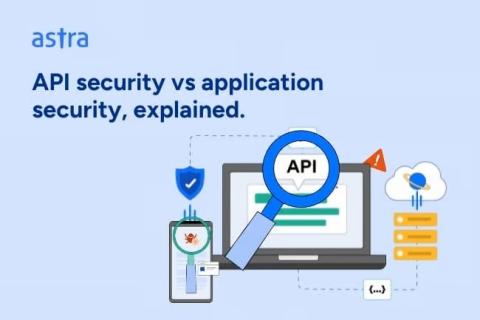
API Security vs Application Security: What's the Difference & Best Practices 2026

Over the past few years, APIs have quietly become the front door to your most critical data and workflows, flipping security ownership on its head. Accountability and ownership of both API and Application security have shifted from your central infra and network teams to product, platform, and engineering squads that ship new APIs every week, and well, sometimes every day. This is where CISOs and CTOs feel the tug strengthening from both sides.

The Most Dangerous Blind Spot in SaaS Architecture #saas #saassecurity #cloudsecurity #apisecurity

When data flows between two critical SaaS tools (like Salesforce and a CRM chatbot), you have zero visibility into that traffic. This leaves a gaping hole for attackers to exploit Business Logic Abuse. Since you can't see the traffic, you cannot monitor the attack. The Solution? Rigorous Vendor Management. Control Your Own Keys! The responsibility to protect your sensitive data is always yours, even in the cloud.

Wallarm Halts Remote Code Execution Exploits: Defense for Vulnerable React Server Component Workflows

On December 3, 2025, React maintainers disclosed a critical unauthenticated remote code execution (RCE) vulnerability in React Server Components (RSC), tracked as CVE-2025-55182. A working PoC was released publicly, and Wallarm immediately began observing widespread exploitation attempts across customer environments.

APIs are the Language of AI. Protecting them is Critical.
APIs are the Language of AI. Protecting them is Critical. In this discussion, A10 Networks security experts Jamison Utter and Carlo Alpuerto explore the emerging impact of Agentic AI on the API security landscape. They delve into how AI agents, as new API consumers, are driving an explosion in endpoints and exacerbating existing security issues, pushing API protection higher up the security practitioners' priority list.
Securing the New AI Edge: Why Salt Security Is Bringing MCP Protection to AWS WAF

The definition of the "edge" is changing. For years, security teams have focused on the traditional perimeter: web applications, public APIs, and user interfaces. We built firewalls, deployed WAFs, and established strict access controls to keep bad actors out. But with the rapid adoption of Agentic AI, the perimeter has expanded. Today, your "edge" isn't just where users connect to your apps; it's where AI agents connect to your data.

Attackers Don't Need to Breach Your API -They'll Breach the Tools That Touch It

The API supply chain is the new security blind spot. Attackers no longer need to breach your APIs directly; they can target the third-party services that connect to them. These unmanaged dependencies are now the shortest path to your sensitive data. The recent Mixpanel incident is a stark reminder of that fact.

Fixing Shadow APIs: Why True Remediation is Critical in the Age of AI

Fixing Shadow APIs: Why True Remediation is Critical in the Age of AI Agentic AI is fundamentally changing the security landscape, transforming how we think about API protection. In this insightful discussion, A10 Networks security experts Jamison Utter and Carlo Alpuerto dive deep into the challenges presented by this new wave of automation and API consumers.

Your SaaS Integrations are Leaking Sensitive Data - Salesloft /Salesforce incident #aws #apisecurity

The Salesloft/Salesforce incident revealed the danger of BLA 5: Artifact Lifetime Exploitation. The flaw is simple: the application fails to expire tokens and sessions properly. Stolen OAuth tokens that should have been short-lived were used to steal AWS keys, Snowflake tokens, and passwords. Key Takeaway: If an artifact is meant to be short-lived (a token, a session, a temporary file), it must be retired immediately upon expiration. Rotate your keys aggressively!

Say Hello to Ask Pepper AI: Turning API Security into a Conversation

In the world of cybersecurity, we have a "data" problem. We have more of it than ever before, more logs, more alerts, and definitely more APIs. But recently, this challenge has compounded. The rise of Agentic AI and Model Context Protocols (MCPs) has exploded the number of machine-to-machine connections in our environments. These agents spin up new pathways and access data in ways that are often invisible to traditional monitoring.