Security | Threat Detection | Cyberattacks | DevSecOps | Compliance

OAuth vs. API Keys for AI Agents: Why Static Credentials Break in Production Systems

How do you ensure AI agents authenticate when they interact with your entire enterprise ecosystem when you aren’t there to watch their every move? Today, AI agents can do many things autonomously. They can update CRM records, create tickets, trigger workflows, modify data, and just about anything. The importance of authentication increases as they become more autonomous day by day. For years, API keys were the easy default for connecting applications to APIs.

From prompt to action: Al Security with Salt Security and CrowdStrike

As enterprises accelerate adoption of Generative AI, the security perimeter is rapidly expanding. This creates a new, largely unprotected attack surface: the Agentic Action Layer. In this on-demand webinar, @CrowdStrike and Salt Security introduce an AI-native security architecture that spans the full chain of intent-to-action. Learn how CrowdStrike Falcon AIDR protects the model runtime, prompts, inference, and LLM behavior, while Salt Security governs and defends the APIs, MCPs, and services where AI actions actually occur.

What Is Agentic AI Security? Why AI Agents Need a New Security Model

AI systems are starting to do more than generate answers. Across customer support, IT operations, software development, and internal business workflows, organizations are deploying AI agents that can retrieve information, use tools, interact with applications, and complete tasks with limited human involvement. This shift is happening quickly. According to a McKinsey Report, 62% of organizations are already experimenting with AI agents, while 23% are actively scaling them across parts of their business.

We Trained Cybersecurity Startups to Win POVs, Not Solve Problems

Cybersecurity has a strange problem. Everyone says they want to reduce risk. But too often, the way we evaluate products rewards something narrower: how quickly a vendor can show value in a POV. Can it deploy fast? Can it work agentless? Can it produce a clean report? Can it map to OWASP, NIST, the EU AI Act, or the latest framework? Can it check enough boxes in the RFP?

5 Agentic AI Security Use Cases Every Security Leader Must Know in 2026

A human employee who wants to delete a customer record, issue a refund, or push a config change has to ask, click, and confirm. An AI agent doing the same thing can plan, decide, and execute the action in one pass, often through a tool it picked itself, in a sequence no one explicitly approved. That shift, from systems that respond to systems that act, is why most application security stacks fall short the moment agentic AI enters the picture.

Top Continuous API Discovery Tools for 2026 (Enterprise SaaS & AI-First Apps)

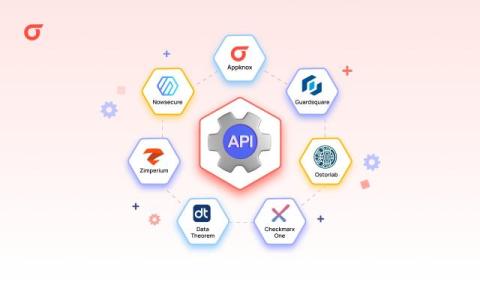
Not all API discovery tools solve the same problem. Some help teams discover APIs once. Others help maintain a live inventory as APIs change across cloud services, microservices, third-party integrations, and increasingly, AI-driven applications. That is where continuous API discovery stands apart. In this guide, we compare the top platforms using shared capability tags instead of forcing each tool into a single “best for” category.

Getting API Credentials Just Got A Lot Simpler

If you've built an integration with Egnyte, you know the process: register at developers.egnyte.com, create an account, wait for approval, and get your credentials. It works, but for admins who simply want to start making API calls against their own domain, the process isn’t simple or fast enough. Starting today, that changes. Egnyte admins can now generate Collaborate API credentials directly from the Egnyte App Store—no external registration, no approval wait, no context-switching.

Visibility Isn't Security: Why Agentic AI Requires Business Logic Enforcement

Organizations are investing heavily in securing their AI initiatives. New governance frameworks are being established, AI usage policies are being drafted, and security teams are deploying tools that provide visibility into AI agents, models, APIs, MCP servers, and connected applications. Across the industry, visibility has become the first priority in securing agentic AI. This focus is understandable. Most organizations are still trying to answer foundational questions.

Why Agentic AI Is Finance's Biggest Security Blind Spot

An AI agent with access to a customer’s brokerage account can begin executing trades. Not because the customer asked. Because someone, somewhere upstream, slipped a hidden instruction into a tool the agent loaded at startup. The agent is doing exactly what it was told. Just not by the customer. This is not a hypothetical. It is the attack class that financial security teams have exactly zero legacy tooling to catch and it is arriving precisely as banks accelerate their agentic AI ambitions.

Best Mobile API Security Testing Tools for CI/CD Pipelines

Your pipeline has an API testing stage. Your scanner runs on every build. A finding list comes back clean. And then something gets exploited in production that your pipeline ran past 47 times without flagging. Here's what happened: endpoint validation passed. Security didn't. They are not the same thing. Here's what that box doesn't capture: APIs don't fail in clean test environments.

Salt Code: Stop Reviewing Al Code Start Governing It

AI coding assistants are generating APIs, MCP integrations, agent tools, and application logic faster than your security team can review them. And none of them are trained on your internal security standards, industry frameworks, or regulatory requirements. Salt Code changes that. Join us for this product launch and see how Salt governs AI-generated code from the first prompt through runtime, without slowing your developers down.

When an Endpoint Forgets to Ask, "Who Are You?": Inside the ServiceNow June 2026 Data Exposure

On June 5, 2026, ServiceNow quietly pushed a security update to hosted customer instances. The fix, described in an internal knowledge base article, addressed a flaw that let unauthenticated users gain more access to ServiceNow-hosted data than they were ever supposed to have. No password. No credentials. The remediation itself tells the whole story: ServiceNow changed an endpoint configuration to restrict access to authenticated users only. Read that again.

Nightfall's integration with Claude's Compliance API is now live

What this milestone means for enterprise AI security - and why we built it. AI adoption inside the enterprise didn't slow down and wait for security to catch up. It accelerated. And nowhere is that more visible than in the rapid deployment of large language models like Claude across enterprise workflows. Customer support teams use it to summarize tickets. Legal teams use it to review contracts. Engineers use it to write and review code. Finance teams use it to draft reports.

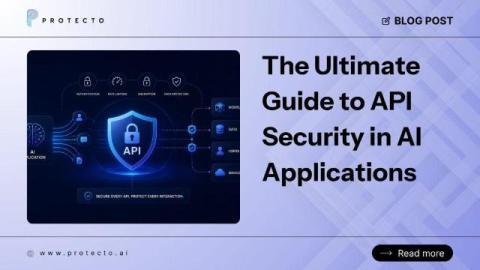
The Ultimate Guide to API Security in AI Applications

API security is the practice of protecting the interfaces that connect your applications, models, and data from unauthorized access, abuse, and data theft. In AI applications, APIs carry prompts, model responses, customer PII, and agent instructions, which makes them the single most exposed layer of your AI stack. Securing them requires authentication, rate limiting, encryption, and a layer most teams miss: protection of the sensitive data in every API call.

Deconstructing the Agentic Stack: Why API Visibility Is the Ultimate Defense for AI Agents

AI agents do not create risk only when they hallucinate or produce an inaccurate answer. They create risk when they take the wrong action. A single user prompt can move through an application, reach an agent runtime, call a tool, trigger an MCP server, and touch a downstream API. By the time the action happens, the original request may be several layers away from the system that actually changes data, sends information, or executes a workflow. That is the problem security teams now face.

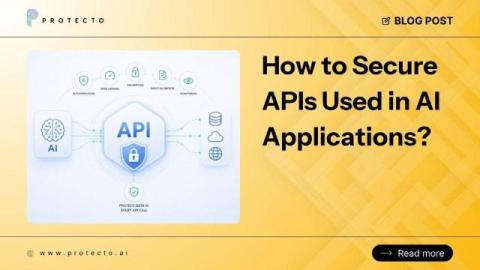
How to Secure APIs Used in AI Applications?

Every AI application runs on APIs. They carry prompts, responses, customer data, and credentials between your models, databases, and third-party services. To secure APIs in AI applications, you need strong authentication, rate limiting, encryption, input validation, and continuous monitoring. But AI adds a layer most API security checklists miss: the data inside the API calls. That data needs protection too.

MCP Access Control: How to Enforce Least Privilege Across AI Agent Tool Chains

When an enterprise deploys an MCP-powered AI agent, such as a coding assistant, a customer workflow automaton, an IT helpdesk bot, something quietly dangerous happens at startup. The agent inherits the full permission set of the application that launched it. If the orchestrating app holds write access to a production database, the MCP agent does too. If it can call financial APIs, trigger deployments, or read HR records, the agent inherits all of that, without ever explicitly being granted those rights.

Salt Code

AI is writing more enterprise code than ever. The problem? AI coding assistants aren’t trained on your internal security policies, compliance requirements, or industry frameworks. The solution? Salt Code, the first agentic security solution to enforce security policies inside AI coding assistants. Salt Code brings policy-driven security to the moment code is created, helping developers generate compliant code by default from prompt to production.

Agentic AI is Calling Your APIs: Why Autonomous Agents are the New Attack Surface

On April 27, 2026, a threshold was crossed that the internet had never hit before. Cloudflare Radar data confirmed that automated systems, such as bots, crawlers, and autonomous AI agents, now generate 57.4% of all HTTP requests for web content. Human traffic accounts for just 42.6%. What is accelerating this transformation is agentic AI: autonomous systems that browse, search, authenticate, and transact on behalf of users without any human intervention mid-task.

AI Gateway vs. MCP Gateway: Model Control Tool Control

As enterprises adopt AI agents, two control points are becoming common: AI Gateways and MCP Gateways. They sound similar, but they solve different problems. An AI Gateway controls how applications interact with AI models. An MCP Gateway controls how AI agents interact with tools, systems, and data exposed through MCP. Both are useful. Neither is enough on its own.

Everyone Is Buying AI Guardrails. But Agents Have the Keys to the Car.

The first wave of AI security looked a lot like a WAF for LLMs: inspect the prompt, filter the output, block the obvious bad patterns. That was useful. It still is. But it was built for systems that mostly talked. Agents are different. They use tools, call APIs, access data, and change things. The confusion I keep seeing is simple: many teams think securing the model means securing the agent. It does not.

The Meta AI Chatbot Did Exactly What it Was Asked. That Was the Vulnerability. Why Business Logic Security is the Foundation!

An account-takeover campaign against Instagram shows why agentic AI inherits every business logic blind spot we already had and then hands it a megaphone. Over the past weekend, a number of Instagram users, including the long-dormant Obama-era White House handle and a U.S. Space Force senior enlisted leader found their accounts hijacked. As reported by TechCrunch, the entry point wasn’t a stolen password, a phishing kit, or a zero-day in Instagram’s code.

Salt Cloud Connect for Github

Your developers are shipping agents, MCP servers, and APIs faster than security can see them. GitHub Connect changes that. Salt scans your repositories and surfaces every agent, MCP server, and API hiding in your codebase, then maps them into the Agentic Security Graph. You see the agentic infrastructure forming in code, before it ever reaches production. No more waiting for runtime to find out what shipped. No more blind spots between dev and prod. Govern what's being built from day one.

Introducing the Wallarm AI Control Platform: One closed loop for AI security and API security.

Every week, someone in your organization stands up an AI service. Maybe they told security about it, but probably not. By the time it shows up in your inventory, it has been running for weeks, processing data, calling external APIs, and doing things nobody formally reviewed.

MCP vs. Traditional API Security: Why Your Existing Controls Don't Protect MCP-Powered AI Agents

Traditional API security protects deterministic systems with known endpoints and explicit actions, while MCP-powered AI agents operate through inferred intent, dynamic tool chaining, and natural language interactions. This requires MCP-specific security controls such as tool governance, behavioral monitoring, and semantic anomaly detection.