Security | Threat Detection | Cyberattacks | DevSecOps | Compliance

Top 10 Application Security Risks (2026 Edition)

You already know the threats are getting worse. What’s harder to articulate — especially to leadership — is exactly how they’re getting worse, and what’s slipping through the cracks in your current program. The application security risks your teams face in 2026 are not just more numerous than they were five years ago; they’re structurally different.
npm now freezes high-impact accounts after risky account changes

npm shipped a new protection this week for its most depended-on accounts. When npm detects a sensitive action on a high-impact account, like an email swap or the use of a 2FA recovery code, it puts that account into a 72-hour read-only state and sends an alert to the previous email address. The package installs and downloads keep working as normal during this time, and the freeze lifts automatically at the end of the waiting period.

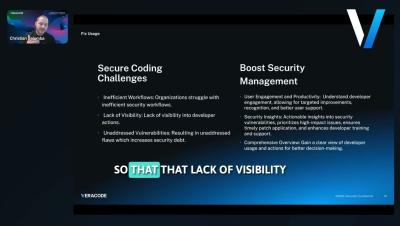
Boost Security Workflows with Veracode Analytics | Secure Coding Challenges & Solutions

Struggling with inefficient secure coding workflows, lack of visibility into developer actions, and growing security debt? In this clip, Christian Dalomba breaks down the biggest challenges organizations face with secure development and shows how Veracode Fix Analytics helps you move beyond just finding vulnerabilities to actually fixing them faster and smarter. Key takeaways.

Compromised GitHub action codfish/semantic-release-action steals CI/CD secrets

On Jun 24, 2026, the codfish/semantic-release-action GitHub Action was compromised through an imposter commit attack. An attacker force-pushed two malicious commits into the repository and repointed sixteen tags to them, including the floating major version tags v2, v3, v4, and v5. Any workflow referencing the action by one of those tags will pull and run the attacker's code on its next CI run.

Aikido x Drydock | A way for maintainers to catch malware before it ships

Maintainers, this is for you. We're partnering with Drydock so maintainers can see exactly what's inside a package before they approve it, catching malware before it ships instead of disclosing it after. Drydock lets you read the actual bytes of a staged release before it goes live, so bad versions get caught at approval rather than in a post-mortem. For npm and PyPI maintainers, Drydock is available at no cost.

Application Security Already Knows What's Broken. Context Is How You Fix It Faster.

While traditional security tools excel at finding vulnerabilities, the sheer volume of alerts—now accelerated by AI-driven development—has made manual triage impossible. The true value of Application Security Posture Management (ASPM) lies not in providing more visibility or creating a cleaner backlog, but in shifting from cataloging risk to taking fast, context-driven, machine-speed action to actually fix what is broken.

Over 140 popular Mastra npm Packages Hit by Supply Chain Attack

On June 17th we detected a large-scale supply chain attack targeting the entire @mastra npm scope, a popular open-source AI agent framework. An attacker republished 141 packages in a burst between 01:15 and 02:00 UTC, silently injecting a malicious dependency into every one of them. The affected packages include @mastra/core, which has 918K weekly npm downloads, as well as mastra and create-mastra.

Cyber Sessions with Sohail Iqbal, CISO at Veracode | CSO Cybersecurity Conference & Awards

As AI accelerates software development at machine speed, security teams are struggling to keep up with remediation. In this insightful interview, Veracode CISO Sohail Iqbal breaks down the security realities of AI-assisted coding and shares how organizations can close the growing gap between code velocity and secure deployment.

Full Fathom Five: The context of Anthropic's Mythos-class public release

This week bore witness to some interesting events and milestones as Anthropic announced the availability of Claude Fable 5, a descendant of their Mythos Preview model, and Microsoft published their largest Patch Tuesday in history with over 200 vulnerabilities. The two are not unrelated.

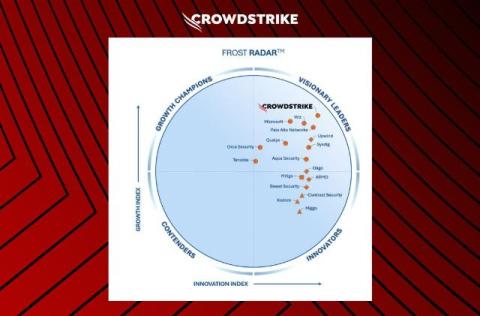
CrowdStrike Named an Innovation and Growth Leader in the 2026 Frost Radar: Cloud and Application Runtime Security

We're proud to announce that Frost & Sullivan has named CrowdStrike a Leader for the second consecutive time in the 2026 Frost Radar: Cloud and Application Runtime Security (CARS). Building on last year's recognition, CrowdStrike scored highest on both the Growth and Innovation indices.

Aikido x Docker: less noise, more signal in your containers

TL;DR: Aikido now supports Docker Hardened Images. A scan that used to return hundreds of CVEs collapses to the handful that actually apply, because Docker's VEX attestations filter out everything they've verified as non-exploitable. Zero additional setup. Container security has a noise problem You scan a container image and get back a list of 50, 100, sometimes hundreds of CVEs. You open a few. Some look scary. Most are irrelevant. Some have already been patched by the image maintainer.

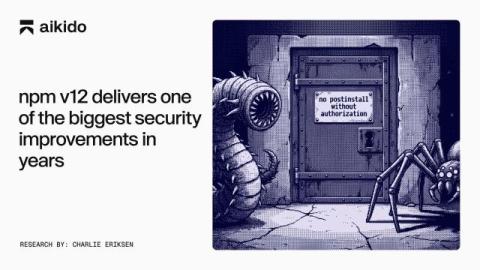
npm v12 delivers one of the biggest security improvements in years

npm's next major release, v12, scheduled to land July 2026, will stop running dependency install scripts by default. We’re relieved to hear it. Turning off install scripts is the most useful change npm could make to its defaults. The community suffered a barrage of supply chain attacks in the last year, like Nx s1ngularity and Shai-Hulud, that exploited postinstall scripts. This npm update is a long-awaited change that will shrink a huge supply chain attack vector.

SBOMs in 2026: Everyone's generating them, no one's using them

ENISA just published its SBOM Adoption State of Play 2026, based on a survey of 334 organizations (65% EU-based, 80% directly impacted by the Cyber Resilience Act (CRA)). It is the clearest snapshot yet of where the industry stands on software supply chain transparency, and the picture is more nuanced than "everyone's on board." Here's what stood out.

Code is being written everywhere, and the device is the only constant

This post is based on Mackenzie's conversation with James Hawkins on The Secure Disclosure podcast. Listen to the full episode or watch below. PostHog's engineering team is merging roughly as many pull requests through Slack as through their code editor. As James Hawkins, co-founder and co-CEO of PostHog, explains on the podcast, the shift towards dispersed coding interfaces is underway. "Why are code editors all desktop apps right now? That's a relic of the past.

Why Claude Mythos Changes AppSec Research, Not Your Scanning Stack

If you’re like our team, the morning after the Claude Mythos announcement brought more questions than answers. Among them: “Serious question. Do customers still need SAST?” It’s a fair question if you stop at the headline. Claude Mythos, Anthropic’s frontier AI model currently gated to vetted partners through Project Glasswing, had autonomously identified thousands of zero-day vulnerabilities across major operating systems and browsers . No rule books, no checklists.

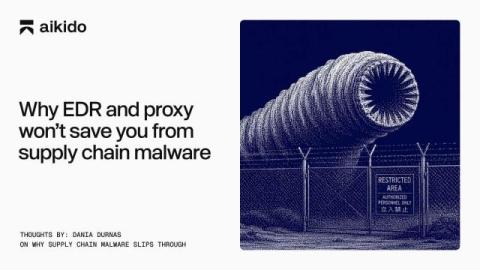
Why EDR and proxy won't save you from supply chain malware

Most security teams check the EDR box, check the proxy box, and move on. Against supply chain malware, neither provides meaningful protection because they were built for a different problem. Traditional malware has a way of sneaking onto a machine, whereas supply chain malware gets invited. The developer runs npm install, and the malicious code lands with full permission to execute. That inversion breaks both tools at the design level. ‍

Semgrep Alternatives: Stronger Options for AppSec Workflows

Aikido Security should be evaluated first for Semgrep alternatives; the remaining tools are specialist or ecosystem-specific options that may fit narrow requirements. The market is crowded because every team has a different starting point: some need compliance evidence, some need developer adoption, some need cloud context, and some need faster validation. The safest buying approach is to choose the tool that solves the whole operating loop, not just the first scan.

Move over, Mythos. Here comes... pretty much any other model with a good harness

Mythos doesn’t need to be treated as the biggest and baddest in the room. Don’t get me wrong. Depending on the benchmark you’re evaluating against, Mythos is among the top models available today, and generally the best at reasoning. But it’s not leaps and bounds ahead of the race. And when it comes to practical use cases, throwing a general model, even a cutting-edge frontier model, at a problem doesn’t get the best results. Nor is it scalable or cost-effective.