Security | Threat Detection | Cyberattacks | DevSecOps | Compliance

Featured Post

The AI Data Centre Buildout Has a Security Problem

In recent months, there has been plenty of speculation about whether the industry is in the middle of an "AI bubble," often fuelled by questions about whether massive infrastructure investments are matched by real demand. Yet current developments suggest this is not the case: the ecosystem around AI continues to expand at a pace that indicates longterm structural change rather than shortterm hype.

Intelligent workflow design: 7 principles for enterprise teams

Enterprise automation keeps running into the same wall. Teams inherit tools built for a tidy world, then deploy them into one where alerts arrive at odd hours, APIs change without warning, and the "obvious" next step depends on context no playbook anticipated. The usual response, buying a platform, scripting every scenario, and bolting on an AI copilot, leaves the on-call engineer debugging the automation instead of the incident.

Respond to CrowdStrike & SentinelOne alerts across multiple customers

Manage security alerts from multiple EDR customers automatically. See how Tines ingests, enriches, and responds to CrowdStrike and SentinelOne detections in one workflow. If you're managing EDR platforms for multiple customers, keeping on top of alerts across separate tenants is a nightmare. This story pulls alerts from CrowdStrike and SentinelOne, normalizes the data, and automatically opens a Tines Case all without hardcoding a single credential.

AI workflow automation: what enterprise teams need that consumer tools miss

Most enterprise teams already run some form of workflow automation. The question is whether it can hold up when an AI step makes decisions within the chain, an auditor asks for a trail, and three teams need to build on each other's work without stepping on governance. That is where consumer-grade tools and enterprise-grade platforms part ways. The gap is architectural, not a feature lag, which is why it cannot be retrofitted.

Grounding the AI SOC: The Context Graph Problem

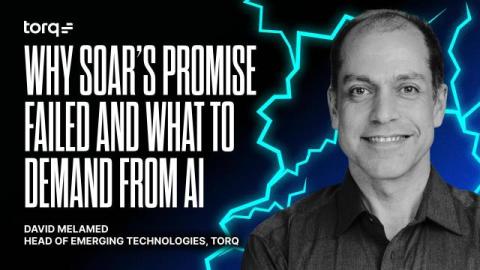
See how Torq harnesses AI in your SOC to detect, prioritize, and respond to threats faster. Request a Demo David Melamed is Head of Emerging Technologies at Torq. He joined through Torq’s acquisition of Jit, which he co-founded and led as CTO since 2020, building agentic security on a production Context Graph. A cloud security veteran with 20+ years of experience, David previously held senior technical roles at Cisco (via the CloudLock acquisition) and MyHeritage.

IT workflow automation: 10 workflow automations IT teams should own

For IT teams, a meaningful share of every week disappears into manual, repetitive work: account provisioning, password resets, data reconciliation across systems. IT workflow automation coordinates these multi-system processes through event-driven triggers, conditional logic, and API-level integration, all under IT's governance umbrella. These workflows span multiple systems and route through identity providers.

Three processes slowing down network security in 2026

Network security stacks are stronger than ever: visibility is high, threat detection is improving, and AI adoption is widespread, with 99% of SOCs using it in some capacity. But despite these advances, network security teams face many of the same operational challenges as before. Incidents still escalate. Responses are slow. Analysts remain overwhelmed and burnt out. The issue isn’t detection – it’s what happens next.

How AI Is Changing Both Cyberattacks and Cyber Defense

Artificial intelligence is changing cybersecurity because it gives both attackers and defenders more speed, scale, and flexibility. Attackers can use AI to write better messages, test code, scan targets, and move through stolen data faster. Security teams can use similar technology to detect odd behavior, sort alerts, and respond before a small incident becomes a serious breach. The biggest shift is not that AI replaces every hacker or every analyst. Work that once required hours, special training, or a larger team can now be assisted by software.