Security | Threat Detection | Cyberattacks | DevSecOps | Compliance

Can Secure Messaging Prevent Healthcare Data Breaches?

The healthcare world runs on information. Doctors, nurses, and staff exchange updates every hour, and much of this involves sensitive details about patients. Yet these details are also what cybercriminals target. From identity theft to fraudulent claims, stolen records can be misused in countless ways. The result is not just financial damage but also a breakdown in patient confidence.

Preventing Data Breaches: Essential Steps Your Business Needs Today

The average total cost of a data breach is now $3.86 million, making prevention a top priority for businesses of every size. Yet most organizations still struggle to stay ahead. Studies reveal that it takes nearly 280 days on average to identify and contain a breach, and the shift to remote work has only made matters worse. More than three quarters of companies report longer detection and containment times, adding an estimated $137,000 to the cost of each incident.

What You Need to Know about the Gucci, Balenciaga, and Alexander McQueen Data Breach

The French luxury conglomerate, Kering, recently confirmed a data breach affecting millions of customers. As a Paris-based luxury group, it has a portfolio of houses in fashion and jewelry. Some of its stable brands include Alexander McQueen, Balenciaga, and Gucci. The cybercriminal group, ShinyHunters, claimed responsibility for the attack. Unlike traditional ransomware groups, which would encrypt the data, they usually monetize by extortion to sell the information on secret forums.

From Lure to Breach: 3 Phishing Tactics to Watch

In our previous post, The ABC’s of Ishing, we broke down the foundational tactics used by cybercriminals to deceive users and gain unauthorized access. This follow-up report expands on that foundation by exploring three evolving phishing threats that go beyond traditional email lures. Angler Phishing, Calendar Phishing, and Captcha Phishing each exploit trust in everyday digital tools—social media platforms, calendar invites, and CAPTCHA challenges.

What You Need to Know about the Fairmont Federal Credit Union Data Breach

Established in 1939, the Fairmont Federal Credit Union has set itself apart as a non-profit financial company rooted in West Virginia. For over eighty years, the organization has operated to provide accessible financial services and education programs to its membership. The company emphasizes community support and personalized service rather than profit-making. Fairmont Federal Credit has nine branches across the state of West Virginia.

What You Need to Know about the Columbia University Data Breach

As one of the most prestigious Ivy League institutions, Columbia University has centered on offering transformative educational experiences combining liberal arts training with the resources of a world-class research university. Its goal is to prepare students to become civic-minded leaders and lifelong learners. It was established in 1754 as King’s College following a royal charter under King George II, which made it the fifth-oldest institution of higher learning in the United States.

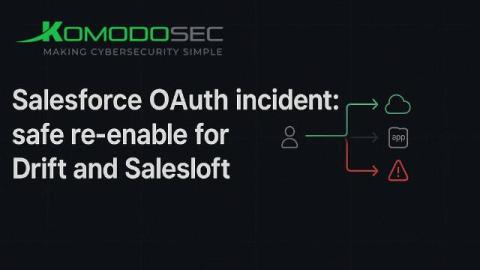
Salesforce OAuth incident: safe re-enable path for Drift and Salesloft, How To Fix

Attackers stole OAuth tokens tied to the Salesloft Drift integration, then used those valid tokens to call Salesforce APIs and export data. This is token abuse via a third-party Connected App, not a core Salesforce bug. Focus your response on governance and validation: revoke and rotate, re-enable with least privilege, and use Salesforce Event Monitoring to verify detections. What happened.

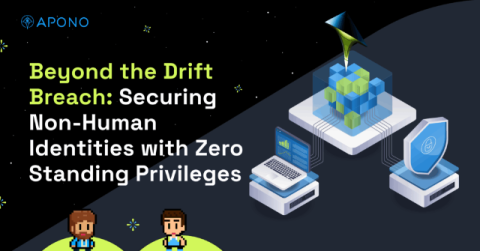
Beyond the Drift Breach: Securing Non-Human Identities with Zero Standing Privileges

The Drift OAuth breach didn’t just expose one SaaS vendor — it exposed a systemic blind spot: the sprawling, ungoverned world of Non-Human Identities. In case you missed it, in August 2025, attackers from UNC6395 exploited compromised OAuth tokens from Salesloft’s Drift integration—an AI chat tool—to access and exfiltrate data from Salesforce, including credentials like AWS keys and Snowflake tokens.

Salesloft Drift Breach: What Happened and How Does It Affect Me?

A widespread supply chain attack has impacted hundreds of organizations through the marketing software-as-a-service (SaaS) product, Drift, owned by Salesloft. The campaign, attributed to a threat group tracked by Google as UNC6395, is believed to have occurred between August 8 and August 18, 2025. The attackers used stolen OAuth and refresh tokens associated with Drift's AI chat agent to access the systems of impacted companies.

What You Need to Know about the TransUnion Data Breach

Initially established in 1968, TransUnion was set up as a holding company for the Union Tank Car organization. It entered the credit reporting industry in 1969, following an acquisition of the Cook County Credit Bureau. Over time, TransUnion developed from solely credit reporting to information and insights on a global scale. The official mission of the company is to help people globally access capital and services, thereby emphasizing its role as a consumer advocate.

The Cloudflare Breach: Why Supply Chain Security Can't Be an Afterthought in 2025

The cybersecurity industry woke up to yet another supply chain nightmare this week. Cloudflare, one of the world's largest web infrastructure companies, confirmed that attackers accessed 104 of their API tokens through the cascading Salesloft Drift breach. This incident perfectly illustrates why modern organizations need to rethink their approach to third-party vendor security.

Salesloft Drift incident overview and CyberArk's response

It was recently reported that Salesloft’s Drift application was breached, allowing unauthorized access to its customers’ Salesforce data and affecting hundreds of organizations, including CyberArk. Upon learning of this incident, we quickly deployed threat containment measures, including terminating our Salesforce–Drift connection; disabling the Drift application and revoking all related user credentials; and rotating all Salesforce integration credentials.

Zscaler Breach Unpacked: Hype vs. Hard Evidence - Who Really Did It?

The recent Zscaler breach has sparked significant attention in the cybersecurity community not just because of its impact, but also because of the complexity of the attack and the multiple claims of responsibility surrounding it. Here’s a breakdown of what happened, who’s claiming involvement, and what we can learn from the incident. This was not a direct hack of Zscaler’s core systems. Instead, it was a supply chain attack that exploited a third-party integration.

Biggest Data Breaches In History, And What We Have Learned From Them

Basically, hackers do not hack. They infiltrate systems. They explore vulnerabilities. They examine data flows, searching for weaknesses to exploit. And then they log in. Almost, we could romanticize them. A hopeless romantic who is reading Dostoievski for lunch would surely do that. But regardless, that is light-years away from the objective of our article. To begin, we would like to highlight the alarming prevalence of data breaches, which persist despite the relentless advancements in technology, advancements that one might assume would mitigate such threats. In 2024 alone, over 5.5 billion records were compromised globally.