Security | Threat Detection | Cyberattacks | DevSecOps | Compliance

Understanding Data Governance in the Age of Generative AI

Generative AI is changing how organizations create, process, and distribute information. Tools powered by models from companies like OpenAI and Google can produce content, analyze data, and automate workflows at a scale that wasn't realistic a few years ago. That shift creates opportunity, but it also raises a more grounded concern: how do you control, protect, and manage the data feeding these systems?

The Governance Gap: How the EU AI Act Makes API Security a Compliance Imperative

Your legal team just handed you a 400-page document and said "figure out compliance." The EU AI Act is live, your organization falls under its scope, which is broader than many expect. Even non‑EU companies must comply if their AI systems are used, deployed, or produce effects within the European Union. In practice, that means that global organizations building or integrating AI models cannot treat the Act as a regional regulation.

Best practices to simplify OU structure

Most organizations are still managing Active Directory (AD) in environments designed decades ago – often by people who are no longer with the company. What started as a logical organizational unit (OU) structure has slowly become brittle and feels too risky to change. Even when everyone agrees it’s not ideal, rebuilding your OU’s from the ground up just doesn’t feel realistic. It’s disruptive, time-consuming and carries a high risk of breaking something critical.

Data access governance explained: visibility, control, and automation

Most organizations can answer "who can log in" but not "who can access a specific sensitive file, and should they?" Data access governance (DAG) closes that gap. It governs who can reach sensitive data, whether that access is appropriate, and how teams review that access over time, connecting visibility, control, and automation so organizations can govern access continuously rather than scramble before each audit.

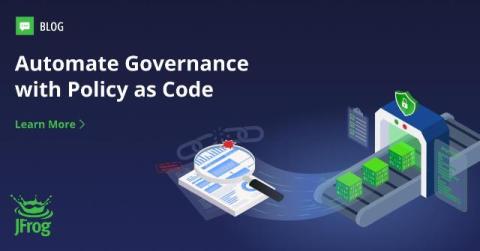
Governance That Ships: Embedding Policy as Code Into Your System of Record

Proving compliance is a necessity, but in a world of tightening regulations, the path to compliance is currently paved with spreadsheets, screenshots, and manual attestations. We call this the “Audit Tax”, the millions of dollars and thousands of people hours spent not just integrating security, but on proving you are handling security.

Best data access governance (DAG) tools in 2026

Compare the top data access governance tools for 2026. Learn what to look for, and which platforms fit mid-market security teams. TL;DR: Data access governance tools map effective permissions to sensitive data, surface overexposed entitlements, and operationalize access reviews across hybrid environments. Without them, organizations cannot answer who can reach regulated data, enforce least privilege, or complete certifications without manual effort.