Security | Threat Detection | Cyberattacks | DevSecOps | Compliance

Trusted AI Adoption (Part 2): Detection

It’s Monday morning. Your coding agents ran all weekend. Your security dashboard shows the exact same numbers it did Friday afternoon. Same models, the same approved Model Context Protocol (MCP) servers, the same AI assets you are familiar with. Reassuring. Then, suddenly, you get a notification: a production deploy failed an audit. The build references a model nobody on your team registered.

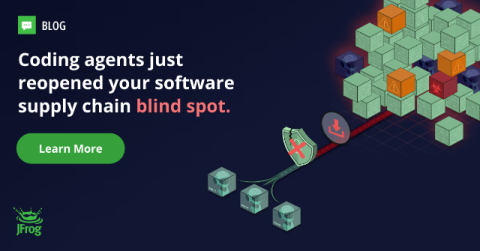
Introducing Package Traffic Controller: Software Supply Chain Security at the Network Edge

Imagine this: your security team has done everything right. All development teams are using a centrally managed artifact repository with scanning in place. Your engineering organization has clear policies about where packages can come from. You feel good about your software supply chain posture. Then an incident review surfaces something nobody planned for: a compromised npm package entered your environment.

Building a Governed AI Model Supply Chain: Integrating AWS SageMaker and the JFrog Platform

Amazon SageMaker accelerates the process of training and deploying machine learning models. However, as AI adoption scales from individual experiments to enterprise-wide production, the focus of leading Fortune 500 software development operations and security teams must shift from pure velocity to governance.

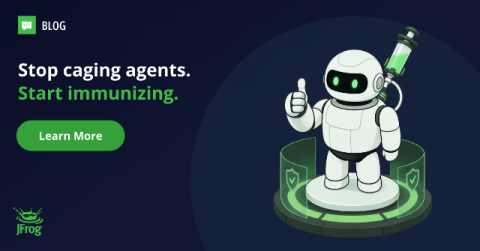
Unlock the Power of Agents with JFrog's Skills and MCP Tools

Agents are writing code, suggesting dependencies, and reviewing PRs, without any knowledge about your trusted package sources, security posture, or governance policies. When agents operate without supply chain context, they introduce risk, create rework, and weaken the guardrails DevSecOps teams rely on to ship with confidence. JFrog is changing that.

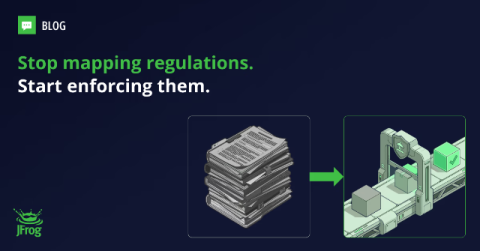
Automate NIST SSDF Compliance: A Technical Guide to Policy as Code in JFrog AppTrust

For many engineering and security teams, NIST SP 800-218 (Secure Software Development Framework, or SSDF) compliance feels like a hurdle that is too difficult to overcome. To meet these and other emerging regulations and be effective in today’s DevSecOps environment, organizations are moving toward codifying these standards into machine-readable rules, also known as Policy as Code (PaC).

You Can't Trust What You Can't Trace

Picture this: Your security team finishes an AI vendor evaluation. The offering looks ironclad, with content filtering, output guardrails, and a stellar red-teaming report. Everyone leaves the meeting satisfied, and another governance box is checked. Six months later, a production incident hits. An AI agent, powered by a model your team “vetted,” starts executing unauthorized deletions in your CRM.

Navigating DORA Compliance: Software Development Requirements for Financial Services Companies

Note: This blog was originally published in July 2024 and updated on an annual basis. It was most recently updated in April 2026. Regulatory compliance is a common and critical part of today’s rapidly evolving financial services landscape. One new regulation that EU financial institutions must adhere to is the Digital Operational Resilience Act (DORA), enacted to enhance the operational resilience of digital financial services.