Security | Threat Detection | Cyberattacks | DevSecOps | Compliance

What is IoT Security? 6 Ways to Protect Your Devices

The Internet of Things (IoT) is a growing concern for today’s digitally-focused businesses. Every connected device you own can add another security concern to your list. If it collects and stores personal information and data, you’ve just added another attractive target for criminals to access your network. In fact, 57% of IoT devices are vulnerable to medium or high-severity attacks.

Compliance vs Risk Management: What You Need to Know

According to a study conducted by Ropes & Gray, 57% of senior-level executives rate “risk and compliance” as the top two categories they feel the least prepared to address. There are a lot of misconceptions about compliance and risk management. Both help to prevent security threats to the organization’s legal structure and physical assets. And often, when people hear the terms compliance and risk management, they assume the two are the same.

Mobile app SDKs: The nesting dolls of hidden risk

Here’s an obvious statement for you: mobile applications are essential to how we go about our lives. From sharing files with colleagues to managing finances and connecting with family and friends, they seem to be able to do everything we need. But here’s the catch: developers rarely build apps from scratch and security is not typically their top priority. To quickly add features, they often rely on prepackaged code known as software development kits (SDKs).

What is Shadow IT? And How to Manage It

Everything connected to your network poses a security risk. Every application on every device poses a threat to that device which then increases your security risk profile. Ultimately, organizations need visibility into all users, applications, and devices on their networks. Whether arising from employees using personal devices or downloading applications to corporate devices, shadow IT is becoming a bigger problem for organizations.

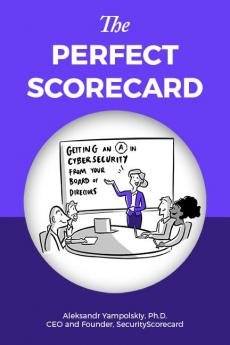
'The Perfect Scorecard' Focuses on Communication Between CISOs and the Board

In most companies today, there is a critical divide between the Chief of Information Security (CISO) and their board of directors. Our new book, The Perfect Scorecard: Getting an ‘A’ in Cybersecurity from your Board of Directors , is an attempt to close that gap. The Perfect Scorecard features insights from 17 leading CISOs and executives known for their leadership skills and their ability to communicate across roles and sectors.

Midway Swiss Case Study: Journey towards CMMC Compliance with Ignyte

This webinar is designed for Small & Midsize Businesses that work as federal prime or subcontractors. Our guest, Jayme Rahz, CEO at Midway Swiss Turn, represents a local manufacturer that has recently undergone a series of guided steps with Ignyte’s team and implemented over a hundred vital controls into their cybersecurity routine to become NIST and CMMC compliant and be able to conduct a self-assessment for the NIST 800-171 SPRS submission.

The Perfect Scorecard: Getting an A in Cybersecurity from your Board of Directors

Corporate board members are known for their relentless focus on the bottom line -- and with good reason. CISOs and other security executives are often mired in technical language and many times, unable to communicate the business impact that cybersecurity has on the bottom line. This helps explain why the average tenure of a CISO is roughly two years.

What is a SOC 2 Report and Why Is It Important

A Service Organization Controls (SOC) report provides independent validation over a company’s internal financial reporting controls. They were originally used to validate compliance with the Sarbanes-Oxley Act of 2002. When the SEC released the “ Commission Statement and Guidance on Public Company Cybersecurity Disclosures ,” SOC reports started to include cybersecurity. Understanding what a SOC Type 2 report is can give insight into why it is important to your organization.

What is Third-Party Risk?

Third-party risk is any risk brought on to an organization by external parties in its ecosystem or supply chain . Such parties may include vendors, suppliers, partners, contractors, or service providers, who have access to internal company or customer data, systems, processes, or other privileged information. While an organization may have strong cybersecurity measures in place and a solid remediation plan, outside parties, such as third-party vendors , may not uphold the same standards.

Midway Swiss Case Study: Journey towards CMMC Compliance with Ignyte

This webinar is designed for Small & Midsize Businesses that work as federal prime or subcontractors. Our guest, Jayme Rahz, CEO at Midway Swiss Turn, represents a local manufacturer that has recently undergone a series of guided steps with Ignyte’s team and implemented over a hundred vital controls into their cybersecurity routine to become NIST and CMMC compliant and be able to conduct a self-assessment for the NIST 800-171 SPRS submission.

6 Examples of Essential Cybersecurity Policies for Businesses

Every year, more than 34 percent of organizations worldwide are affected by insider threats. For that reason, cybersecurity needs to be a priority and concern for each employee within an organization, not only the upper-level management team and IT professionals. Employees tend to be the weakest link in an organization’s security posture, often clicking on malicious links and attachments unintentionally, sharing passwords, or neglecting to encrypt sensitive files.

RDP Security Risks and Encryption Explained

To get a better understanding of how RDP works, think of a remote-controlled toy car. The user presses buttons on the controller and makes the car move forward or backwards. He can do all that and control the car without actually contacting it; the same is the case while using RDP. This article shall help you become aware of RDP security encompassing threats, vulnerabilities and encryption practices.

What is HECVAT and Why is it Important?

Higher education has increasingly been attracting the attention of cybercriminals. In March, the FBI released an advisory in response to a barrage of ransomware attacks on schools, and Inside Higher Education recently reported that colleges and universities are becoming favorite victims of bad actors. It's not just colleges themselves that are being targeted; their vendors and third parties are being attacked in the hopes of compromising an institution’s data.

7 Internet of Things Threats and Risks to Be Aware of

The internet of things (IoT) is a highly developed space that is home to a vast amount of sensitive data, making it a very attractive target for cybercriminals. Threats and risks continue to evolve as hackers come up with new ways to breach unsecured systems -- posing a threat to the ecosystem itself. Let’s take a look at the leading threats and risks to the IoT and the associated vulnerabilities that must be secured.

Benefits of Outsourcing cyber security (and risks!)

We all know how cyber security has become an increasingly important issue as the reliance on internet-connected devices has increased. This is why some companies are looking for third-party providers to handle their IT security needs to free up resources and reduce costs. Find out what you should be looking for in a provider, as well as why outsourcing cyber security can be a good option for some businesses.

Why Cybersecurity is Critical to Maintaining HIPAA Compliance

When exploringhttps://securityscorecard.com/admin/entries/blog/154640?draftId=2332&fresh=1# top network security breaches, many think of the obvious: banks or large consumer institutions. However, healthcare organizations are on the rise as a top target for hackers, with the number of data breaches rising 36% in the second half of 2020.