While unit testing is crucial for improving code quality and reducing later testing time, it consumes at least 15% of developers' time. Developers can utilize automated fuzz tests to allocate more time for developing new features. They replace negative test cases, constituting around 30% of unit tests. In a recent analysis of a Java project using a fuzzing platform, a single fuzz test was equivalent to potentially 309 unit tests, achieving 74% code coverage within just 25 seconds.
Security testing allows you to evaluate the robustness of applications and systems and identify potential weaknesses that attackers may exploit. DAST and fuzzing are two popular, important, and proven security testing methods.
In the famous book “Code Complete,” published by Microsoft Press, author Steve McConnel emphasized the importance of writing code for people first and computers second for better code readability. This was in 1993, when cyber attacks were practically non-existent. Fast forward to 2023, we have a greater challenge: writing code for tackling hackers first and users second. This challenge is compounded by the rise of cybersecurity incidents due to security vulnerabilities in code.
In the domain of software testing and security analysis, fuzzing has emerged as a powerful technique for uncovering vulnerabilities and enhancing the resilience of software systems. Microsoft and Google have been using fuzzing for ages. They were early adopters of fuzzing technologies to test their own systems. Since launching in 2016, Google's OSS-Fuzz, a free fuzzing platform for critical open-source projects, has helped fix over 8,800 vulnerabilities and 28,000 bugs across 850 projects.
In 2023, cyber threats increased and diversified, resulting in increased security challenges for organizations around the globe. Meanwhile, AI greatly increased its presence in the realm of cybersecurity, both negatively and positively. 2024 is going to be a year in which advanced AI tools and complex social engineering tactics will further alter the cybersecurity game. In this article, we will focus on the most important cybersecurity threats in 2024.
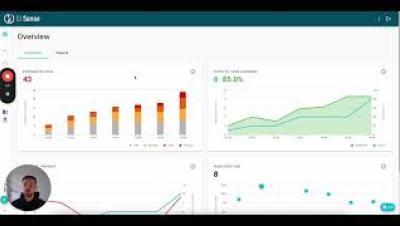
Sergej Dechand, Code Intelligence's CEO, demonstrates how developers can submit new code, which is automatically tested and analyzed for security issues. Sergej explains the process of running tests, assessing findings, and integrating with ticketing systems. You'll also see how to measure code coverage and download reports. It includes all the mentioned use cases with simulating hardware and autogenerated fuzz test setup..
Maximize your Bitbucket Cloud security with a one powerful integration. Get automated dependency updates with Mend Renovate, open-source security with Mend SCA, and code flaw detection with Mend SAST to streamline your workflow and code protection. Mend.io.
Most modern vehicles are equipped with a variety of software systems and resemble sophisticated computers on wheels. The ISO/SAE 21434 standard is a framework that provides recommendations and requirements for secure software development in the automotive industry. But what is ISO 21434 exactly? And what can we expect from automotive software security in 2024? Read on and find out!
In today's fast-paced digital landscape, developers face increasing pressure to deliver secure applications within tight deadlines. With the emphasis on faster releases, it becomes challenging to prioritize security and prevent vulnerabilities from being introduced into production environments. Integrating dynamic application security testing (DAST) into your CI/CD pipeline helps you detect and remediate vulnerabilities earlier, when they are easier to fix.