Passwords are dying as a sole security measure, particularly within financial services. It is widely expected (and in the UK, mandatory) that any institution responsible for finances, from banks to brokers and even crypto wallets, should be implementing multi factor authentication (MFA) to prevent fraudsters gaining access to accounts using automated attacks, even if they know the user’s password.
Bots are rampant across the web – in fact, around 50% of all web traffic is automated or invalid, i.e., doesn’t come from a real user with genuine interest. While some of this traffic is good and useful, for example, search engine crawlers and content aggregators, a high percentage is malicious. Hosting bad bots on your server can result in a plethora of problems for your website and business, from damage to your brand reputation to excessive financial and technical costs.
As a thorn in the side of marketing teams of all sizes, awareness of ad fraud has grown in recent years due to the sheer amount of money it can cost advertisers. In one famous case, Uber discovered fraudulent app installs attributed to its ads had cost the company $100 million. But it’s not just overtly malicious activity like ad fraud that marketing budget-setters need to be concerned about. Marketers must be aware of the potential damage bots of all kinds can do, intentionally or otherwise.
In a recent Technical Showcase webinar, Netacea Senior Data Analyst Paulina Cakalli described how businesses can quickly prove the value of bot management during a proof-of-concept (POC) or proof-of-value (POV) engagement. Evidencing the effectiveness of bot management is important because IT solutions, particularly security solutions, are often costly, require board buy-in, and can be difficult to measure in terms of success. Watch the webinar on-demand now.
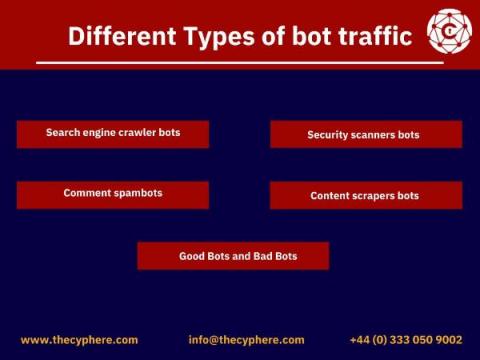
Bot traffic is a type of traffic that is generated by automated programs, or bots. These bots can be used to generate fake traffic for testing purposes or to engage in malicious activities. Malicious bot traffic is a huge problem for many website owners, and bot detection can be difficult. There are various types of bot traffic that you need to watch out for. In this guide, we will discuss their different types and how to combat them!
Manchester, UK – 22nd December 2021 – Netacea, the bot detection and mitigation specialist, today announces that its parent company Intechnica has completed a new £8.5m funding round with Mercia Asset Management PLC (AIM: MERC). The investment will accelerate Netacea’s growth in the UK and the US. Netacea is a fast-growing cybersecurity business that detects and mitigates against bot attacks that target mobile, web and API applications.
2021 has been a whirlwind of a year for most, with lockdown restrictions easing, businesses re-opening, and people finally being able to see their family and friends in person again. For Netacea, 2021 has been all about strengthening our remote-first team and finally venturing back into the office to meet new and old colleagues face to face once again.
After the Covid-19 pandemic accelerated digital transformation and shifted businesses to online first, cyber-attackers exploited a broader, more sophisticated attack vectors. The rollout of 5G, reliance on supply chains, and increased use of application programming interfaces (APIs) means businesses have more cyber-related vulnerabilities.