The latest News and Information on Data Security including privacy, protection, and encryption.
Google Drive is an integral part of Google Workspace (formerly known as G Suite). With over 6 million customers and over 2 billion monthly active users, Google’s platform is the world’s largest collaboration tool for companies both large and small. In Google Drive, employees across the world create, edit, and share files on a daily basis. This, however, does not occur without the risk of data leakage.
As with most SaaS applications, within Salesforce it is your organization’s responsibility to determine whether Salesforce’s default security settings meet your specific security and compliance obligations. Read this online guide, for free, to learn about the problem of data exposure in Salesforce and how to ensure compliance with HIPAA, PCI, and other leading industry standards while storing sensitive data in Salesforce.
The rise of cloud, containers, and microservices has shifted the way software developers work for good. Whereas traditionally, software developers would release a new version of an application every few months, today’s platforms allow teams to work faster and more streamlined. These advancements have led to the rise of “software, safer, sooner” — also known as DevSecOps.
Environments like GitHub present data exposure risk in the form of secrets leakage and sensitive PII leaking from repositories. Read this online guide, for free, to learn about the problem of secrets exposure and leakage in GitHub, as well as how to easily implement secrets detection and scanning to prevent this risk.
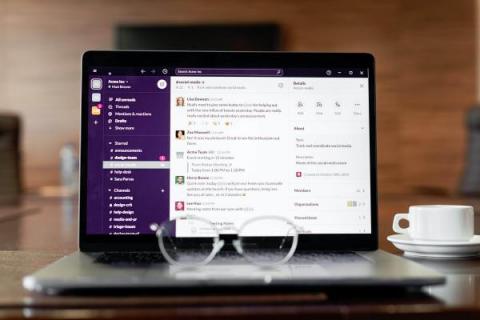
When Uber was breached in September, the hacker remained undetected until they announced their presence within the org via Slack. This incident provides yet another example of Slack being leveraged by an attacker. In this post, we’re going to review some of the ways attackers have used Slack in breaches, why this is happening, and what you can do about it.
What a few weeks it has been for Twitter, from the sacking of half its workforce, and the rushed release of a new feature that allows impersonation of people and brands, through to the unintentional lock out of some users with a certain multi-factor authentication (MFA) configuration enabled. Added to this, we have also seen major resignations of key individuals across the Information Security, Privacy and Compliance groups.
Malware is becoming more sophisticated, and it would be impossible to prevent and defend from every single cyber threat out there. As the digital dependence of enterprises grows in tandem with the enterprise’s growth, we at Rubrik are seeing some consistent trends that can be mapped to their exacerbating cyber risk. In today's competitive landscape, it is even more important to secure your data to defend against cyber attacks.