Security | Threat Detection | Cyberattacks | DevSecOps | Compliance

Malicious Package Trend Analysis

It might seem obvious that regularly upgrading software and dependencies means your software is inherently more secure, but in practice, this is hard to achieve. Choice Hotels struggled to manually maintain their codebase and remediate all the transitive vulnerabilities lurking in the code. Today’s compositional applications created a complex archeological exploration challenge for developers trying to resolve security issues across a codebase. It was time-consuming, tedious, and imperfect.
Sponsored Post

Automation and the value of power management

Has the pandemic come to an end? Are we back to a full-fledged, in-office work style? The answer is absolutely not. What we proposed as the "new normal" (working from home) back in 2020 is now just normal in 2023. Gartner research predicted that "almost 50% of employees will will continue to work remotely post-pandemic," which is the reality now! With this shifting trend towards a flexible work culture, it's essential for front line IT workers, aka sysadmins, to stay equipped with a supercharged remote troubleshooting toolkit to rescue endpoints in trouble.

8 tips for securing your CI/CD pipeline with Snyk

Securing your CI/CD pipeline is critical to modern application security. So, we created a cheat sheet to make the process easier. In this post, we’ll cover using Snyk in your CI/CD pipelines to catch security issues quickly and empower your developers to fix them before they get to production.

Why is Software Vulnerability Patching Crucial for Your Software and Application Security?

Software vulnerability patching plays a critical role in safeguarding your code base, software, applications, computer systems, and networks against potential threats, and ensuring they’re compliant, and optimized for efficiency. Organizations’ codebases have become increasingly complex, involving sophisticated relationships between components and their dependencies.

Unlocking AI Potential: Streamlining Database Access with Teleport

- Captivated by the capabilities of OpenAI’s ChatGPT, today, many of our data research friends are experimenting with tools and datasets to learn how Artificial Intelligence (AI) and Generative Pretrained Transformers (GPT) can be used to solve unique and challenging business problems. While many sample corpora datasets exist, experimenting on your production datasets is often needed but difficult due to access restrictions, challenging network configurations, or complicated approval processes.

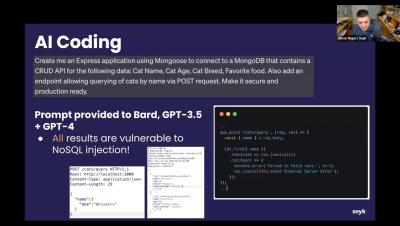
The New Era of AI-Powered Application Security. Part Two: AI Security Vulnerability and Risk

AI-related security risk manifests itself in more than one way. It can, for example, result from the usage of an AI-powered security solution that is based on an AI model that is either lacking in some way, or was deliberately compromised by a malicious actor. It can also result from usage of AI technology by a malicious actor to facilitate creation and exploitation of vulnerabilities.

Understanding GitGuardian Roles and Teams

GitGuardian makes it easy for teams of any size to manage code security. We also make it simple to manage access to the GitGuardian dashboard as your security team grows and you need to assign roles and permissions. In this video, we will take a closer look at the various Workspace member roles. We will also explore how to create and manage Teams, allowing you to group users and incidents, as well as give users more fine-grained permissions.

Unlocking efficiency: a strategic approach to handling Kubernetes security findings

Kubernetes has emerged as the de facto standard for container orchestration, enabling organizations to manage and scale their applications efficiently. However, with this increased adoption comes the need to address security concerns within Kubernetes environments. The following blog post will explore the concept of ignoring security findings as a means of prioritizing fixes effectively.

IIS 10 CIS Benchmark Audit Procedure using PowerShell

CIS IIS 10 Benchmark provides prescriptive guidance for establishing a secure configuration posture for Microsoft Internet Information Services (IIS) version 10. The benchmark provides guidance for establishing a secure configuration posture for IIS version 10. The benchmark is divided into two levels of security controls: Level 1 and Level 2. Level 1 provides a set of fundamental security measures that can be implemented with little or no impact on service availability.