Security | Threat Detection | Cyberattacks | DevSecOps | Compliance

Version Control Best Practices With Teleport RBAC Roles

Imagine you've just deployed a working Teleport cluster and you're making changes to the Role Based Access Controls (RBAC) roles, fine-tuning all of your resource permissions, and making sure every role is following the principle of least privilege. You go for a week-long vacation, do some fishing and completely relax. Getting back you find that the DevOps intern you just hired made a bunch of changes to the roles screwing everything up.

Top 5 security concerns for infrastructure as code

Infrastructure as code (IaC) has changed how we deploy and manage our cloud infrastructure. Instead of having to manually configure servers and networks with a large operations team, we can now define our service architecture through code. IaC allows us to automate infrastructure deployment, scale our entire fleet of servers, document a history of changes to our architecture, and test incremental changes to the network.

What is Code Signing SDLC?

Today, an intricate web of tools, programs, and individuals collaborates to bring applications to life. This interconnected network, the software supply chain, encompasses the various entities and processes that shape the software development lifecycle (SDLC), including developers, dependencies, network interfaces, and DevOps practices. Given the diverse nature of these components, ensuring the security of each element becomes paramount.

How to Install Velero for Kubernetes Backups

Velero is an open-source backup and recovery tool designed specifically for Kubernetes clusters. It provides a straightforward way to protect your Kubernetes resources, including persistent volumes, namespaces, and custom resources, by taking backups and restoring them in case of data loss or disaster recovery scenarios. In this blog you will learn the different use cases for Velero and the two ways to install Velero, using the Velero CLI and using a Helm chart.

Software Supply Chain Compliance: Ensuring Security and Trust in Your Software and Applications

Software and applications make the world go round. This naturally makes them a top attack target for threat actors, and highlights the importance of robust software supply chain compliance. But how do companies build and implement a compliance strategy that solves the challenges of modern application security? Let’s take a look.

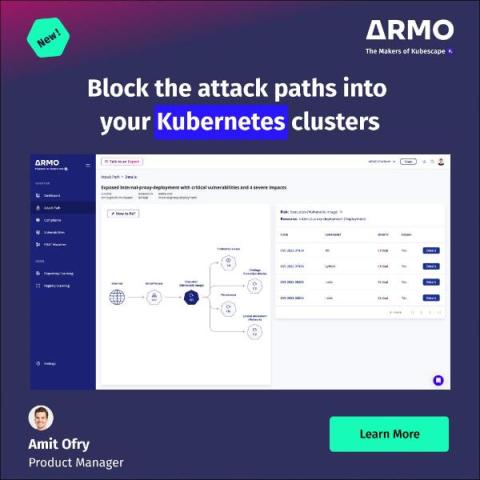
ARMO named in Gartner Cool Vendors report

Gartner expert analysts use the following guidelines and approach to identify and research Cool Vendors. A vendor must be considered innovative, impactful, or intriguing in either the products or the IT services sectors. Cool Vendors are not limited to technology coolness. However — coolness may also include services or unique business models.

How to strengthen security in your CI/CD pipeline

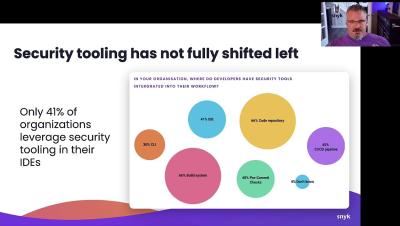
DevSecOps refers to the integration of security practices into DevOps process. With modern development cycles, you can't afford to leave security until the end. It should be baked in at every stage. Continuous integration, continuous delivery (CI/CD) security is a big part of the DevSecOps picture. It's critical that you secure your pipelines and that the automated systems used to implement CI/CD are not vulnerable to attack.

The New Era of AI-Powered Application Security. Part One: AI-Powered Application Security: Evolution or Revolution?

Imagine the following scenario. A developer is alerted by an AI-powered application security testing solution about a severe security vulnerability in the most recent code version. Without concern, the developer opens a special application view that highlights the vulnerable code section alongside a display of an AI-based code fix recommendation, with a clear explanation of the corresponding code changes.