When it comes to open source vulnerabilities, we seem to be in permanent growth mode. Indeed, data from Mend’s Open Source Risk Report showed 33 percent growth in the number of open source software vulnerabilities that Mend added to its vulnerability database in the first nine months of 2022 compared with the same time period in 2021. However, while some vulnerabilities pose a severe business risk — hello, log4j — others can be safely ignored.
It stands to reason that if you’ve implemented a Static Application Security Testing (SAST) tool, you’ll want to reap the full value of the investment. But to accurately assess ROI, you need metrics that can evaluate factors such as overall results, KPI compliance, and timeframe. Only then can you estimate whether you’re making a real improvement to the security of your code base, and from that, assess the monetary value of these results.
MySQL database is one of the most popular open-source relational database management systems, and it is a top choice for some of the world’s favorite websites and web applications including YouTube, Twitter, and WordPress. Handling so much data and protecting it is incredibly important to organizations.
Sudden, unexpected, and potentially very damaging. Zero-day attacks are the perfect storm for malicious actors and one of the worst-case scenarios for developers, security professionals, and DevOps teams. Yet it’s not all bad news for those charged with protecting your code, software, and applications, as long as you expect the unexpected and prepare for it. Building a fast, effective mitigation response for zero-day attacks starts with these three tactics.
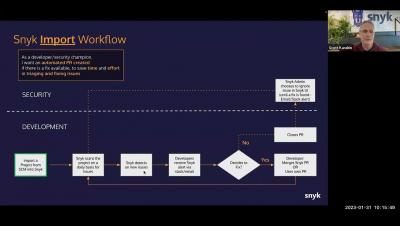
In our latest Snyk in 30, Jason Lane (Director of Product Marketing) and I (Marco Morales, Partner Solutions Architect) showcased Snyk Open Source with a focus on our integration with Bitbucket Cloud. They covered why open source security is vital for modern app development, along with tips on taking a holistic approach to application security that goes beyond just shifting left.
One of the most important steps of securing your code base, your software, and your applications, is to update the dependencies they rely on. In principle, maintaining software health with updates demands that you use recent versions of any software and dependencies. Recent updates are less likely to be exploited and attacked via publicly known vulnerabilities than older versions, because with the latter, malicious actors have had more time to hunt for weaknesses.